Before the next plant moves in
A stack of empty pots is useful. Check their condition, clear the drainage and clean them before reuse.
The short answer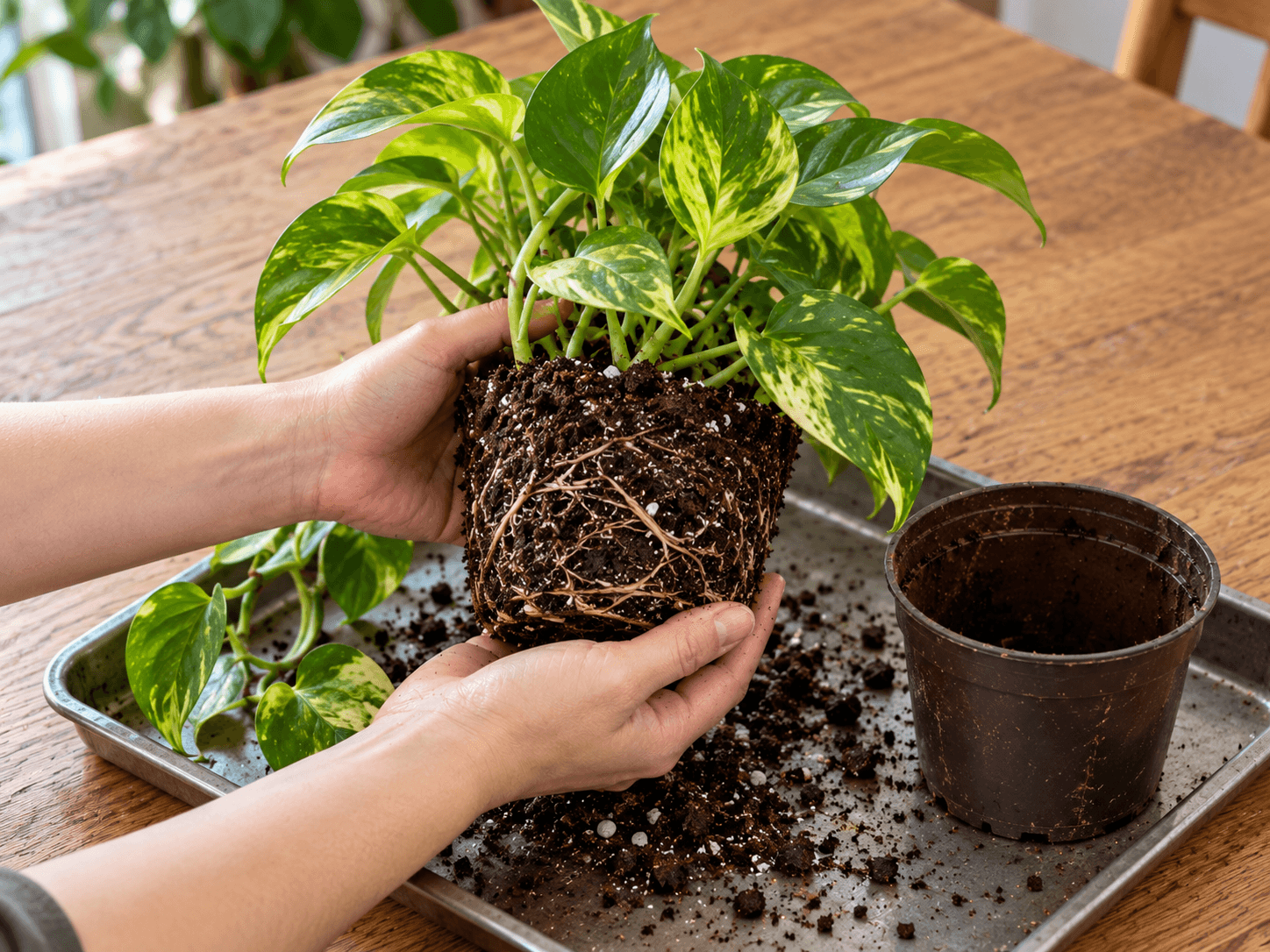
Start with sound containers
Look for splits, sharp edges and brittle plastic before saving a pot for another season. Check whether an attractive cover pot actually has drainage. Keep the matching saucer only if it is sound and easy to empty. A stack that separates cleanly is more useful than one packed with old roots and damp debris.
Remove the material first
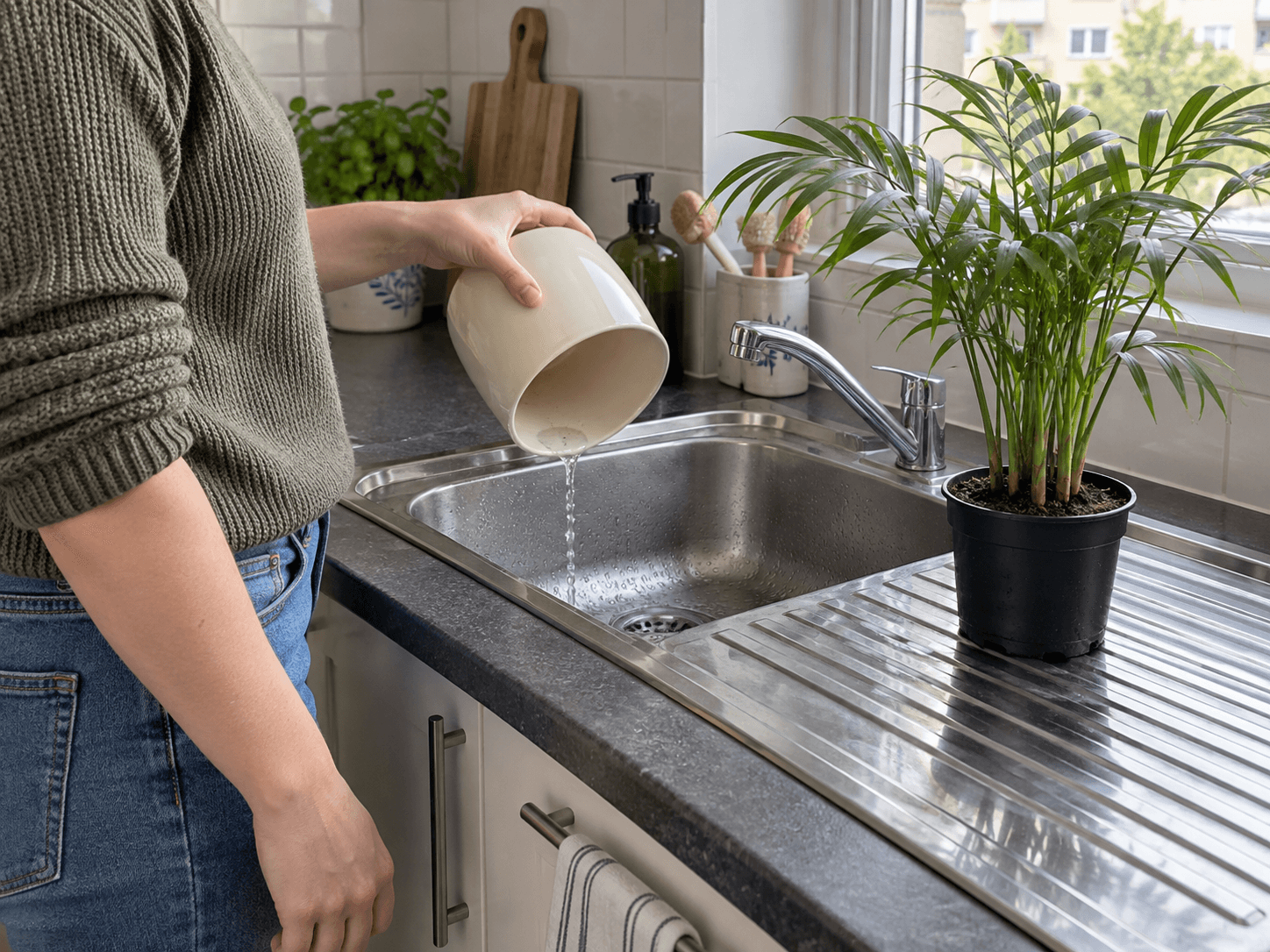
Brush out old mix and root fragments, then wash the inner and outer surfaces and the saucer. Pay attention to grooves around the base and blocked holes. Dirt can shield microorganisms from a disinfectant, so a quick spray over a dirty pot is not equivalent to cleaning it properly. Work away from food preparation.
Use the right instructions
For pots that held diseased plants, consider whether effective cleaning and disinfection are practical or whether the container should be discarded. Choose a product suitable for the material and intended use, follow its contact time and rinsing directions, and use required protection. Never mix cleaning chemicals. Avoid borrowing a dilution from a product with a different concentration.
Keep the next job simple
Let containers dry before stacking and store them away from contaminated debris. Match the next plant to the pot's root space rather than using the largest clean container available. Keep a few small draining pots for cuttings and divisions. They are often more useful than a collection of oversized decorative containers with no practical way to empty them.
Find a related guide below.
Back to the beginningSources & notes
Care guidance checked against these horticultural references on 20 October 2026.
- University of Minnesota Extension: Clean tools and containersRemove debris before disinfection; prevent transfer between plants; follow product precautions.
- Oregon State University Extension: Safe plant propagation and salesUse healthy propagation material and clean containers; inspect before sharing.
- University of Maryland Extension: Potting and repottingRoot-ball placement, aeration and why not to add gravel.