When orchid bark breaks down
Exposed roots do not automatically mean trouble. Look at the medium and the roots inside before choosing a new pot.
The short answer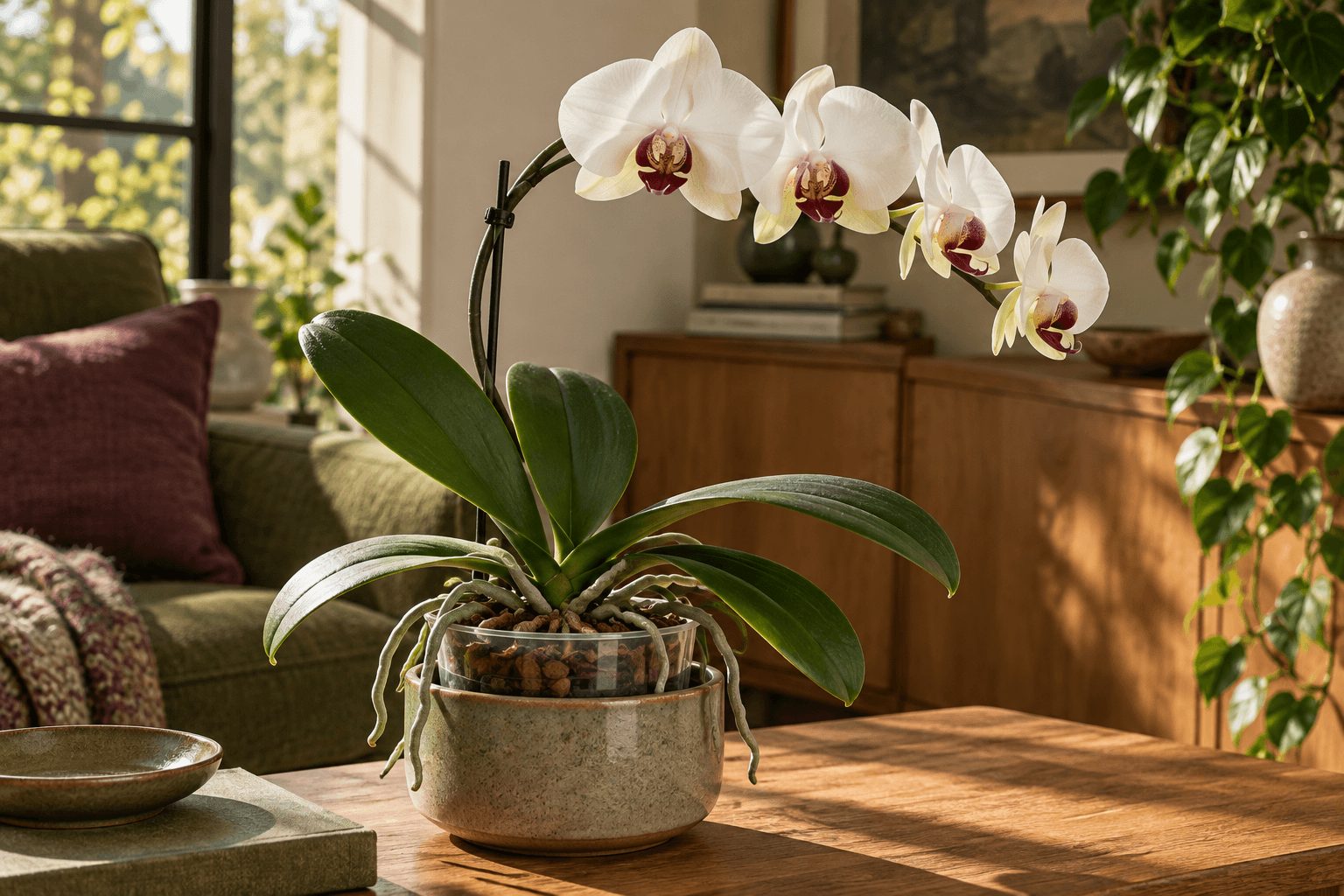
Look past the escaping roots
Aerial roots are normal on Phalaenopsis and do not alone prove that the pot is too small. Check whether bark has become fine and compacted, whether water drains as expected and whether roots inside remain firm. A plant can have impressive roots outside while the centre of its medium needs attention.
Use the plant's growth
If conditions are sound, plan repotting around an appropriate growth period, often after flowering as new roots develop. A serious root problem may require action sooner. Disturbing a flowering plant can shorten the display, but preserving the plant takes priority when its medium is failing. Avoid repotting solely because the original plastic container looks plain.
Work around living roots
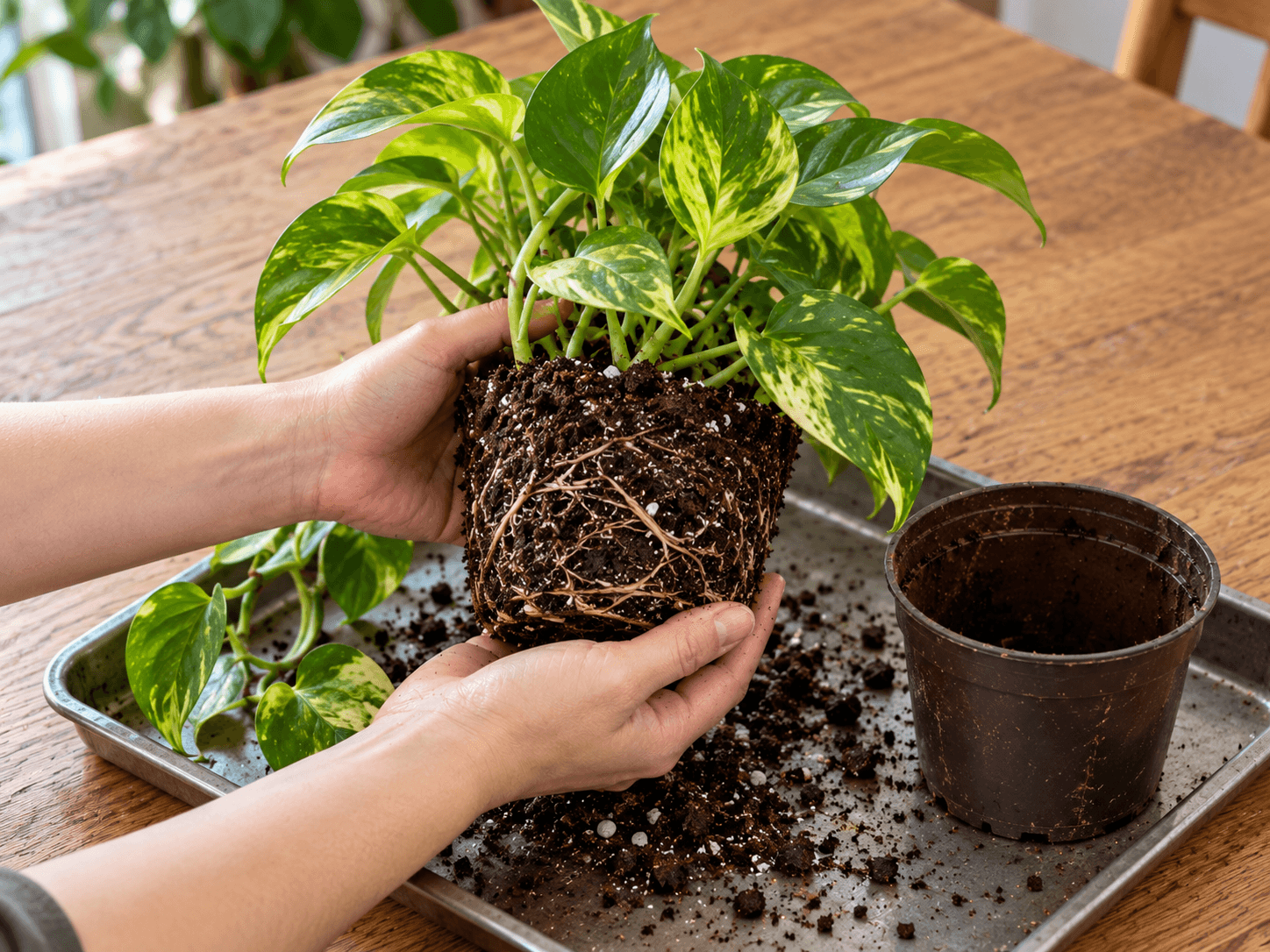
Ease the plant free, remove degraded loose medium and trim clearly soft, dead roots with clean tools. Firm roots may be silver, green or pale depending on exposure and moisture. Fit them gently into a suitable pot without forcing brittle roots. Use a medium intended for the orchid and your growing conditions, leaving the crown clear.
Watch the new medium
Fresh bark can behave differently from old compacted material or a dense nursery plug. Check moisture and root condition rather than retaining the previous watering interval automatically. Keep water out of the crown and drain after watering. A well-supported orchid should sit securely without being packed tightly enough to remove the air spaces its roots need.
Find a related guide below.
Back to the beginningSources & notes
Care guidance checked against these horticultural references on 20 October 2026.
- American Orchid Society: RepottingTiming, root condition and choice of orchid container and medium.
- American Orchid Society: Phalaenopsis cultureMoth orchid light, roots, watering, crown care and repotting.
- University of Minnesota Extension: Clean tools and containersRemove debris before disinfection; prevent transfer between plants; follow product precautions.