The orchid after the last flower
Read the spike, leaves and roots before deciding what to cut from a moth orchid that has finished flowering.
The short answer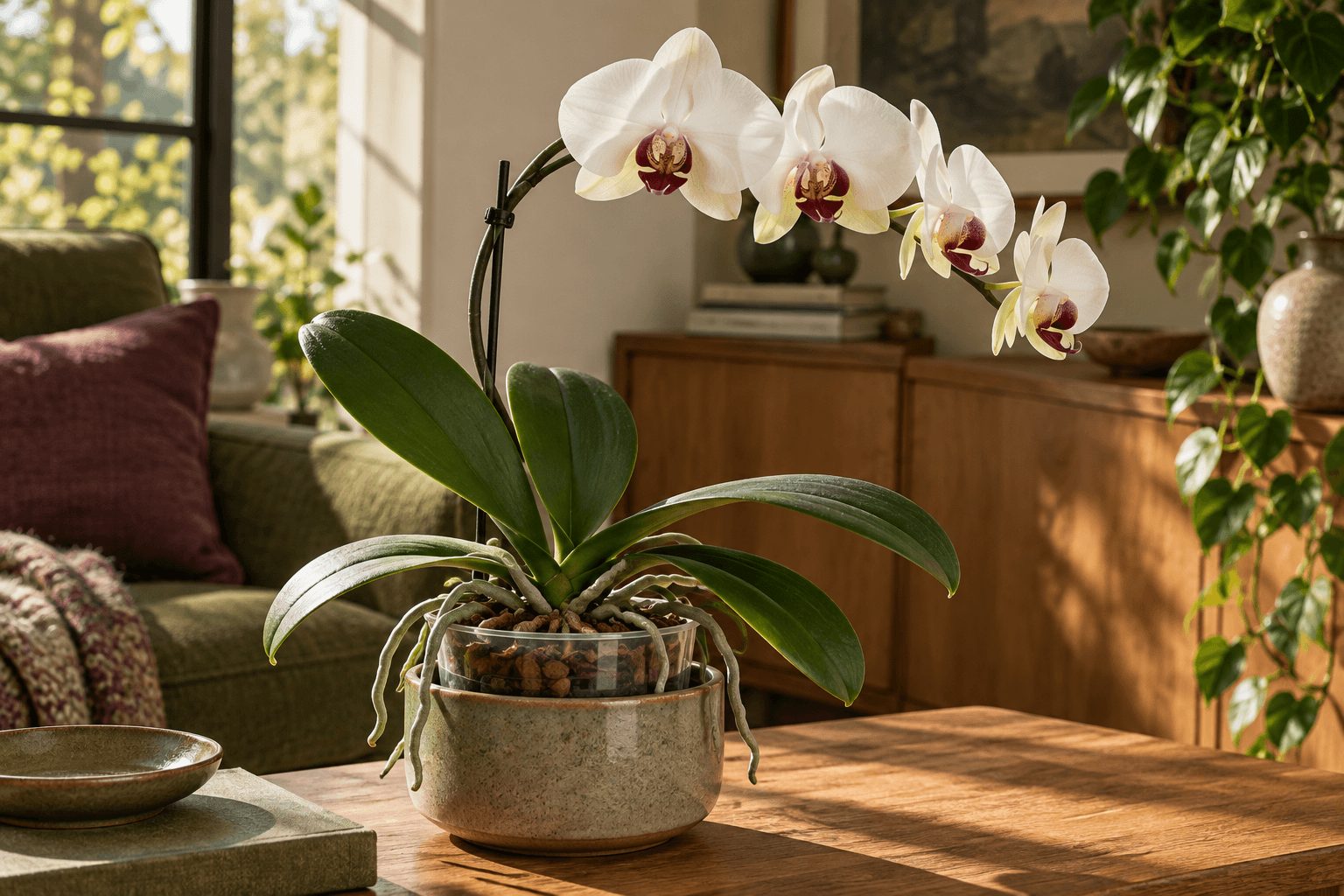
Check what finished
Flowers naturally fade, one after another. That is different from a collapsing crown, soft roots or rapidly yellowing leaves. Remove fallen flowers and inspect the plant before changing its care. If only the display has ended, keep the pot in its suitable light rather than moving it to a dark spare room.
Green and brown need different decisions
A completely dry spike can be removed near its base without cutting the leaves or crown. Common large-flowered Phalaenopsis may branch from unused nodes on a green spike. Some novelty types flower repeatedly from their green tips, so identify yours before shortening it. Leaving a healthy green spike while you find out is a reasonable choice.
For a strong, healthy large-flowered Phalaenopsis, you can try a side branch by cutting just above an unused node below any dead part. An unused node has a small triangular flap lying against the spike; compare it with the American Orchid Society photographs before cutting. A second display is optional and may be smaller. Removing that spent spike near its base instead gives the plant a rest; keep the blade clear of the crown.
Give the plant time to grow
Trying for an immediate second flowering is optional. A weak plant benefits from attention to its roots and leaves instead. Check the potting medium and water according to its condition, then let excess drain away. Repot when the medium or roots require it, using orchid-appropriate material, rather than doing every possible job because the flowers have gone.
Avoid a rebloom deadline
Keep a note of new roots, leaves and any emerging spike. Those observations are more useful than a countdown to another display. Light and temperature affect flowering, but a cold shock or extra fertilizer is not a reliable shortcut. For an unidentified orchid, keep its nursery label or ask a specialist before applying Phalaenopsis spike advice to another genus.
Find a related guide below.
Back to the beginningSources & notes
Care guidance checked against these horticultural references on 20 October 2026.
- American Orchid Society: Where to cut the flower spikeGreen versus dry spikes, repeat-flowering types and plant recovery.
- American Orchid Society: Phalaenopsis cultureMoth orchid light, roots, watering, crown care and repotting.
- American Orchid Society: RepottingTiming, root condition and choice of orchid container and medium.