After the last orchid flower
Phalaenopsis hybrids
Care for a moth orchid beyond its first display: inspect the bark and roots, drain thoroughly and keep water out of the crown.
The short answer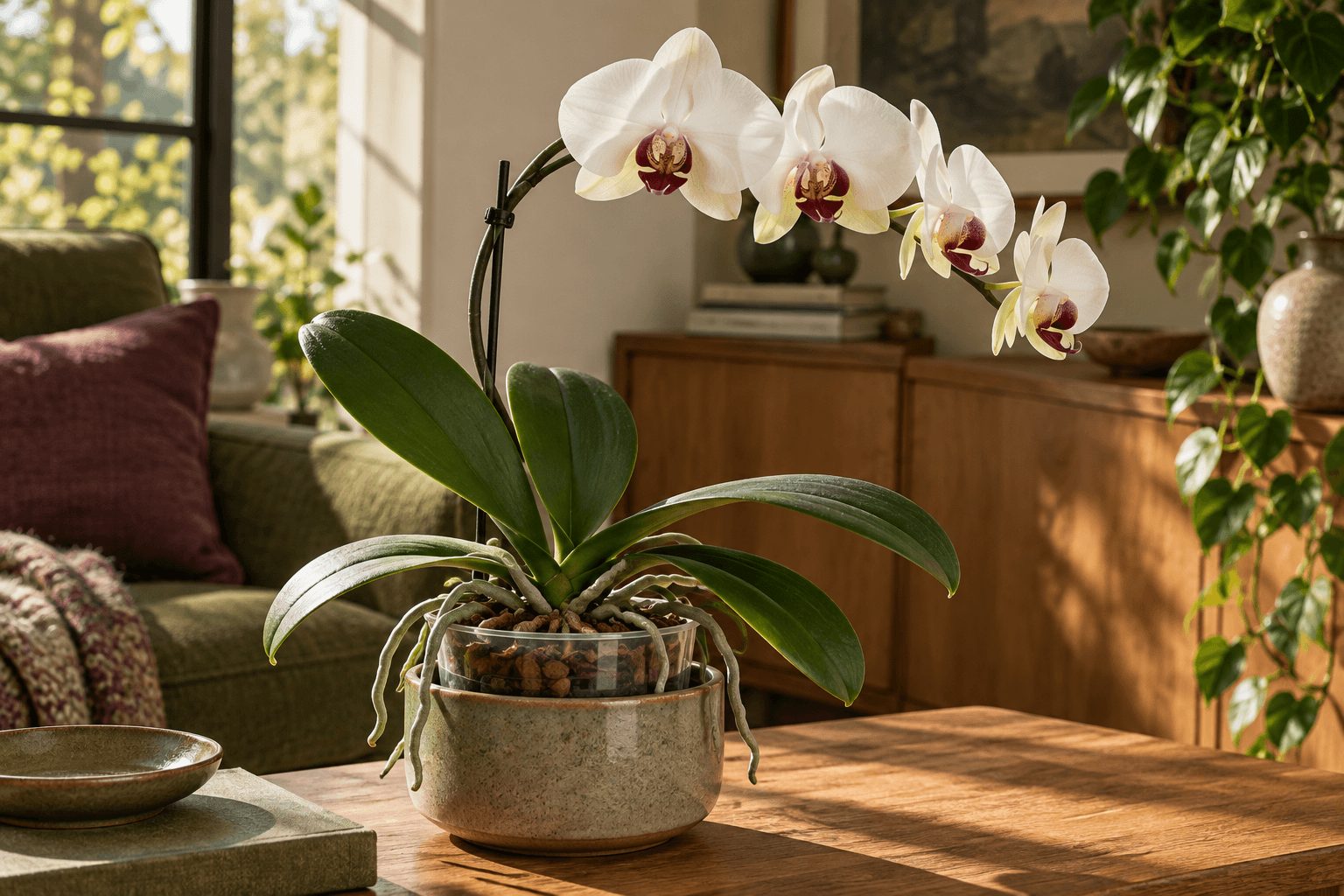
The living plant below the display
A flowering orchid often arrives wrapped in a decorative sleeve, with most attention on the flower stem. Remove packaging that traps water and look at the actual growing pot. Broad basal leaves and firm roots matter after the flowers have fallen. Do not discard a healthy plant because the first display has ended.
Most moth orchids in shops are complex Phalaenopsis hybrids. Their needs differ from orchids sold under other names. Keep the label and start with the type you have rather than applying an instruction meant for every orchid.
Look through the pot
A clear nursery pot can help you inspect roots and medium without repeated unpotting. Roots may look silvery when dry and greener when wet, but colour alone is not the complete test. Feel the weight and check whether the bark is still damp within. Firm aerial roots outside the pot are normal.
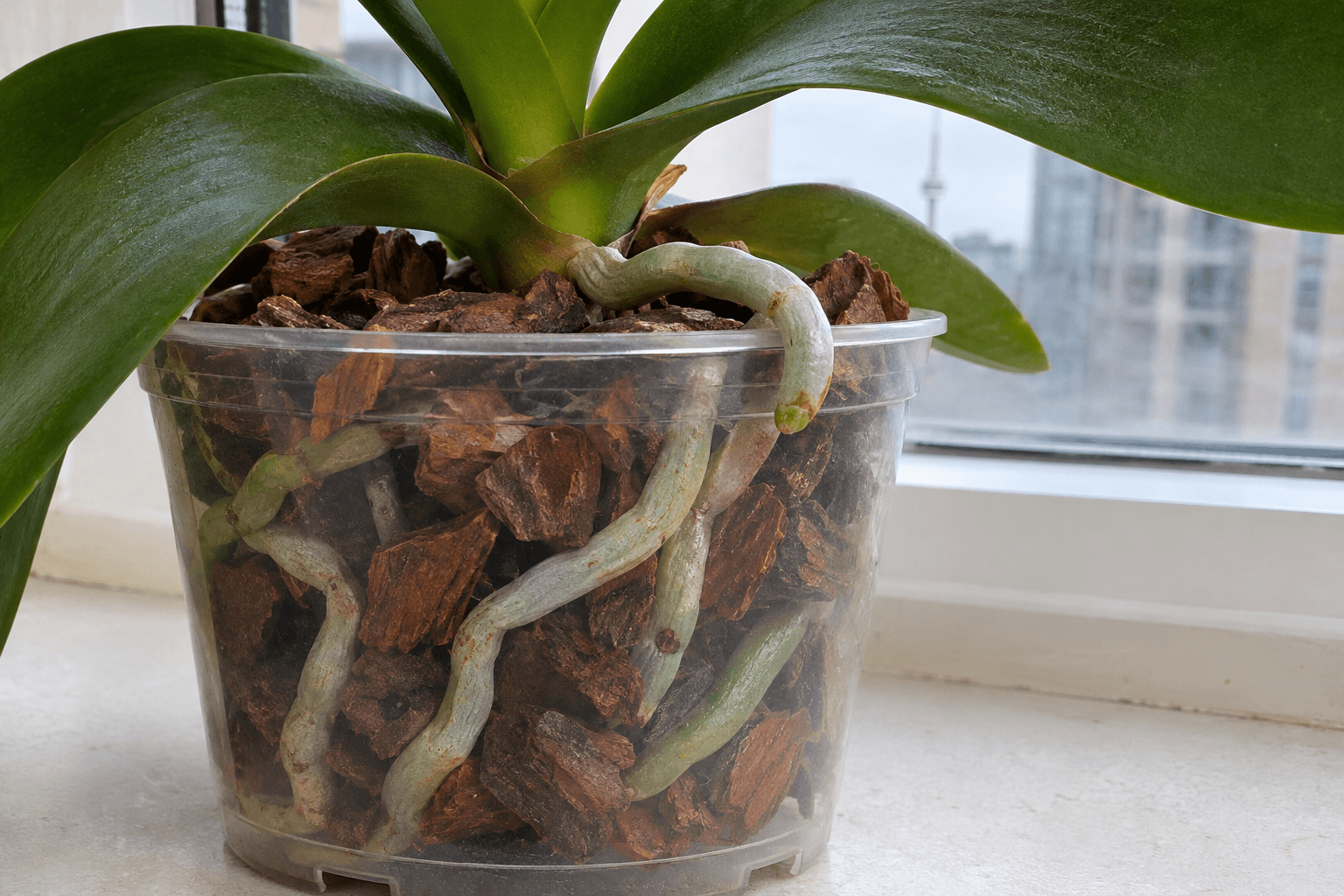
Soft, hollow or decaying roots need closer attention. Do not cut every root that escapes the pot or bury them all in ordinary fine houseplant mix. Moth orchids need an airy root environment; a bark-based orchid medium serves a different purpose from soil for a leafy terrestrial plant.
At the sink, with time to drain
- Remove the growing pot from its outer cover. Check the medium within the pot as well as the visible roots and weight.
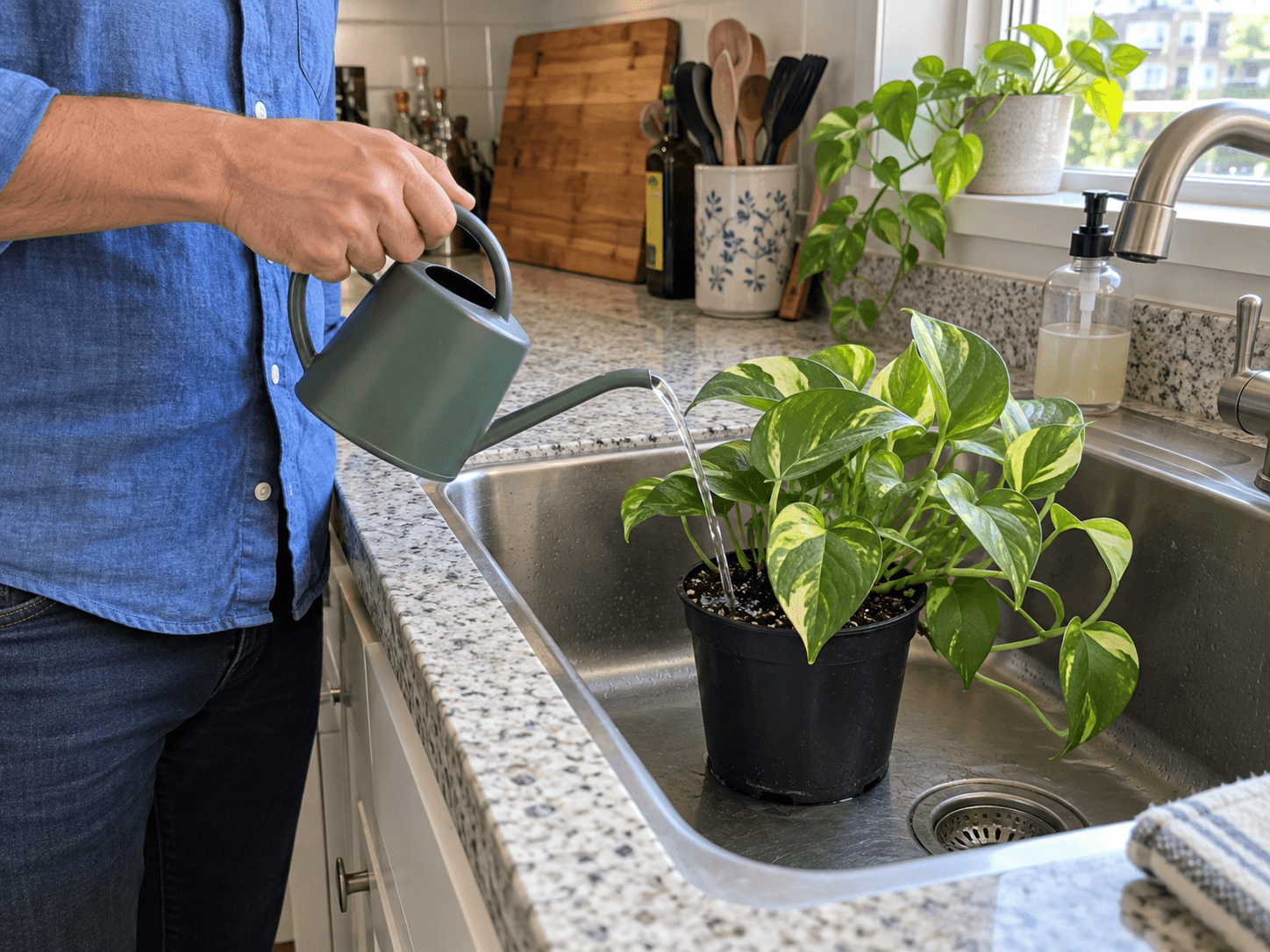
- When the medium is nearly dry, run tepid water through it. Do not wait for every root and the whole pot to become completely dry.
- Let the pot drain completely. Tip away any water trapped between leaves or in the crown.
- Return the pot to an empty cover with air around it.
Avoid treating the attached weekly label as a fixed schedule. A small bark pot dries differently from a tightly packed moss pot. If the plant remains wet for a long time, investigate the medium and container before deciding it wants another drink.
A dry aerial root is not a reason to soak a pot whose centre is still wet. Phalaenopsis has no large water-storage bulbs, so the useful target is a medium approaching dryness, not a long dry rest. Water early enough for any splashed leaves to dry before night.
Make room for the next growth
An east-facing window often gives useful gentle light. Strong afternoon sun needs filtering. Keep the orchid warm and away from cold drafts; do not press leaves against winter glass. Feed during active growth with an appropriate product, following its directions and avoiding excess.
A completely brown flower spike can be removed with clean snips. A green spike may branch, but keeping it is a choice rather than a promise of flowers. Repot when the medium breaks down or the roots need attention, preferably at a suitable growth stage. The next flower is less urgent than a sound root system.
Find a related guide below.
Back to the beginningSources & notes
Care guidance checked against these horticultural references on 20 October 2026.
- NC State Extension: PhalaenopsisHybrid identity, bark media, roots and indoor culture.
- American Orchid Society: Phalaenopsis cultureMoth orchid light, roots, watering, crown care and repotting.
- NC State Extension: Plants grown in containersContainer materials, potting media, nutrition and indoor care.
- University of Maryland Extension: Watering indoor plantsMoisture and pot-weight checks; top and bottom watering.
- Royal Horticultural Society: Growing houseplantsIndoor conditions, seasonal care, humidity and holiday planning.