A little room for a palm
Chamaedorea elegans
Care for a parlour palm in an apartment, understand its separate stems and avoid cutting the growing point to control its height.
The short answer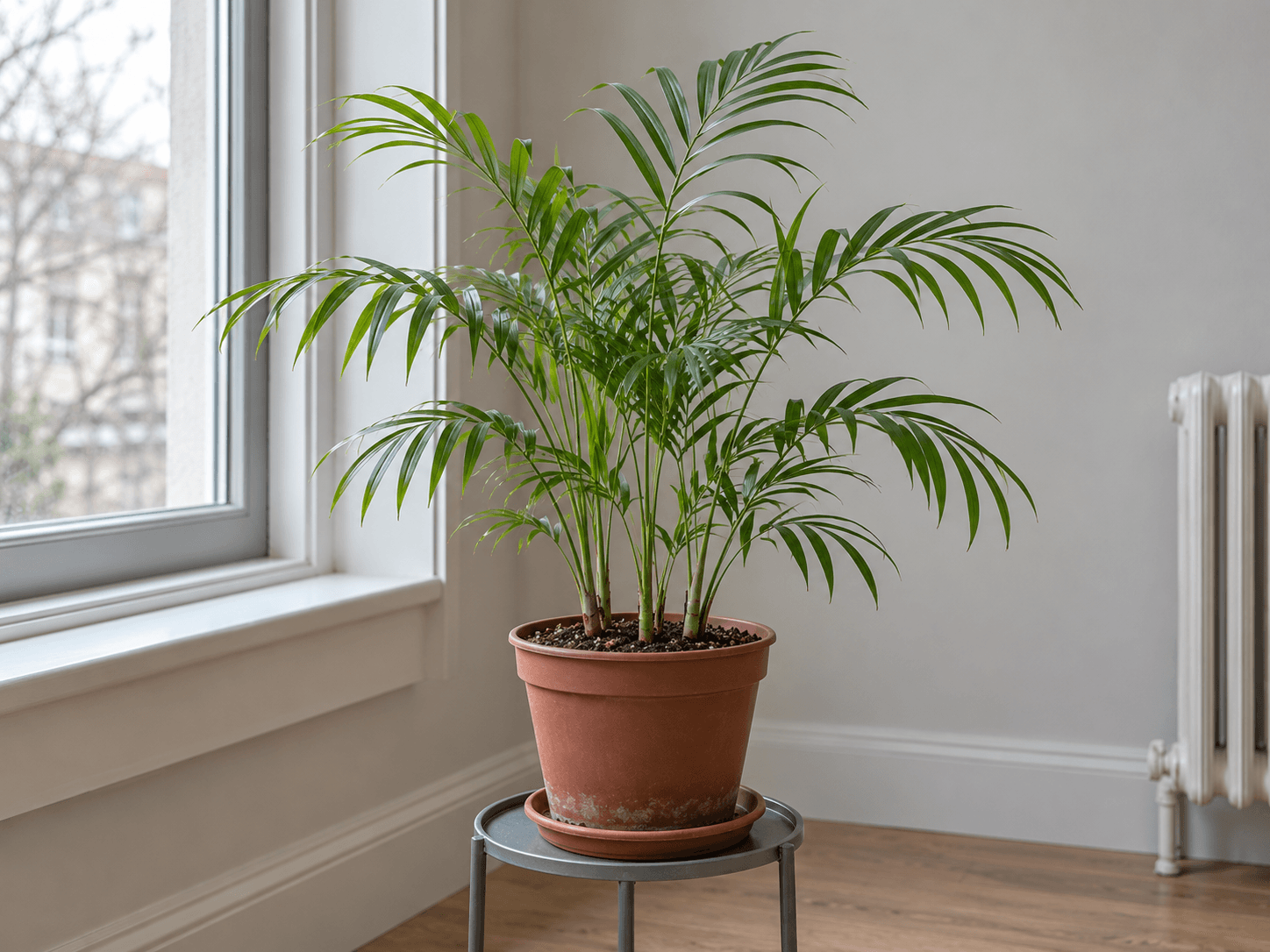
A palm you can identify
The name "palm" covers many different plants, and not every palm-like houseplant has the same needs or safety profile. Look for Chamaedorea elegans on the label. Its fine, feather-like fronds and modest indoor scale make it useful beside a reading chair or desk.
Keep a photograph of the label. That small habit is especially useful when choosing plants for a household with animals, since a common name alone can conceal very different species.
One pot, several individuals
Commercial pots often contain multiple seedlings for a full appearance. Each stem has its own growing point. Do not treat the pot like a shrub that can be cut across the top to make it shorter. Remove an entirely brown frond carefully near its base, leaving green growth alone.
If one stem declines, inspect it and the shared root environment before assuming every stem is dying. Crowding and competition can change the appearance over time. A little space between pots makes it easier to see which fronds belong to which plant.
A workable window and a draining pot
A north- or east-facing window can be a useful starting point, though neighbouring buildings and trees change the result. Keep the palm out of harsh direct sun and away from cold glass or drafts. It tolerates lower light but still needs a light source.
Let the upper mix dry slightly, then water and drain. Avoid leaving the pot in collected water. A root ball that dries completely and repeatedly is a different problem from one that never gets a little air. Use pot weight and the actual mix rather than a weekly instruction.
The fronds are your inspection route
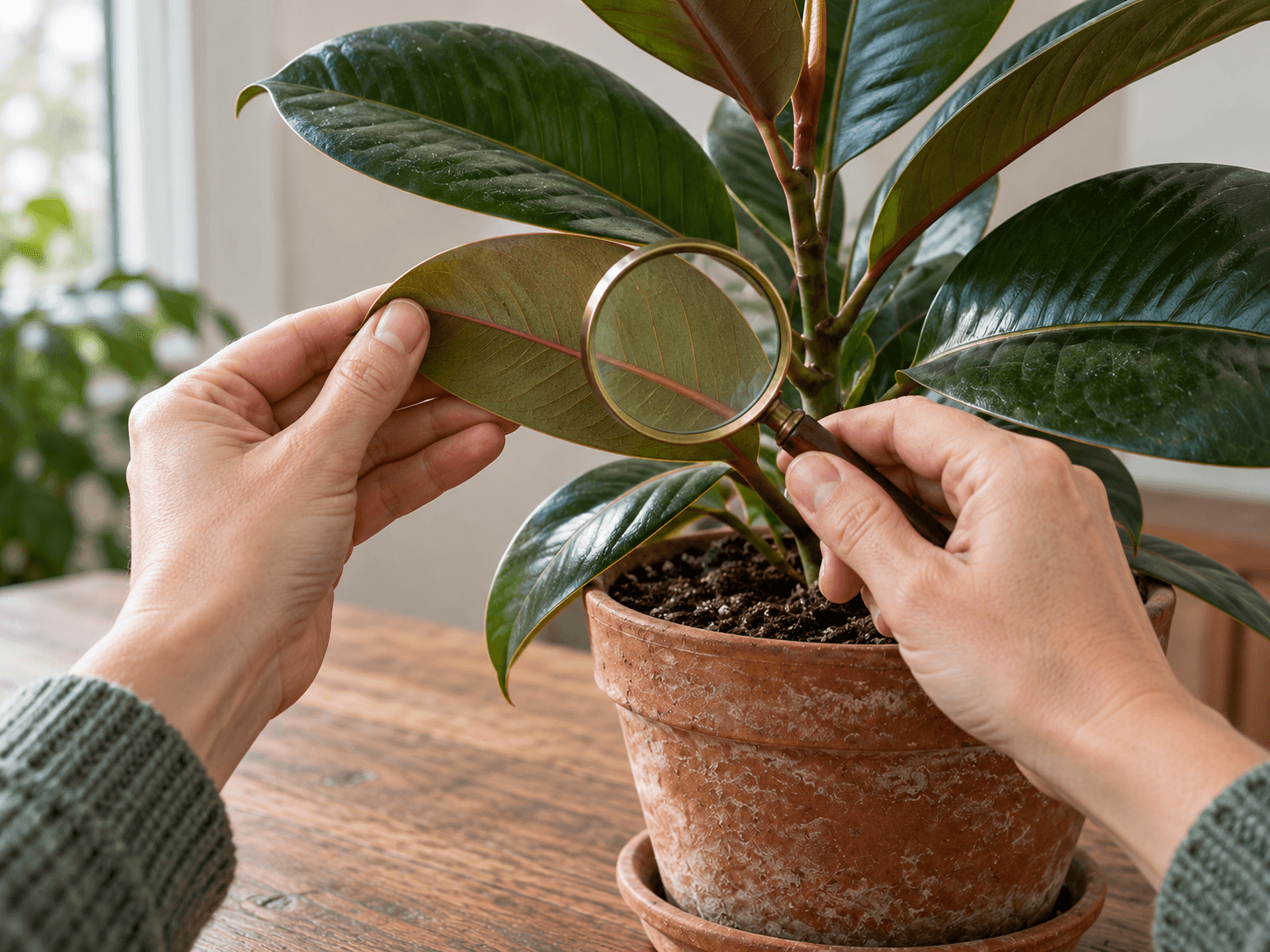
Spread the fronds gently and look at the undersides and where leaflets join. Fine stippling or webbing deserves closer inspection for mites; a single brown tip is not enough to identify a pest. Rinse or wipe dust carefully without pulling on the slender stems.
ASPCA includes parlour palm among its pet-friendly choices. Still secure the pot and keep soil treatments out of reach. Do not substitute a different plant labelled simply "palm" on that basis. If a pet has chewed an unidentified plant, ask a veterinarian rather than relying on its silhouette.
Find a related guide below.
Back to the beginningSources & notes
Care guidance checked against these horticultural references on 20 October 2026.
- NC State Extension: Chamaedorea elegansSolitary stems, indoor light, watering and growth habit.
- ASPCA: Pet-friendly plant choicesSpider plant and parlour palm choices for homes with cats and dogs.
- University of Minnesota Extension: Managing insects on indoor plantsInspection, isolation, pest signs and integrated management.
- University of Maryland Extension: Potting and repottingRoot-ball placement, aeration and why not to add gravel.