A spider plant to share
Chlorophytum comosum
Care for Chlorophytum comosum, investigate brown leaf tips and root a plantlet without making the parent plant a project.
The short answer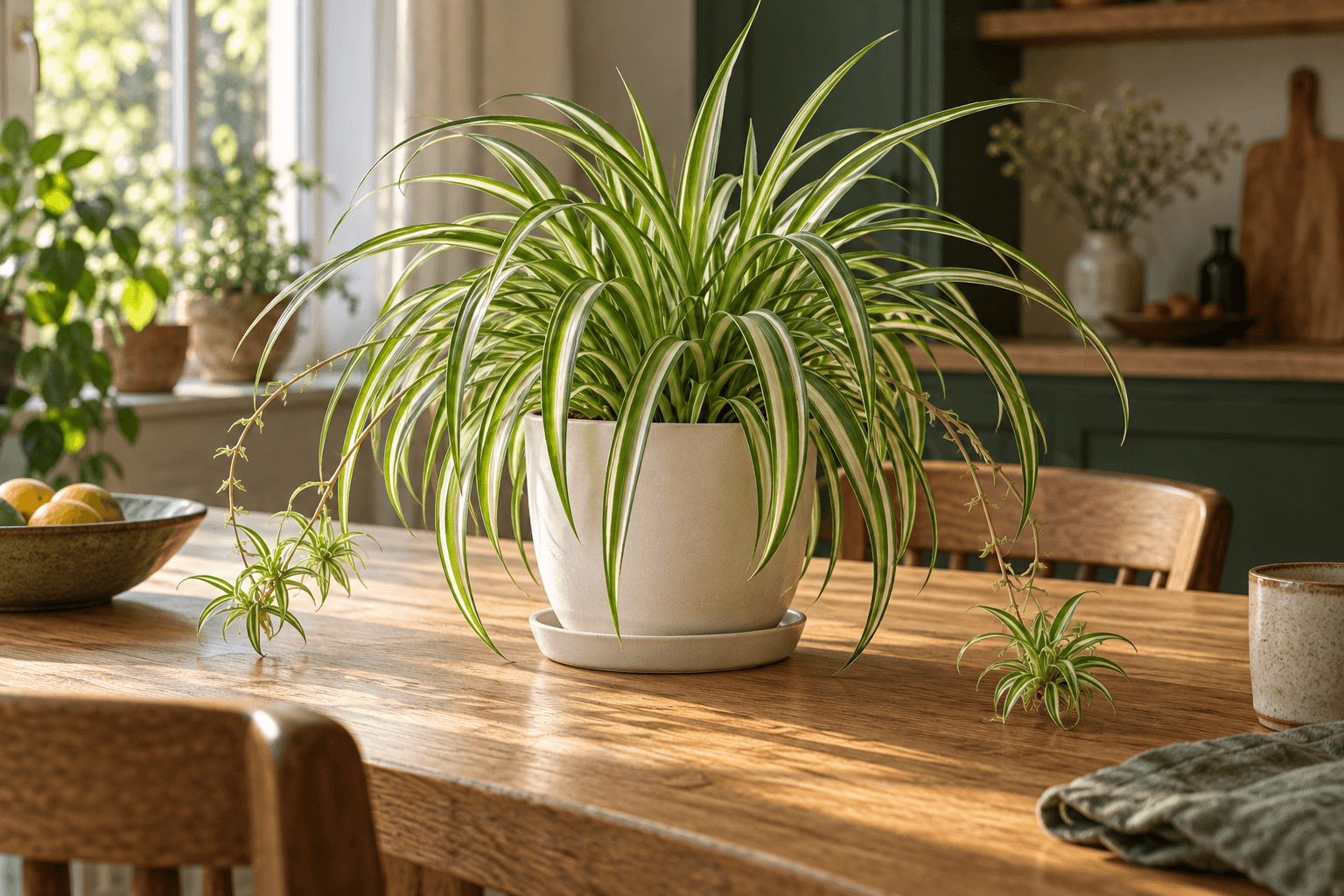
Leave room for the runners
A spider plant needs room for its leaves to arch. On a crowded shelf, the tips catch against books and neighbouring pots, and new runners disappear behind furniture. A stable stand or a hanging pot with a secure fixing lets the shape develop. Keep it somewhere you can still reach for inspection.
The plantlets make a lively display, but they are optional. A plant without babies is not automatically unhealthy. Light and day length influence their formation; fertilizer is not a reliable shortcut.
Check the roots as well as the leaves
The roots can become dense and fleshy. If a pot repeatedly dries much faster than it used to, check the root ball before deciding the plant needs daily water. Conversely, a larger pot does not automatically need more water when the surface looks dry. Feel the mix and compare its weight.
Water evenly, let the pot drain, and keep the growing pot out of collected runoff. Spider plants tolerate some missed attention, but repeated severe drying and soaking can leave a visible record at the tips. In a winter apartment, check the location of heating vents as well as the window.
Brown ends need a little detective work
NC State notes sensitivity to fluorides and other water-quality factors. Fertilizer buildup, dry spells and damaged roots can also be part of the picture. Start with the recent care history rather than buying several remedies. If water quality seems relevant, try a consistent lower-mineral water source for a period and watch new growth.
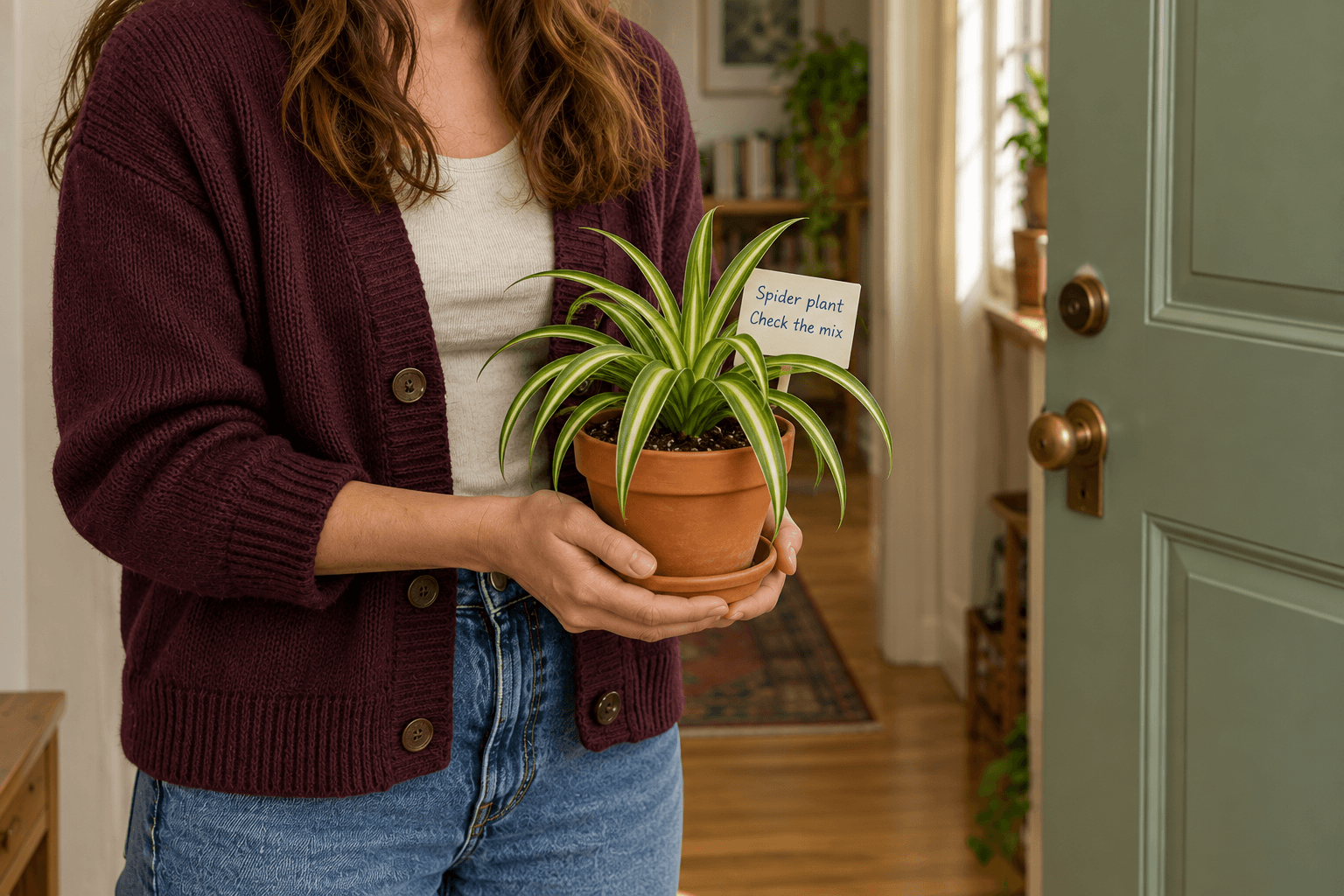
Make a rooted gift
- Choose a healthy plantlet with visible small root nubs.
- Set its base against fresh, lightly moist potting mix in a small draining pot, still connected to the parent.
- Keep the base in contact with the mix and check moisture gently.
- Once rooted and holding in the mix, cut the connecting runner with clean snips.
ASPCA lists spider plant as non-toxic to cats and dogs. That does not make a leaf a snack or a hanging planter safe to pull down. Choose secure placement and keep fertilizer and potting materials out of reach.
Find a related guide below.
Back to the beginningSources & notes
Care guidance checked against these horticultural references on 20 October 2026.
- NC State Extension: Chlorophytum comosumPlantlets, light, moisture and leaf-tip sensitivity.
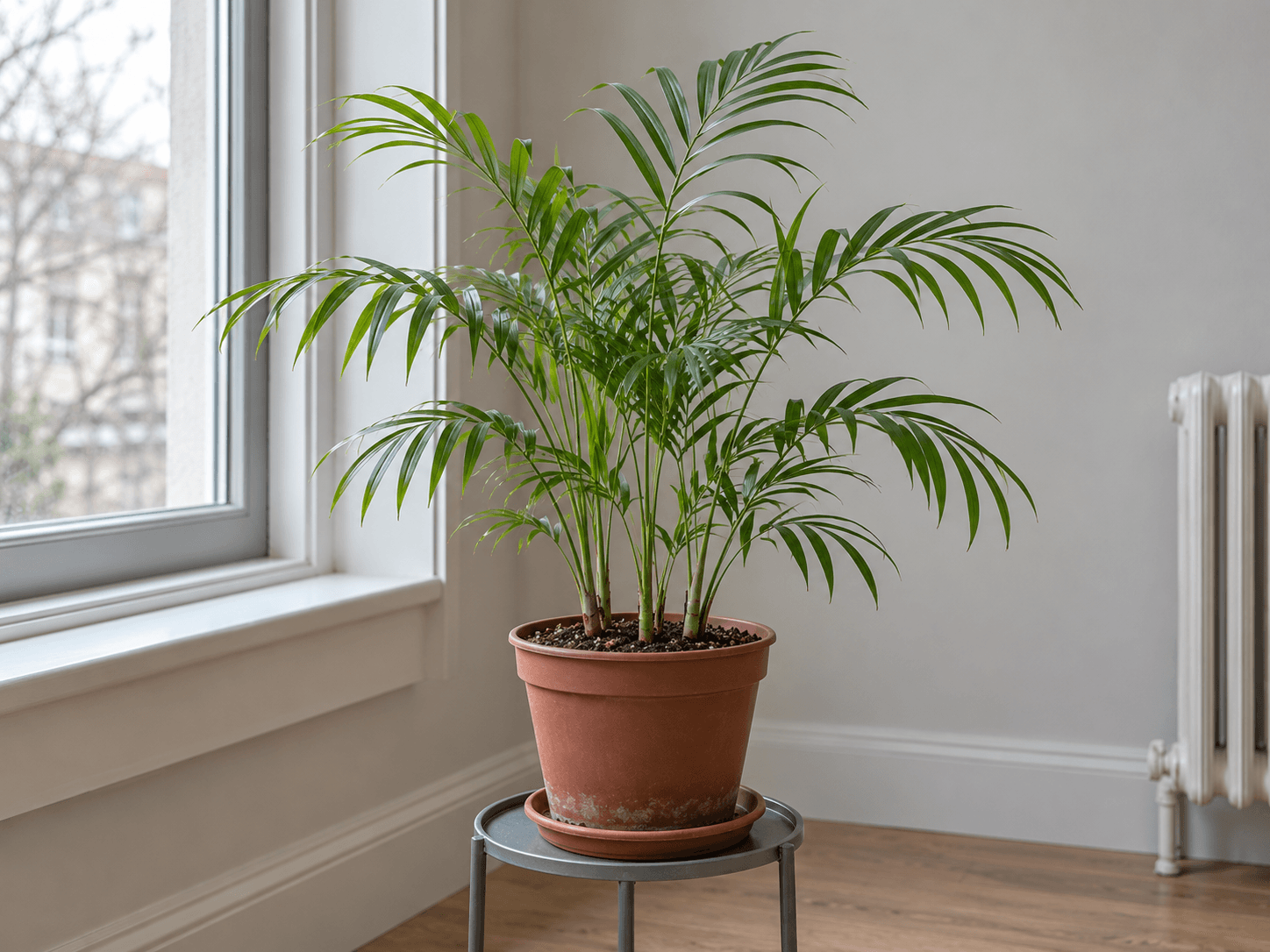
- ASPCA: Pet-friendly plant choicesSpider plant and parlour palm choices for homes with cats and dogs.
- University of Maryland Extension: Watering indoor plantsMoisture and pot-weight checks; top and bottom watering.
- Iowa State University Extension: Propagating houseplantsSpecies-appropriate stem cuttings, divisions and plantlets.