Leave enough room to lift the pot
A useful plant shelf needs more than enough space for the pots. Leave light, leaf room and a clear path for everyday care.
The short answer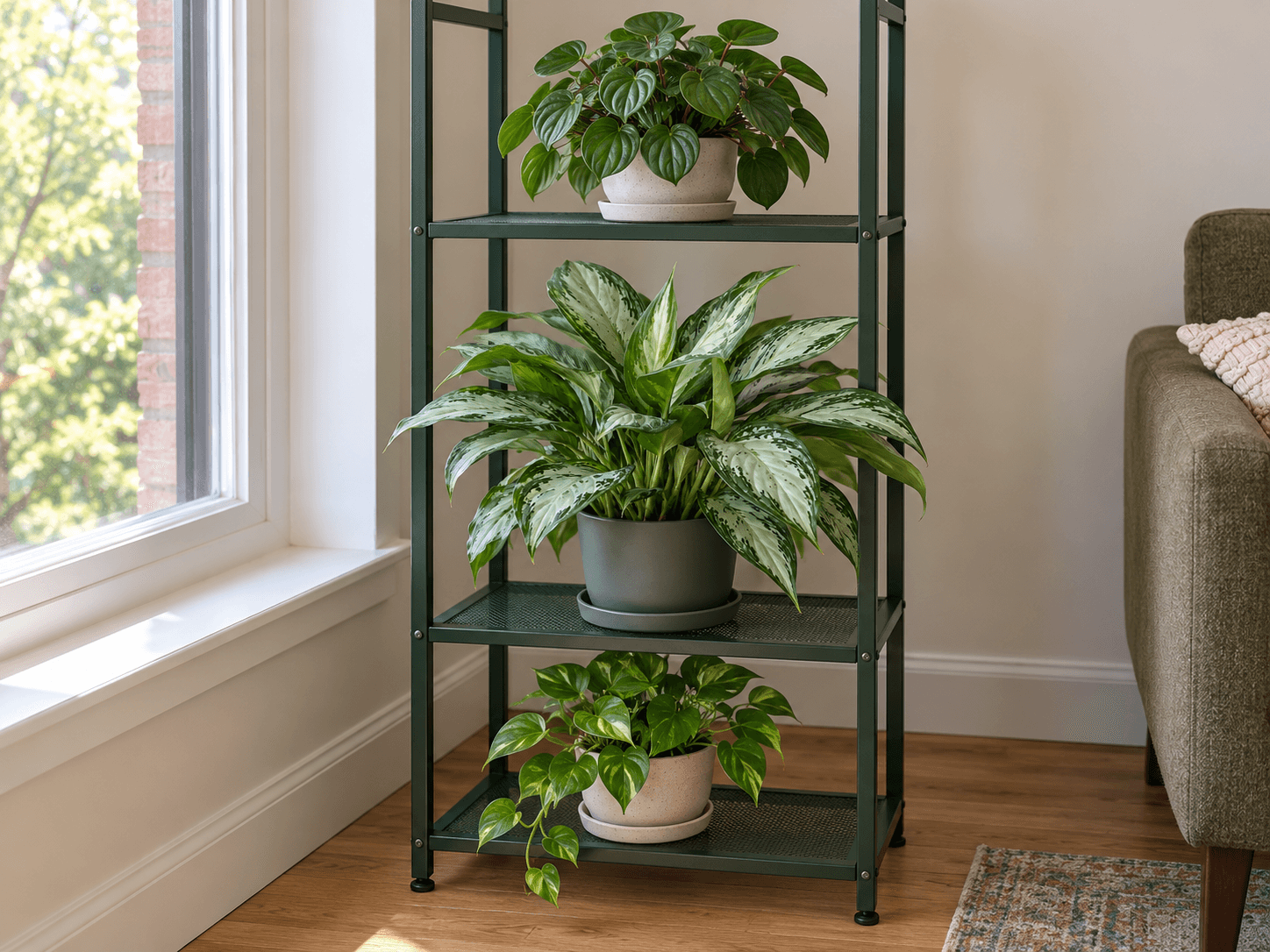
Check the lower shelf too
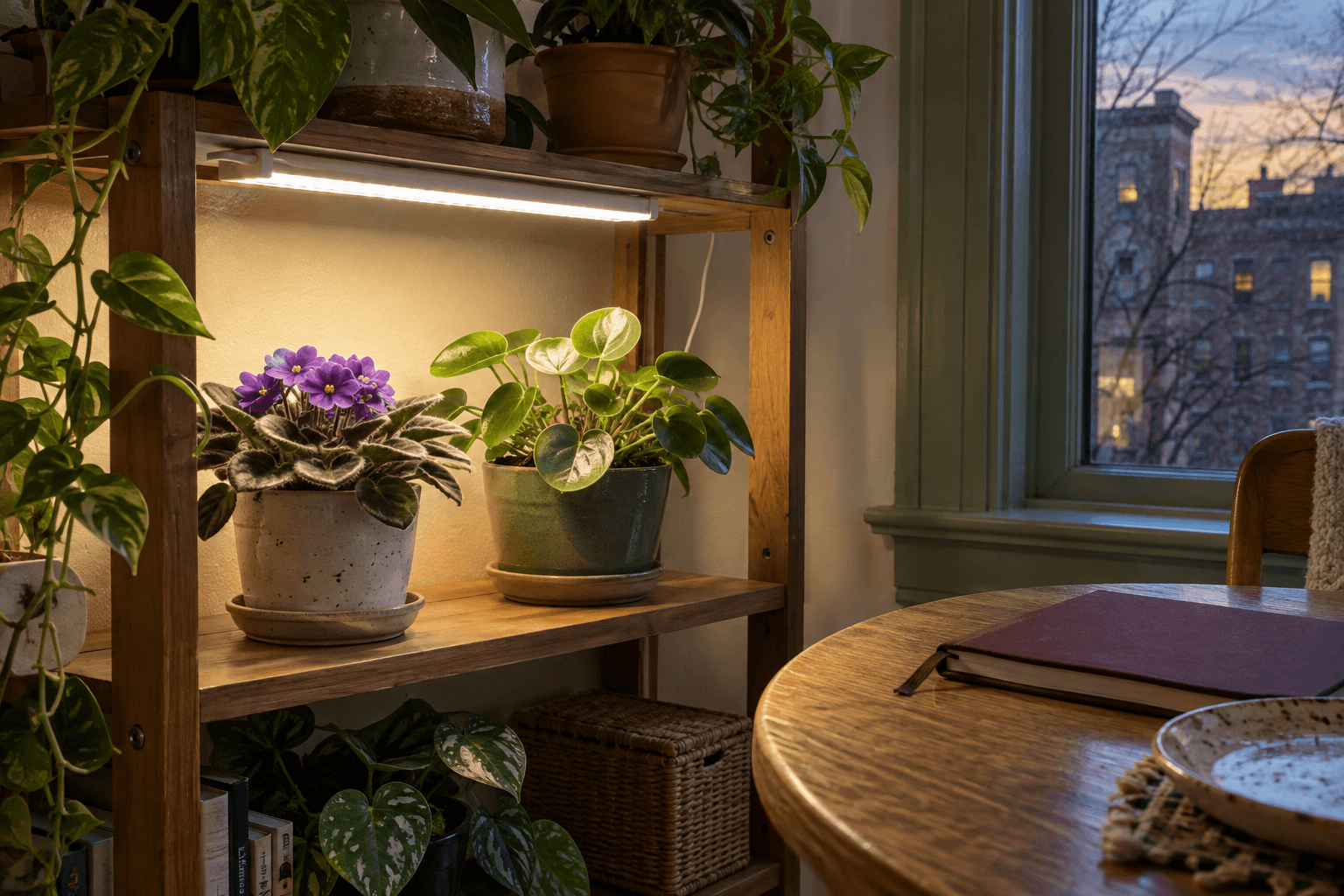
Stand beside the proposed rack and look from leaf height. The top board, neighbouring foliage and a window frame can shade a lower tier. A bright room does not give every shelf the same conditions. Observe the position at different times before assigning plants to it.
Put plants with compatible light needs where that light reaches their leaves. If a shelf needs supplemental lighting, plan the fixture and its coverage before filling the space. The separate grow-light guide covers mounting distance and timing. Moving a struggling pot between shelves each week makes its conditions harder to understand.
Measure the plant, not just its container
| Space | What needs to fit |
|---|---|
| Above the pot | The present leaves, new growth and enough clearance to lift the container out. |
| Across the shelf | The foliage spread and your hands, without crushing a neighbouring leaf. |
| In front | A clear route for carrying a drained pot back to its place. |
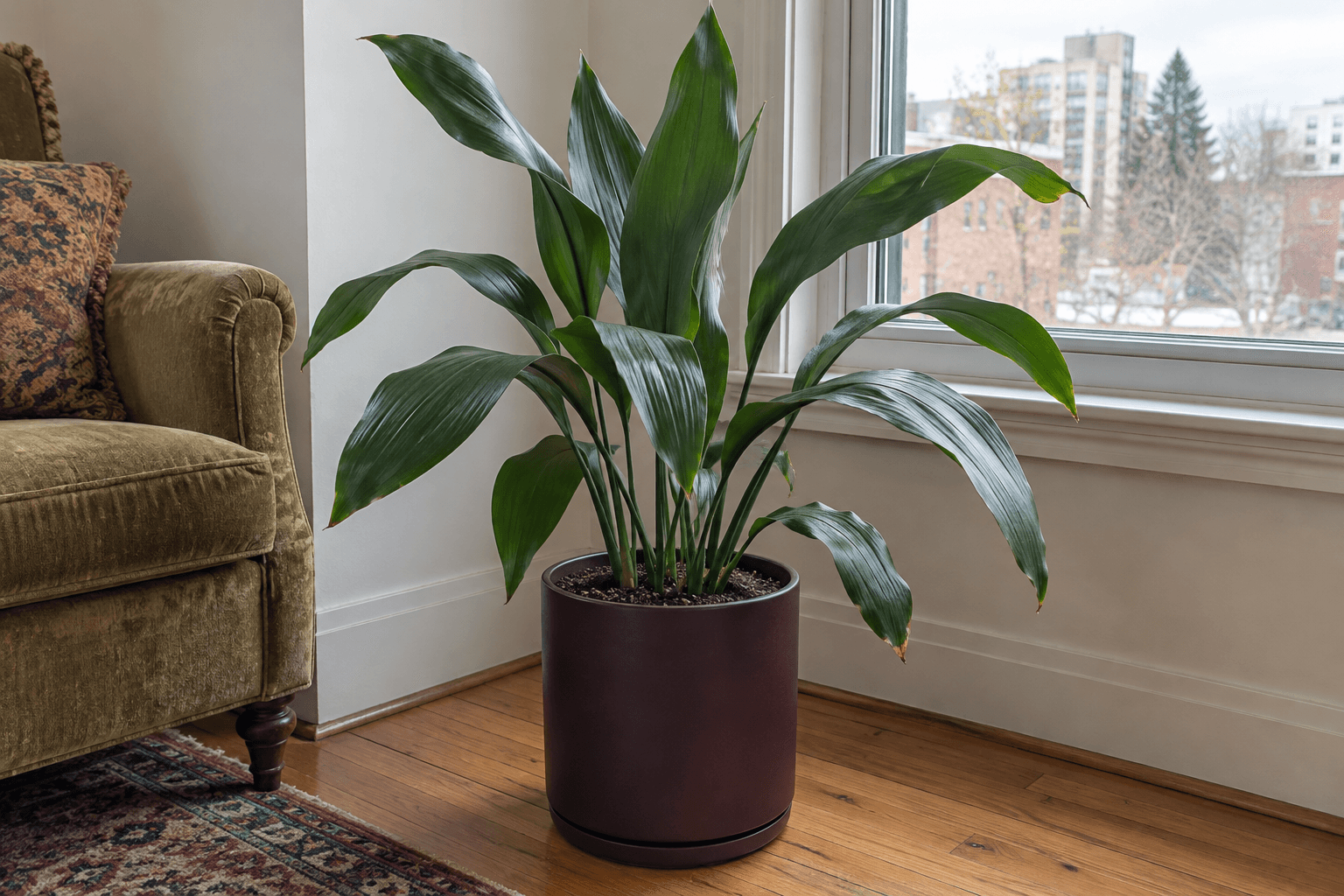
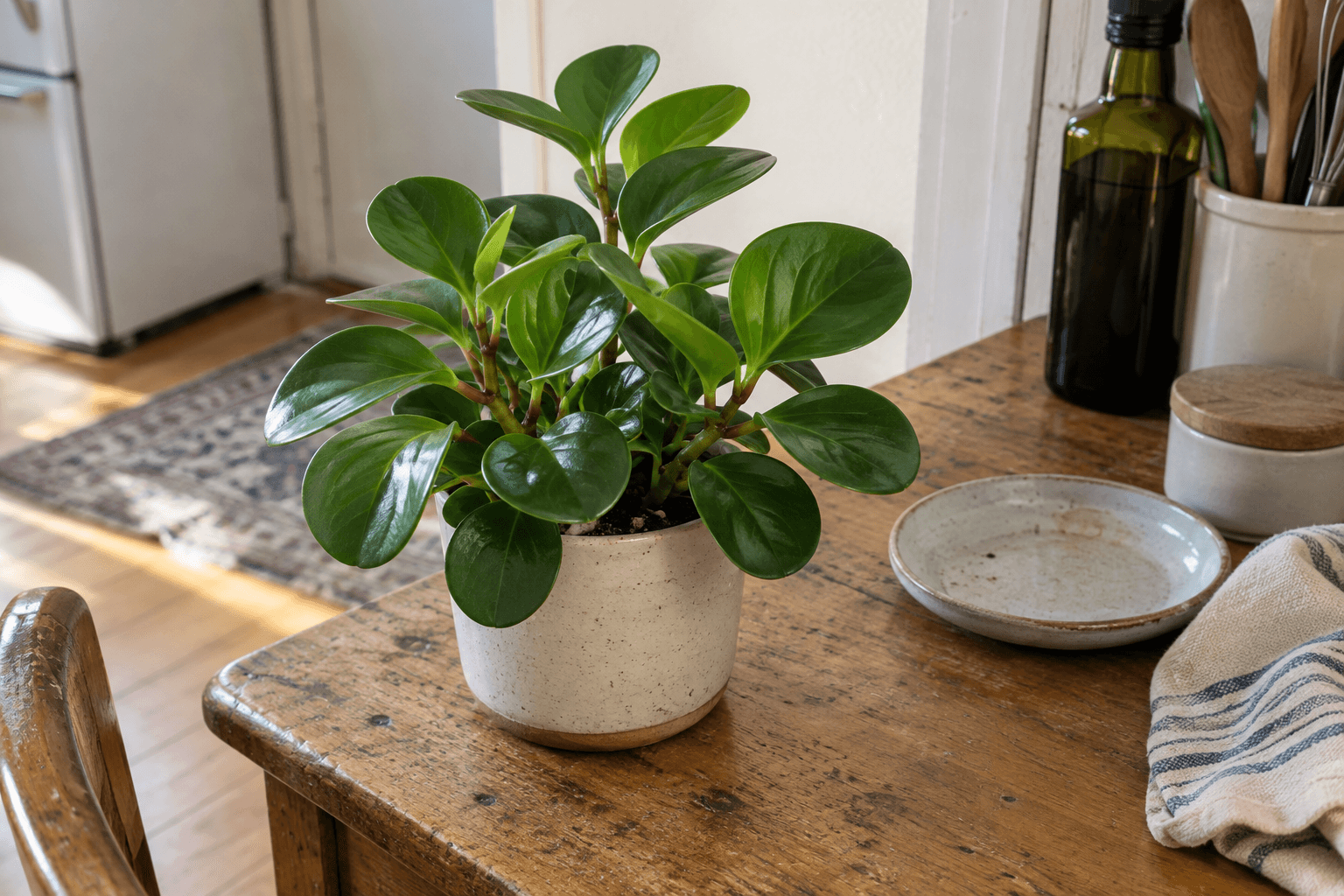
A juvenile climbing plant and a compact peperomia use space differently. Keep an exit plan for a vine that starts climbing the rack or a broad leaf that reaches the shelf above. Fewer accessible pots are easier to maintain than a full display that must be dismantled for every check.
Try the watering journey
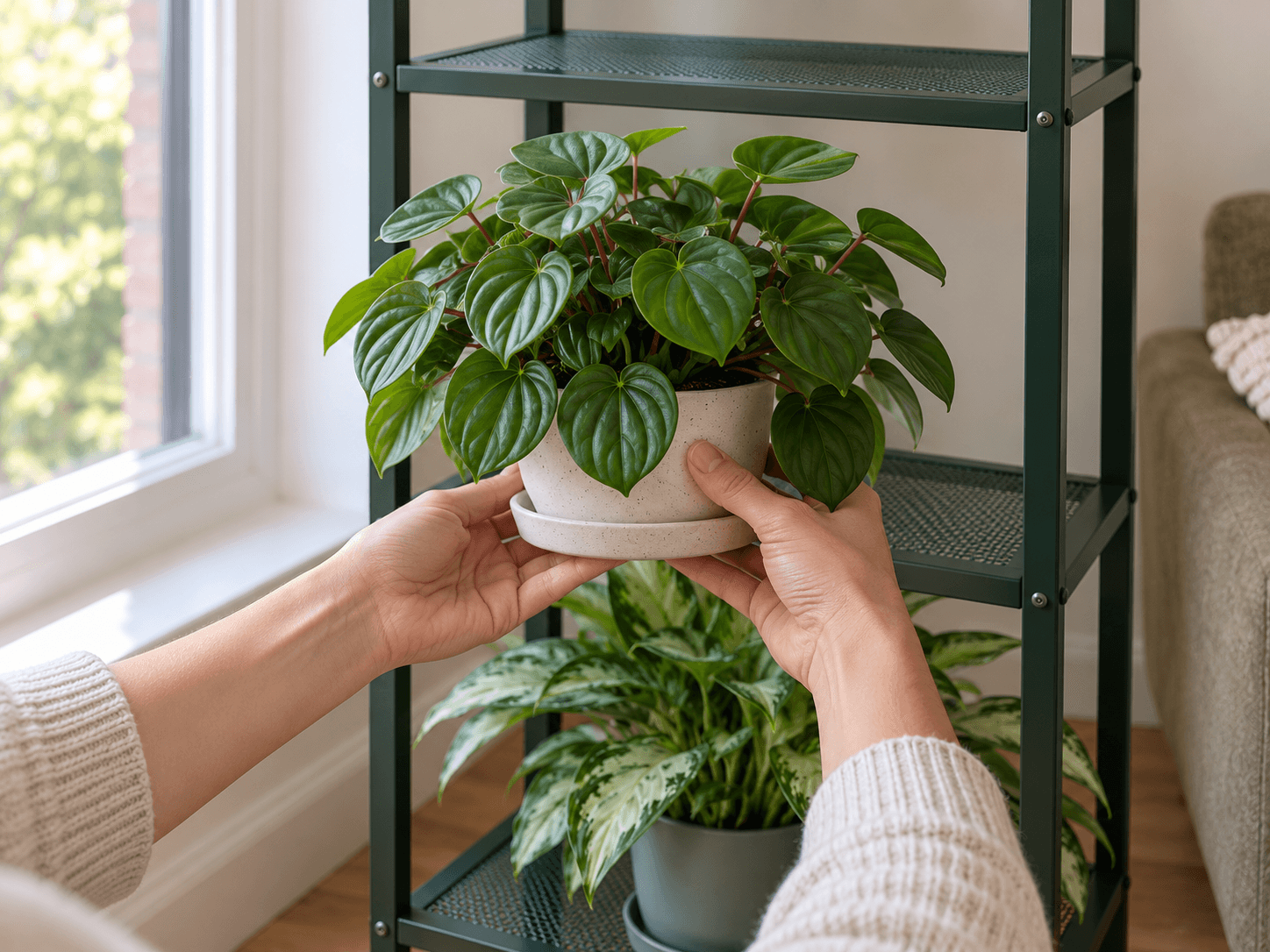
Use empty pots to try the arrangement first. Can you reach the far one with both hands? Can you see its mix and check beneath it? Keep a suitable saucer under each draining pot and remove collected water. A decorative cover pot still needs a way to check and empty its hidden base.
If you water at a sink, return the plant after it has drained. Avoid carrying it above another plant or electrical equipment. Keep light connections away from splashes and follow the equipment instructions. A reachable control is useful; a cord trapped behind a heavy collection is not.
Give the arrangement a regular check
Use shelving and fixings appropriate to the wall, location and combined load, including water and containers. Follow the maker's requirements for anchoring or assembly. Keep heavy pots low and do not assume that an attractive narrow stand is stable when a trailing stem is pulled.
As growth fills the gaps, check the light and lifting route again. Move a plant to a better-sized place before it becomes tangled into the furniture. The useful limit is the collection you can inspect, water and clean comfortably.
Find a related guide below.
Back to the beginningSources & notes
Care guidance checked against these horticultural references on 20 October 2026.
- University of Minnesota Extension: Lighting for indoor plantsWindow exposures, low-light limits and supplemental lighting.
- University of Maryland Extension: Watering indoor plantsMoisture and pot-weight checks; top and bottom watering.
- University of Maryland Extension: Potting and repottingRoot-ball placement, aeration and why not to add gravel.