A peperomia for the small table
Peperomia obtusifolia
The baby rubber plant stays manageable. Its thick leaves and modest roots call for a different routine from a full-size rubber tree.
The short answer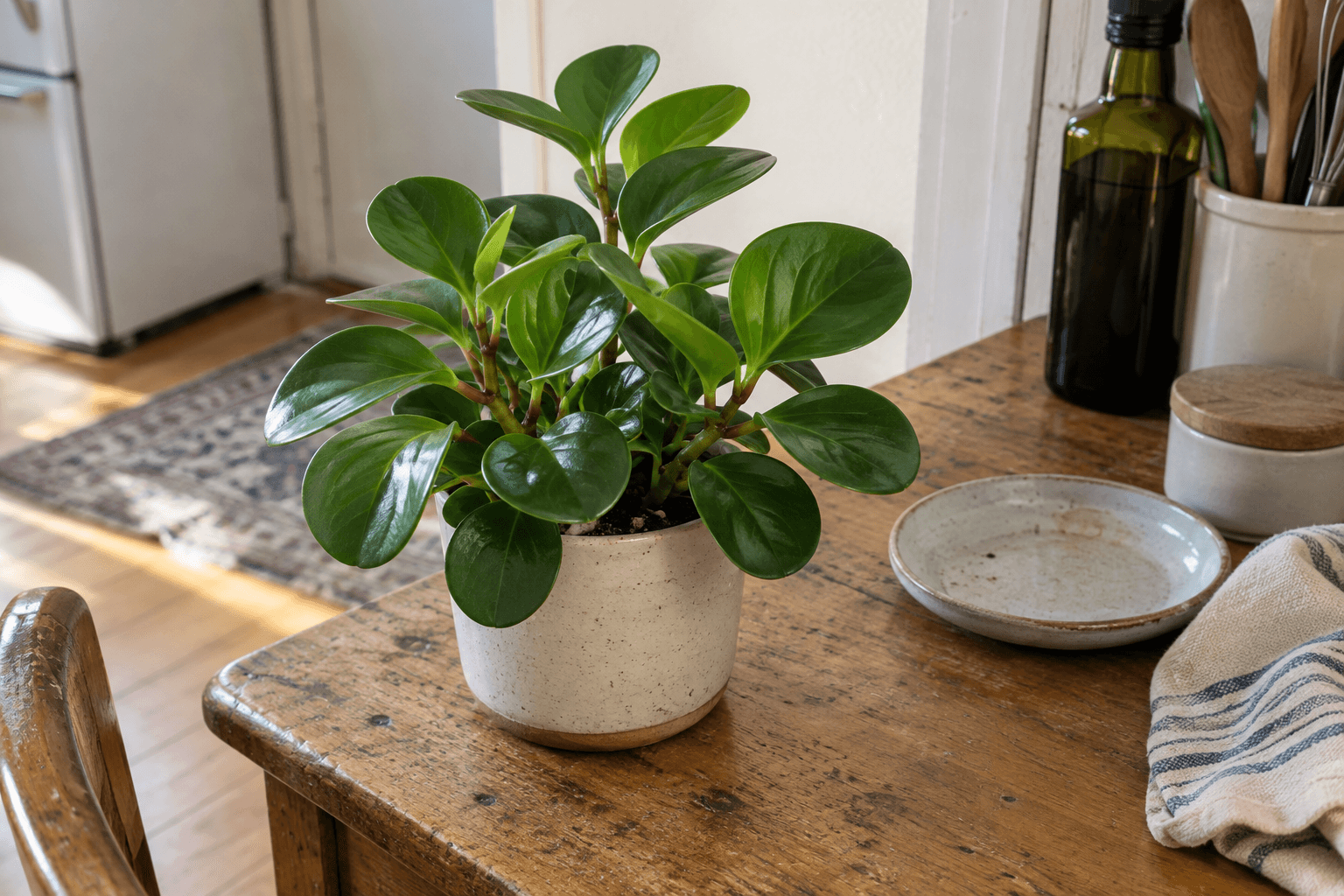
The smaller rubber plant
A peperomia can occupy the bit of table left after the lamp, book and breakfast plate. Look for rounded, spoon-shaped leaves on short branching stems. A plant labelled baby rubber plant is usually this species; the much larger rubber tree is Ficus elastica. Keep the label, because their eventual size is quite different.
A useful patch of daylight
Choose a position with a good view of the window, protected from prolonged strong sun. Green forms tolerate a less bright position better than heavily variegated ones. A desk across a deep room may feel bright to you while offering very little growing light. Check from leaf height before committing the pot to that corner.
Lift the pot first
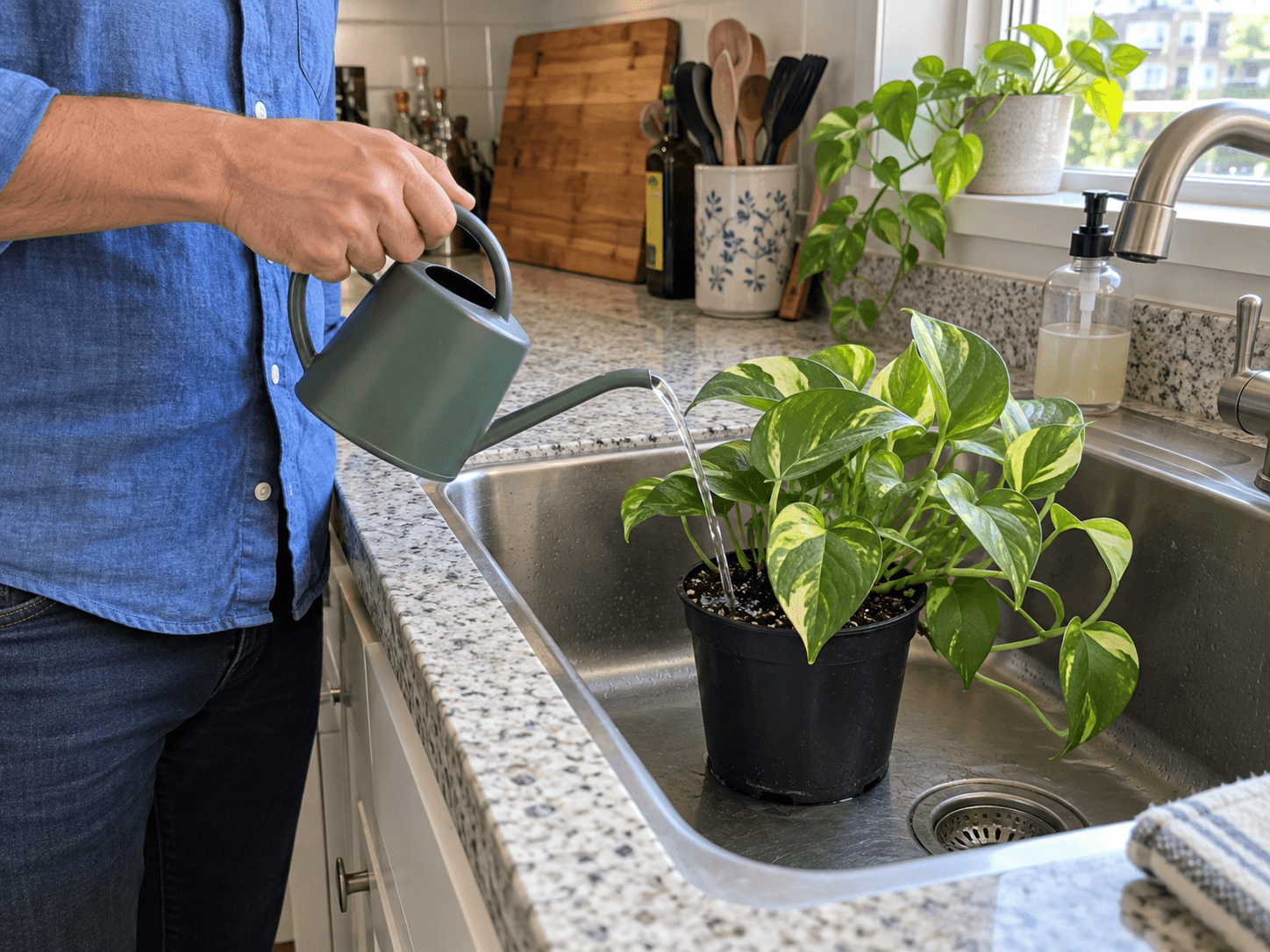
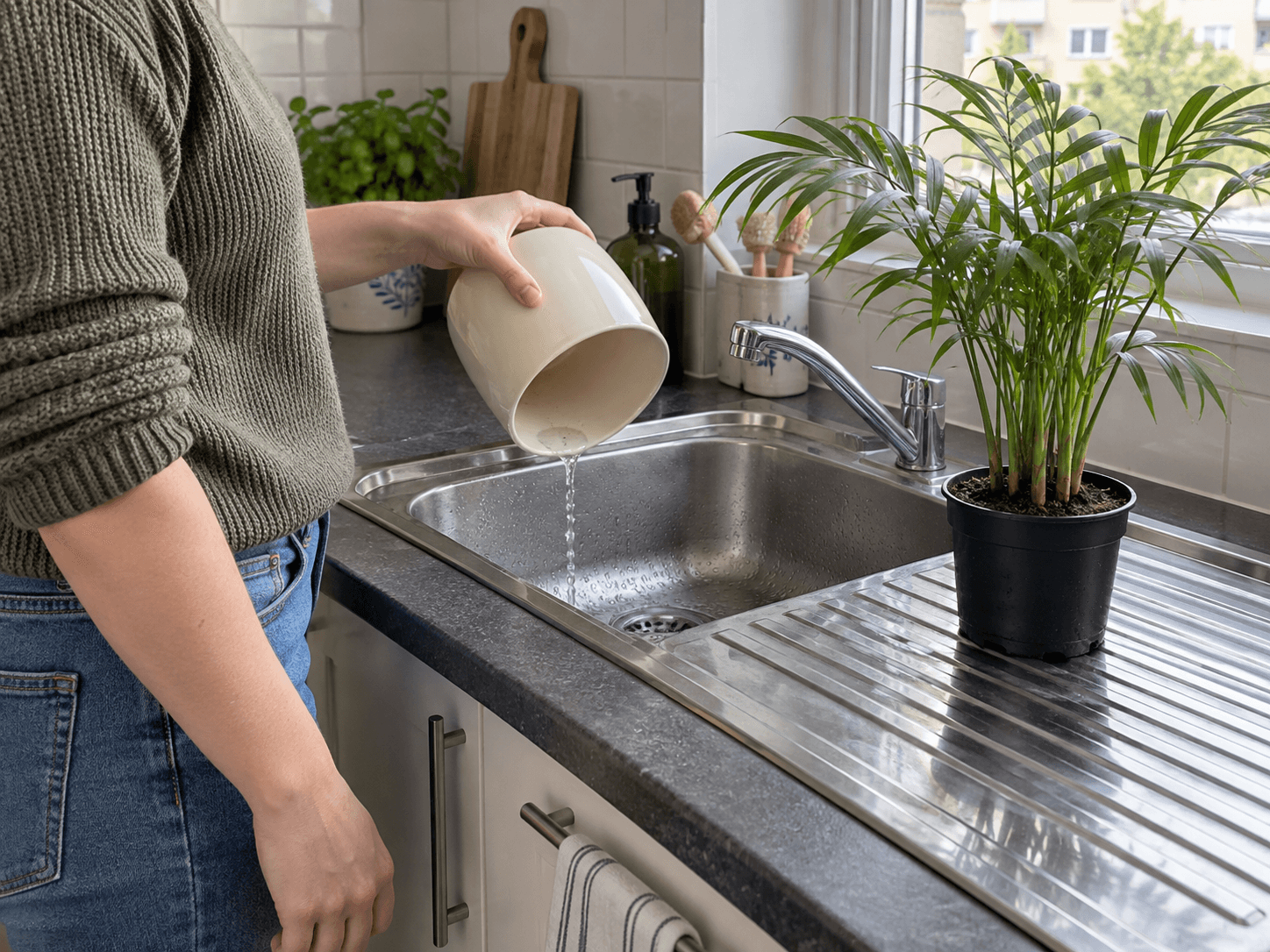
Use a porous houseplant medium and check below the surface before reaching for water. A small root system can remain wet inside an oversized container long after the top looks dry. Water the whole root ball when needed, let excess escape, and empty the outer pot. Avoid both persistent saturation and repeated severe drying.
Leave room for a little growth
New leaves should emerge firm and develop normally. Yellowing combined with wet mix warrants a root and drainage check, not extra feed. Slender cream flower spikes are normal. Keep the plant where you can turn the pot, inspect leaf undersides and remove fallen leaves without first clearing an entire shelf. That access matters more than a perfect arrangement.
Find a related guide below.
Back to the beginningSources & notes
Care guidance checked against these horticultural references on 20 October 2026.
- NC State Extension: Peperomia obtusifoliaBotanical identity, fleshy foliage, light and root moisture.
- University of Maryland Extension: Watering indoor plantsMoisture and pot-weight checks; top and bottom watering.
- University of Minnesota Extension: Lighting for indoor plantsWindow exposures, low-light limits and supplemental lighting.