A fern beside the towels?
A bathroom can suit a plant, but steam alone does not make a growing space. Check the window and the daily routine first.
The short answer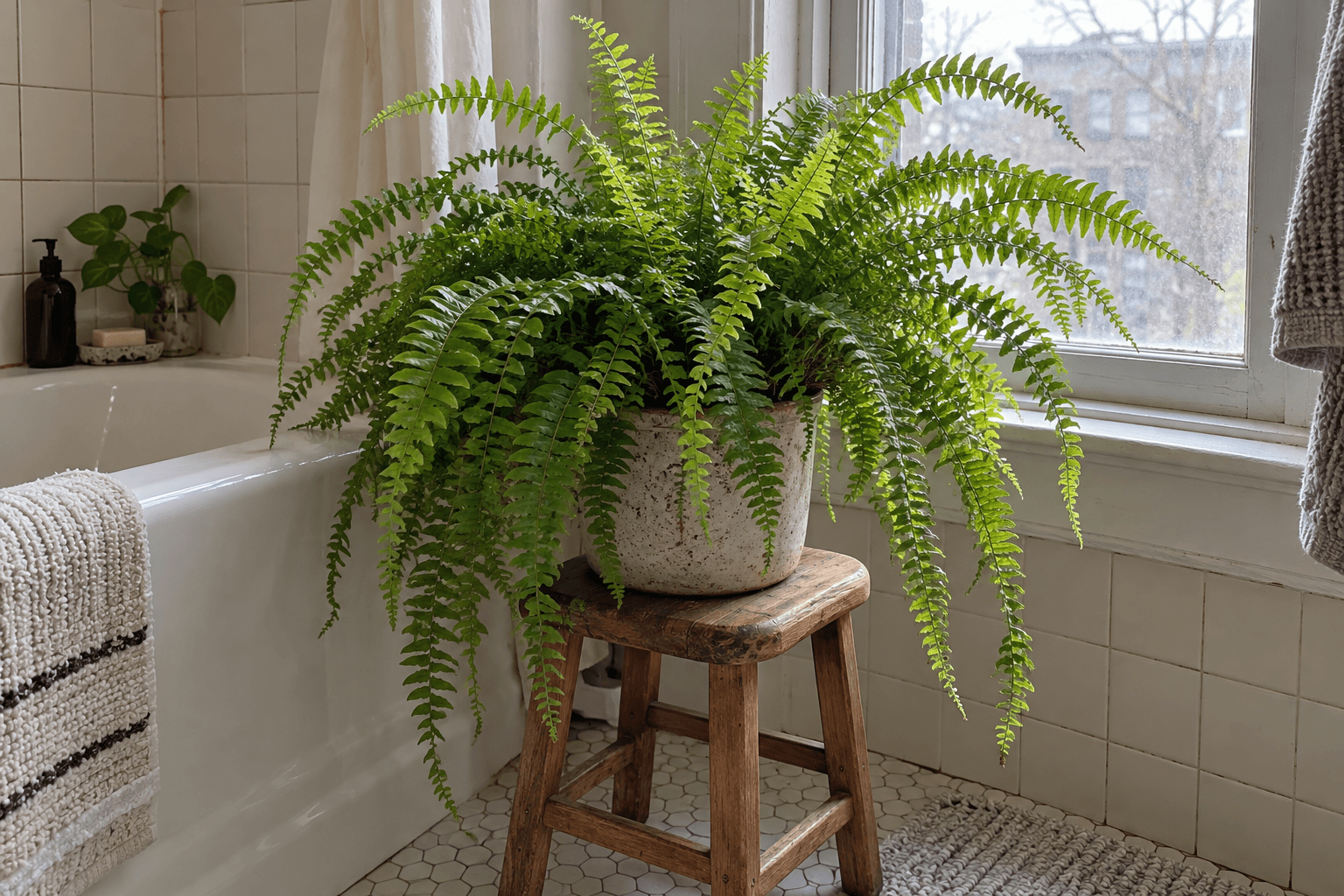
Visit between showers
Look at the room when nobody is using it. Is there daylight at the shelf, or only at the top of a frosted window? Does the room become cold overnight? A bathroom's plant conditions are the hours between showers as well as the few steamy minutes you notice while brushing your teeth.
Keep the shelf practical
Choose a stable position clear of direct shower spray, cleaning products and busy elbows. You should be able to lift the pot down without balancing on a wet surface. Do not place a heavy fern where its fronds obstruct a handle or the only route to a window. Mature width matters as much as pot diameter.
Match the plant to the room
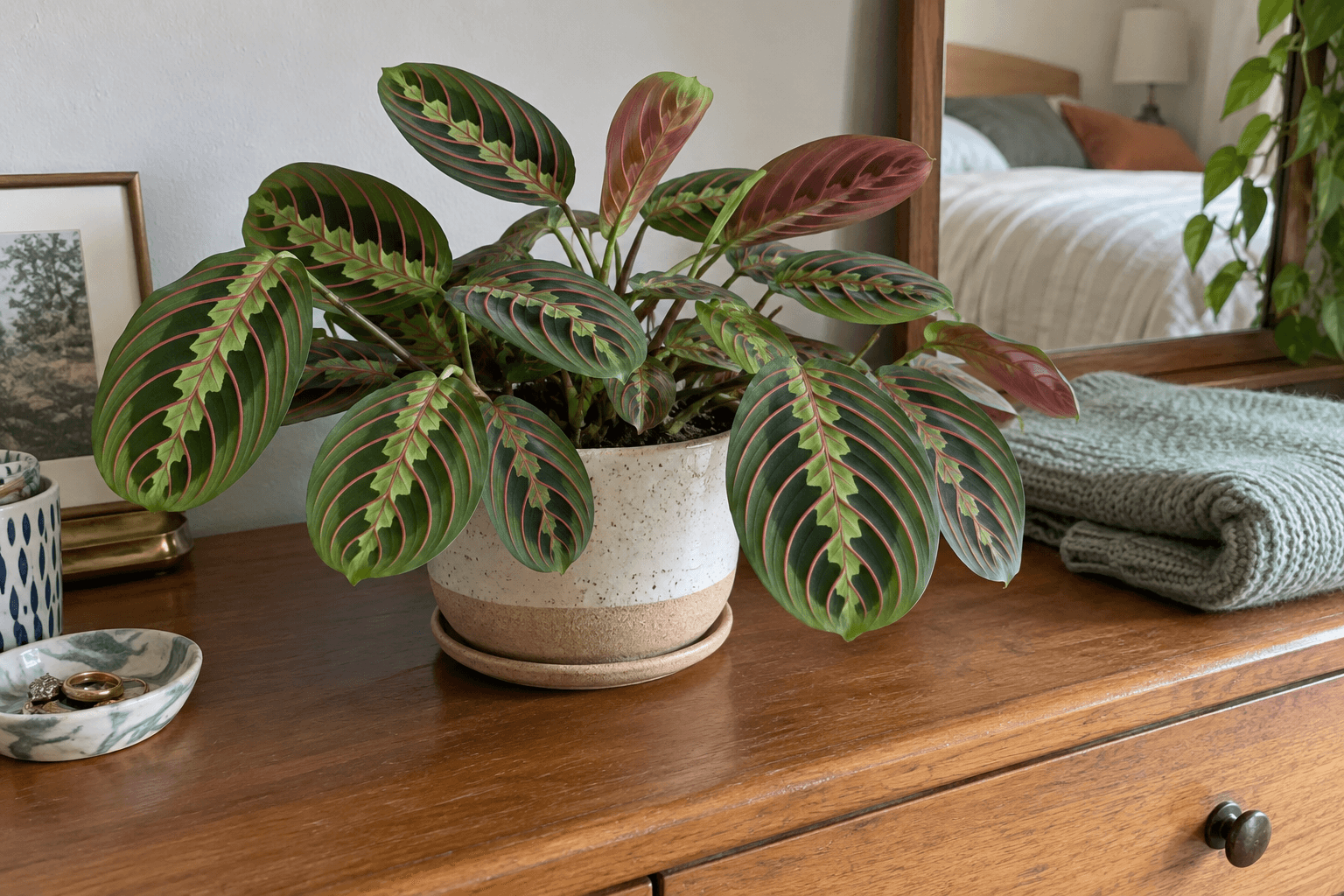
A Boston fern appreciates moisture and humid air; Maranta also benefits from a protected, warm position. Neither is a substitute for checking light. A sunny, dry bathroom may suit a different plant entirely. Start with one plant, inspect its new growth and use the species profile to establish a watering routine.
| What the room offers | A practical decision |
|---|---|
| Filtered daylight at an accessible shelf; steady warmth | Consider a prayer plant or bird's-nest fern. Leave space for its mature leaves and check the mix separately from the air. |
| A bright high window, but a dark shelf below it | Move the proposed position into usable light before choosing a fern. Frosted glass and a deep reveal can change what reaches the leaves. |
| No window; only brief ceiling lighting | Plan suitable plant lighting or choose a different room. Repeatedly replacing a declining plant does not resolve the light shortage. |
| Strong direct sun reaches the shelf | Check how hot the position becomes and protect shade-adapted foliage. The bathroom label does not make this a fern position. |
Water the roots deliberately
Shower steam does not tell you whether the medium is moist. Check the pot, water appropriately and empty the saucer. Maintain ordinary ventilation rather than sealing the room to create humidity. If leaves develop damage, consider light, temperature, roots and pests together. Moving the plant to a more suitable room is an adjustment, not a failure.
Find a related guide below.
Back to the beginningSources & notes
Care guidance checked against these horticultural references on 20 October 2026.
- NC State Extension: Nephrolepis exaltataBoston fern moisture, humidity, fronds and spore structures.
- NC State Extension: Maranta leuconeuraLeaf movement, spreading habit, filtered light and moisture.
- University of Minnesota Extension: Lighting for indoor plantsWindow exposures, low-light limits and supplemental lighting.
- NC State Extension: Asplenium nidusUndivided fronds, central rosette, filtered light, moisture and fragile new growth.