A vine with paper sleeves
Philodendron hederaceum
Heart-shaped leaves, climbing stems and papery growth sheaths help you recognise this familiar indoor vine.
The short answer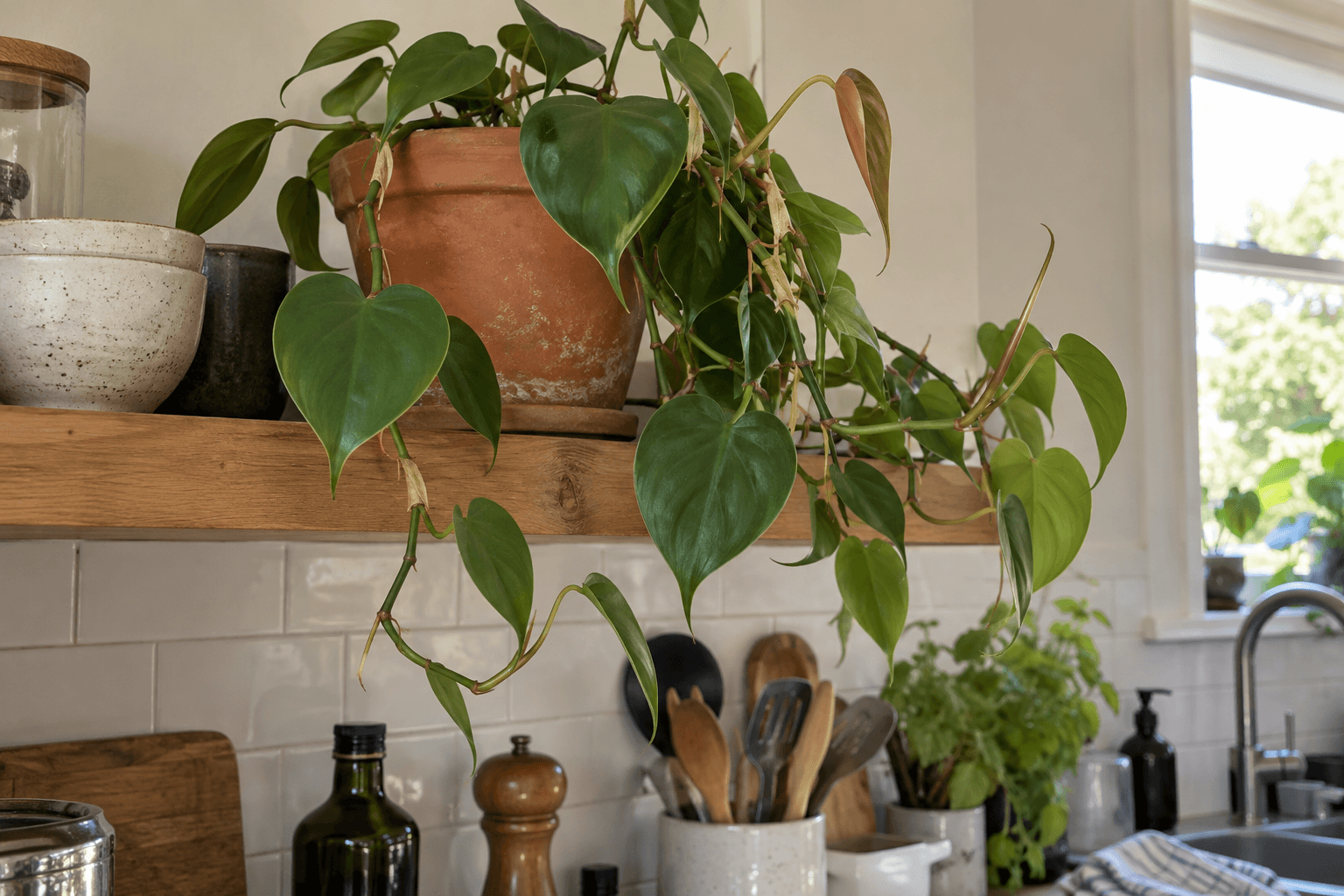
Follow a new leaf
Look along the vine to its newest growth. Heartleaf philodendron produces a protective sheath that later dries into a papery piece. The green heart-shaped leaves can look similar to pothos at a glance, but the growth details differ. Photograph the whole stem as well as the leaf when trying to identify a mystery cutting.
Plan where the vine goes
Provide indirect daylight and a route that stays clear of kettle steam, door hinges and feet. Low-light tolerance does not mean that a long dark corridor is a useful growing position. A small support or an accessible shelf both work. Keep attachment points loose enough that stems can thicken without being pinched.
Reach the original pot
Long vines can distract from the container that supplies them. Make sure you can still lift and inspect it. Wait until the surface has dried, then water thoroughly and drain. The root ball should retain light moisture below, not remain saturated or dry hard throughout. A vine threaded permanently through furniture makes that simple task difficult and can turn a small pest problem into a room-sized untangling job.
Cut with a destination in mind
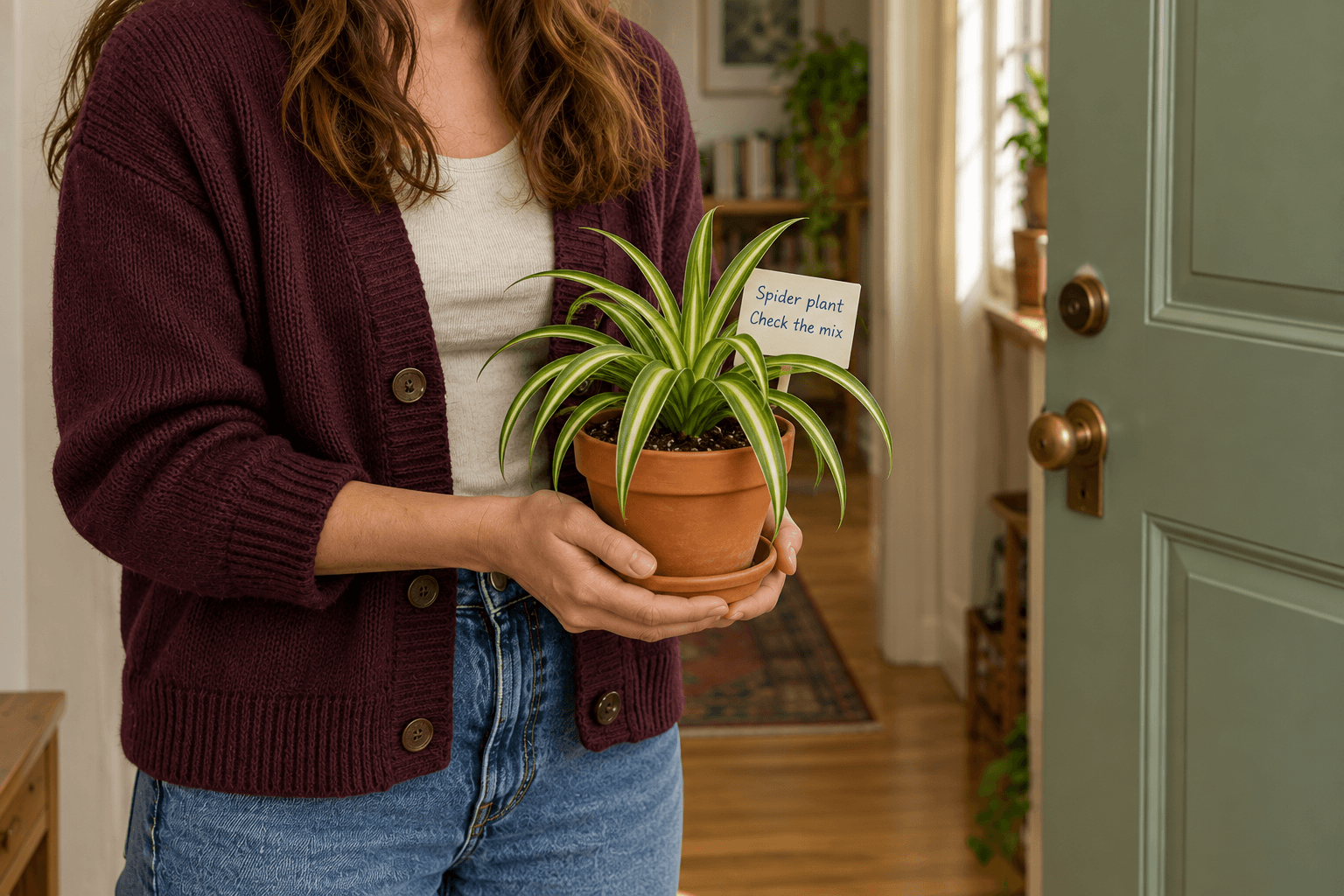
Prune healthy stems above a node when shaping is needed, and use suitable node-bearing pieces for propagation. Keep sap away from skin and mouths; this is an irritating aroid. Before making a cutting for someone, ask whether they have a place for a trailing plant. A short, rooted plant with a name is an easier gift than a bag of anonymous vines.
- In active growth, take a healthy stem tip about 10 cm long, making the lower cut just beneath a node. Include stem tissue rather than a leaf and its stalk alone.
- Remove the lowest leaves and put the lower node in clean water, with the remaining leaves above it. Keep the cutting in bright indirect light.
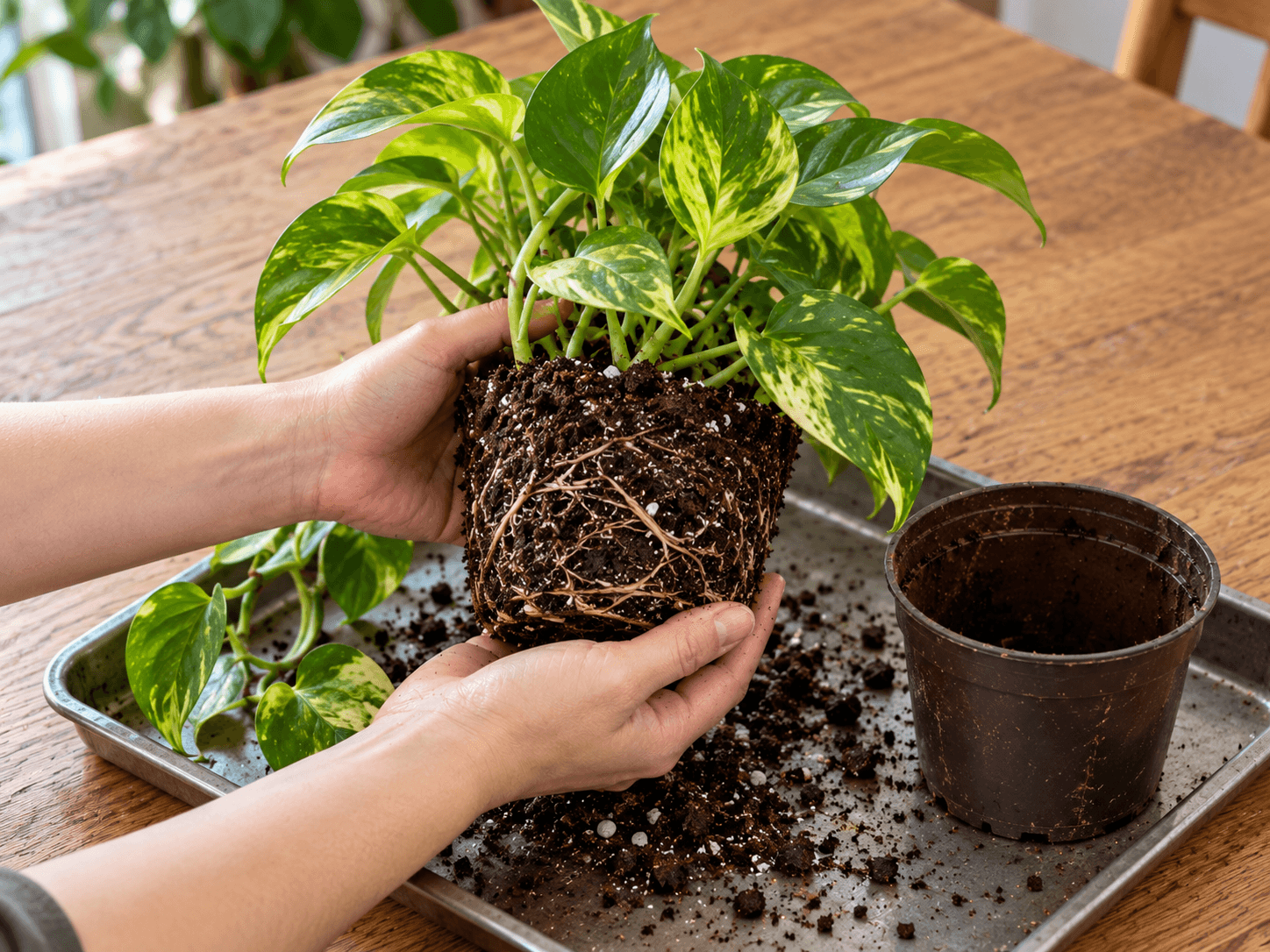
- Once several roots have developed, plant in a small pot of airy draining mix. Check moisture closely during the move from water to mix; do not let the new root ball dry hard.
Find a related guide below.
Back to the beginningSources & notes
Care guidance checked against these horticultural references on 20 October 2026.
- NC State Extension: Philodendron hederaceumClimbing habit, growth sheaths, identification and irritation risk.
- RHS: How to grow philodendronsSurface dry-down, pruning at nodes and preparing water-rooted stem cuttings.
- Iowa State University Extension: Propagating houseplantsSpecies-appropriate stem cuttings, divisions and plantlets.
- University of Maryland Extension: Watering indoor plantsMoisture and pot-weight checks; top and bottom watering.