Hang it where you can still care for it
Choose a hanging position you can reach, inspect and water. A trailing plant needs a workable care route as much as an attractive place.
The short answer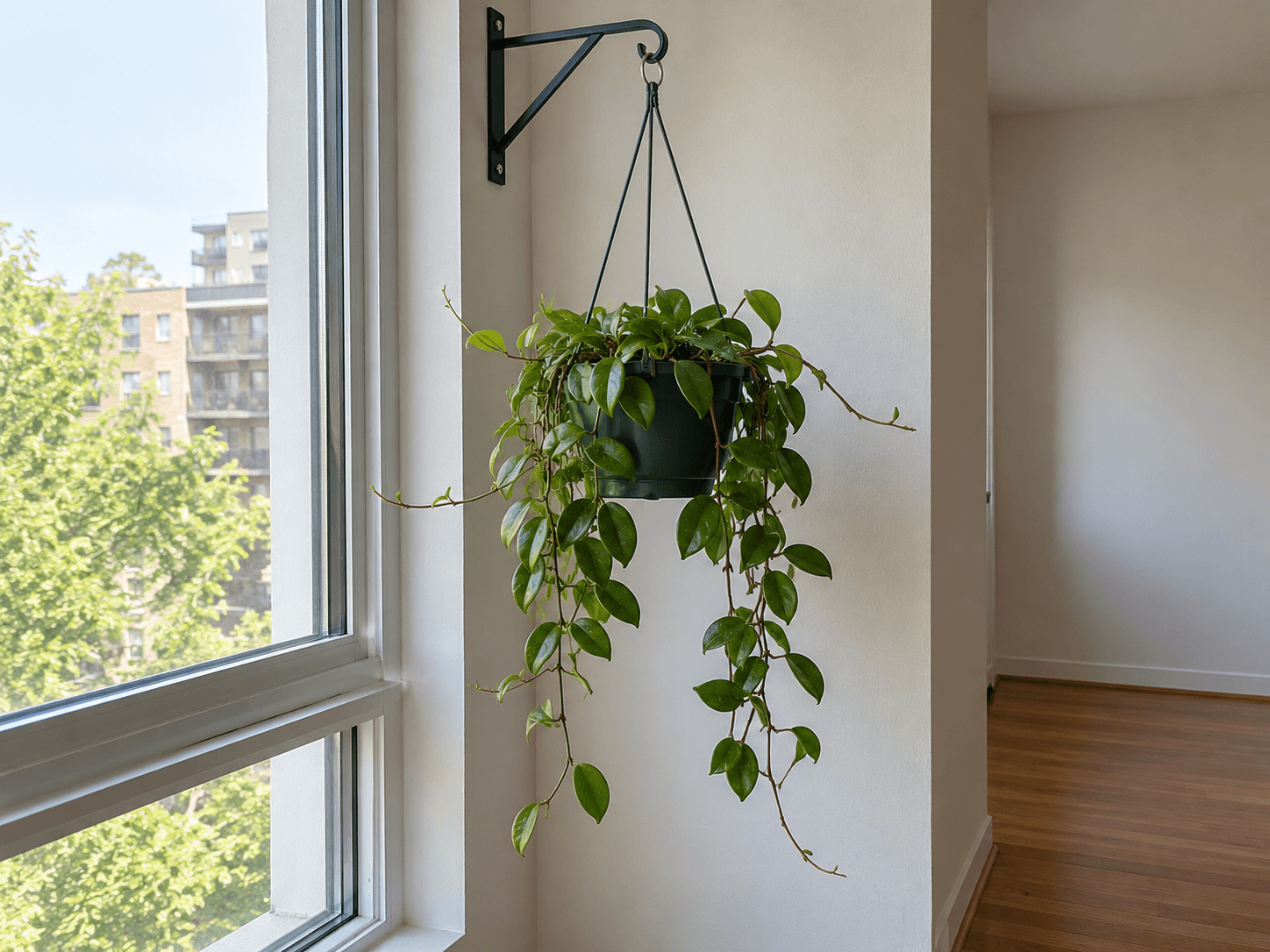
Check the light above the usual shelf
The space beside a window can be darker than it looks from across the room. A basket close to the ceiling may sit above the useful opening, while its longest vine reaches the glass. Look from the height of the main foliage and check how the curtain moves during the day.
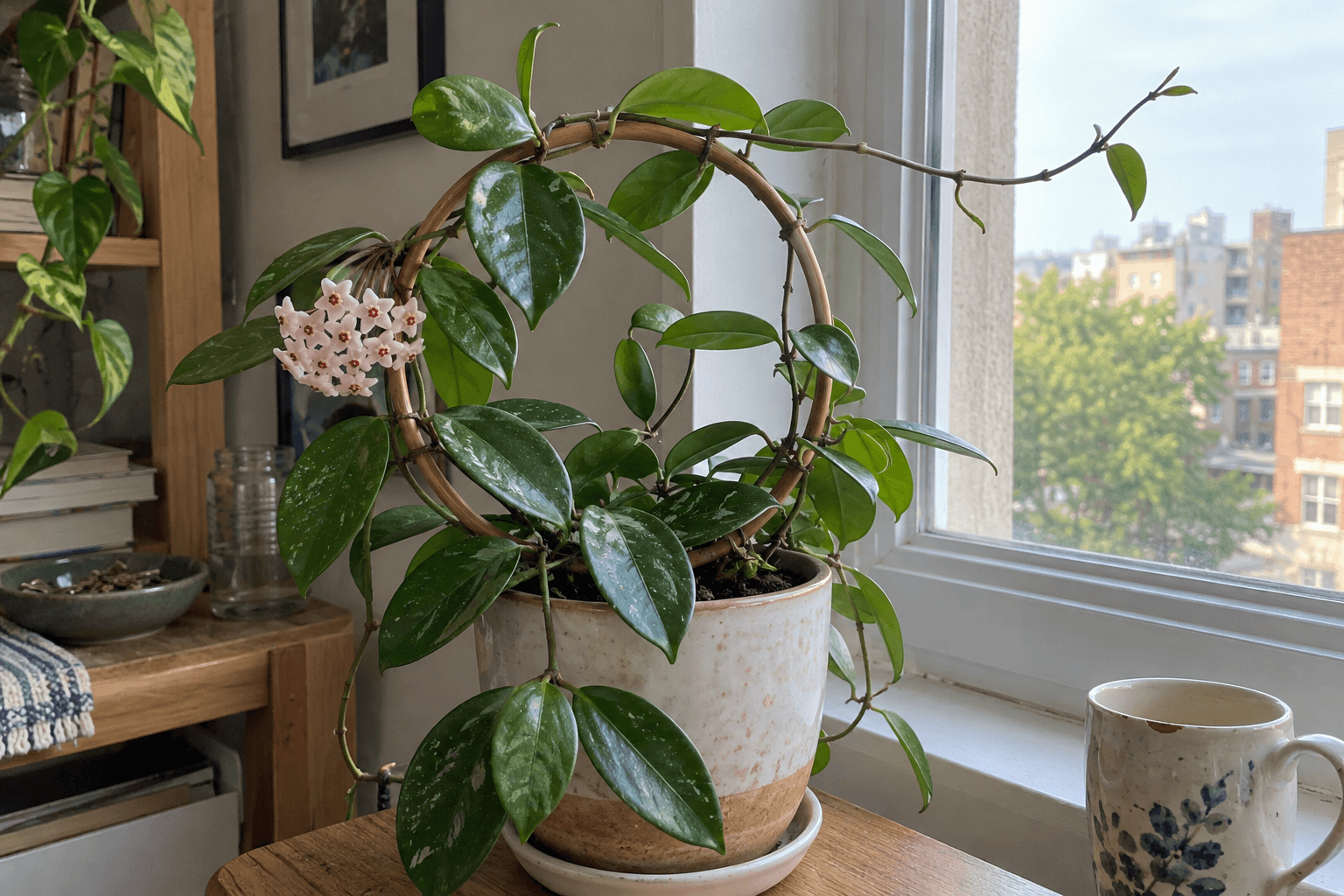
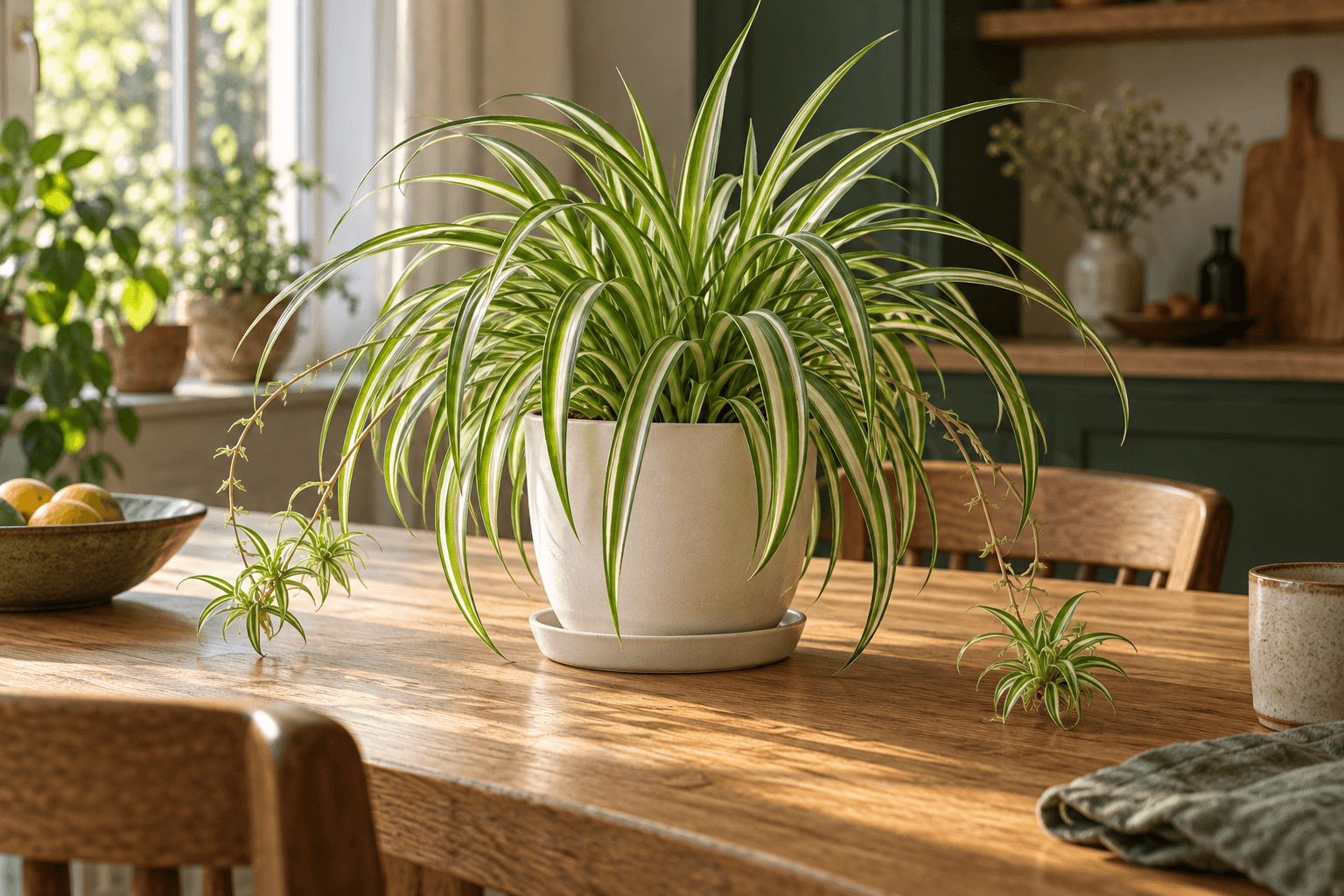
Choose the plant for those conditions. A hoya, spider plant and Boston fern can all trail or arch, but their moisture needs differ. Leave room for the mature spread and the stems that will grow below the pot. Keep them clear of a heater and out of places where they catch on passing people or pets.
Make the support part of the plan
Use a hanger, bracket and fixing suited to the intended location and complete wet load. Follow their installation requirements; get qualified help if the wall, ceiling or fixing is uncertain. An existing hook is not evidence that it can hold a watered plant. A curtain rail is not a substitute for an appropriate support.
Check that the pot sits securely in the hanger and that its rim, clips and cords are in good condition. Allow access to release it without pulling a vine or lifting awkwardly over furniture. A removable inner pot can simplify care, provided it can actually be lifted out when the plant fills the space.
Practise taking it down
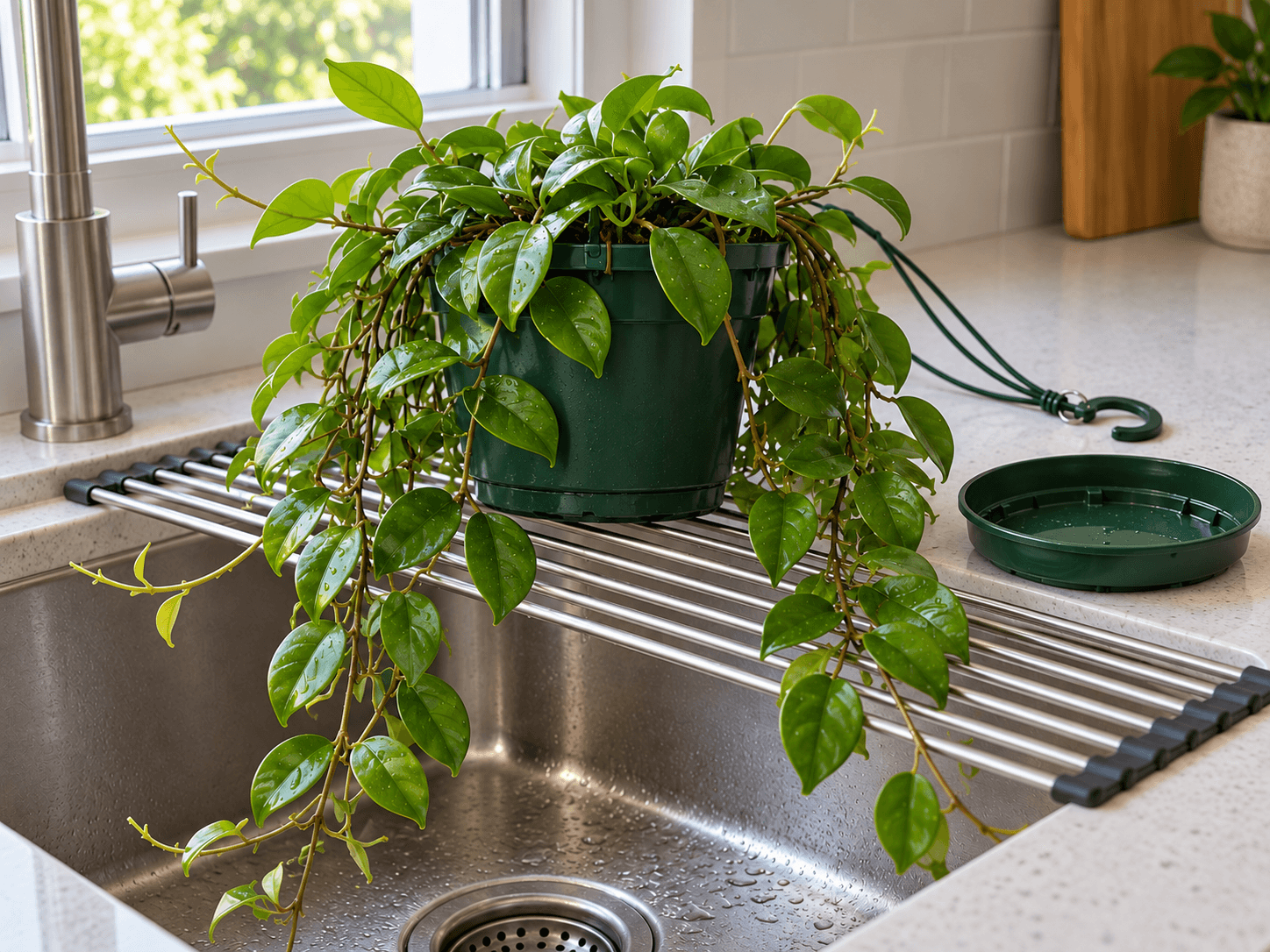
- Support the container as you remove it. Keep trailing stems clear of hooks and furniture.
- Check the medium and leaf undersides at a comfortable height before deciding whether water is needed.
- Water according to the species and let the growing pot drain. Empty a detachable saucer or cover rather than leaving runoff hidden overhead.
- Return the pot securely, keeping cords and foliage in their intended positions. Check that it is stable before letting go.
Keep the route clear as it grows
A vine that has woven itself around the bracket can make routine removal difficult. Guide it gently while flexible, using a suitable support or a clear trailing route. Do not tighten ties around growing stems. Keep a hoya flowering spur when shortening or rearranging other growth.
Find a related guide below.
Back to the beginningSources & notes
Care guidance checked against these horticultural references on 20 October 2026.
- University of Minnesota Extension: Lighting for indoor plantsWindow exposures, low-light limits and supplemental lighting.
- University of Maryland Extension: Watering indoor plantsMoisture and pot-weight checks; top and bottom watering.
- NC State Extension: Hoya carnosaEpiphytic habit, draining medium and persistent flowering spurs.
- NC State Extension: Chlorophytum comosumPlantlets, light, moisture and leaf-tip sensitivity.
- NC State Extension: Nephrolepis exaltataBoston fern moisture, humidity, fronds and spore structures.