Let the hoya find its way
Hoya carnosa
Waxy leaves, exploring vines and flowers that may return to the same little spur. Give this climber a place to settle.
The short answer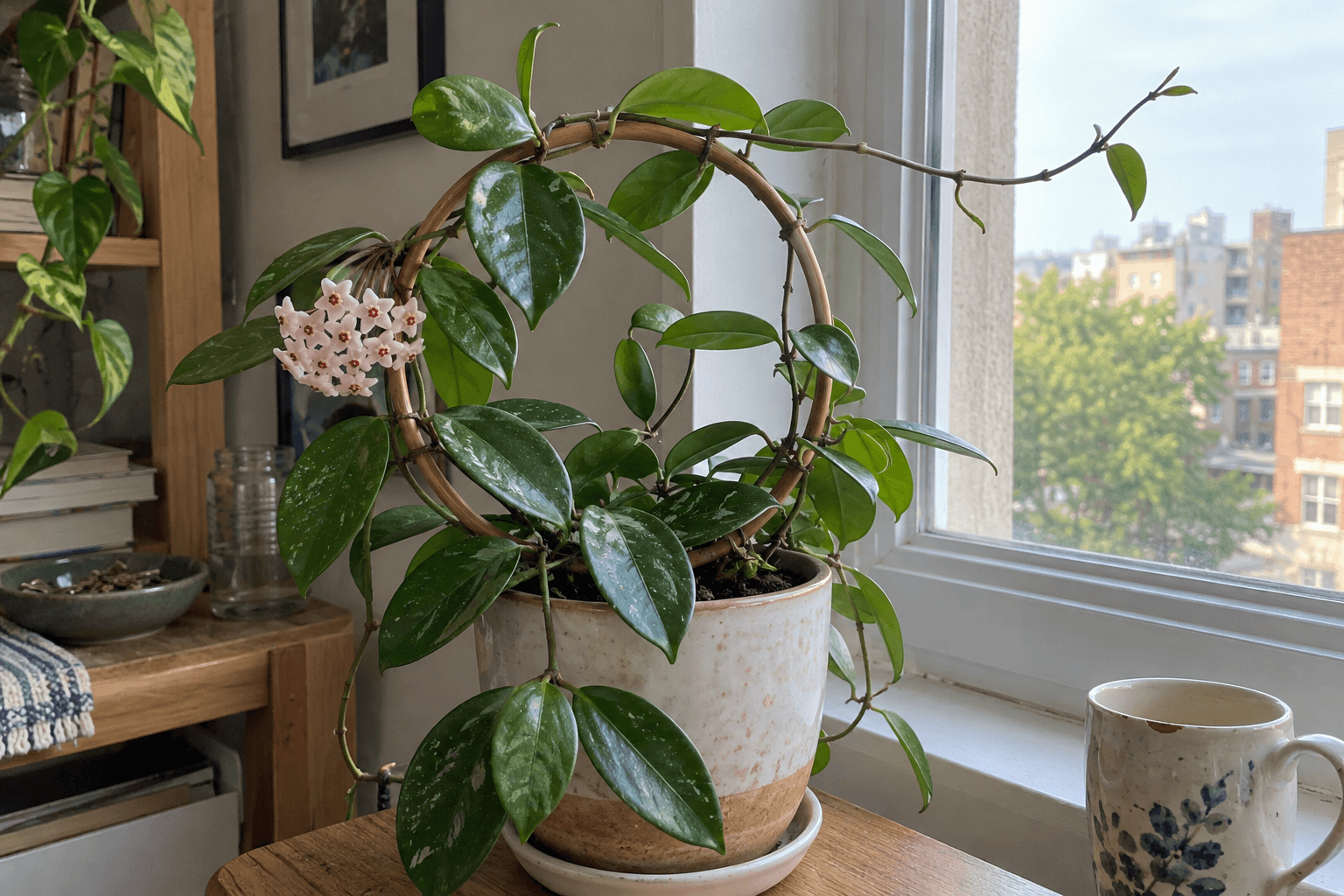
The vine comes first
A hoya can send a slender stem past the end of the shelf before it looks anything like the plant you imagined. Give it a small trellis or a safe trailing route. Its opposite, fleshy leaves differ from the thin foliage of many familiar vines. Untangle stems gently rather than forcing a tight decorative circle.
Keep the window in view
Bright indirect light supports growth and future flowering. A dark shelf may keep foliage present without supplying enough light for buds. Introduce any stronger exposure gradually. Choose a position that you can maintain when the plant gets larger, with space to lift the container out for watering.
Air around the roots
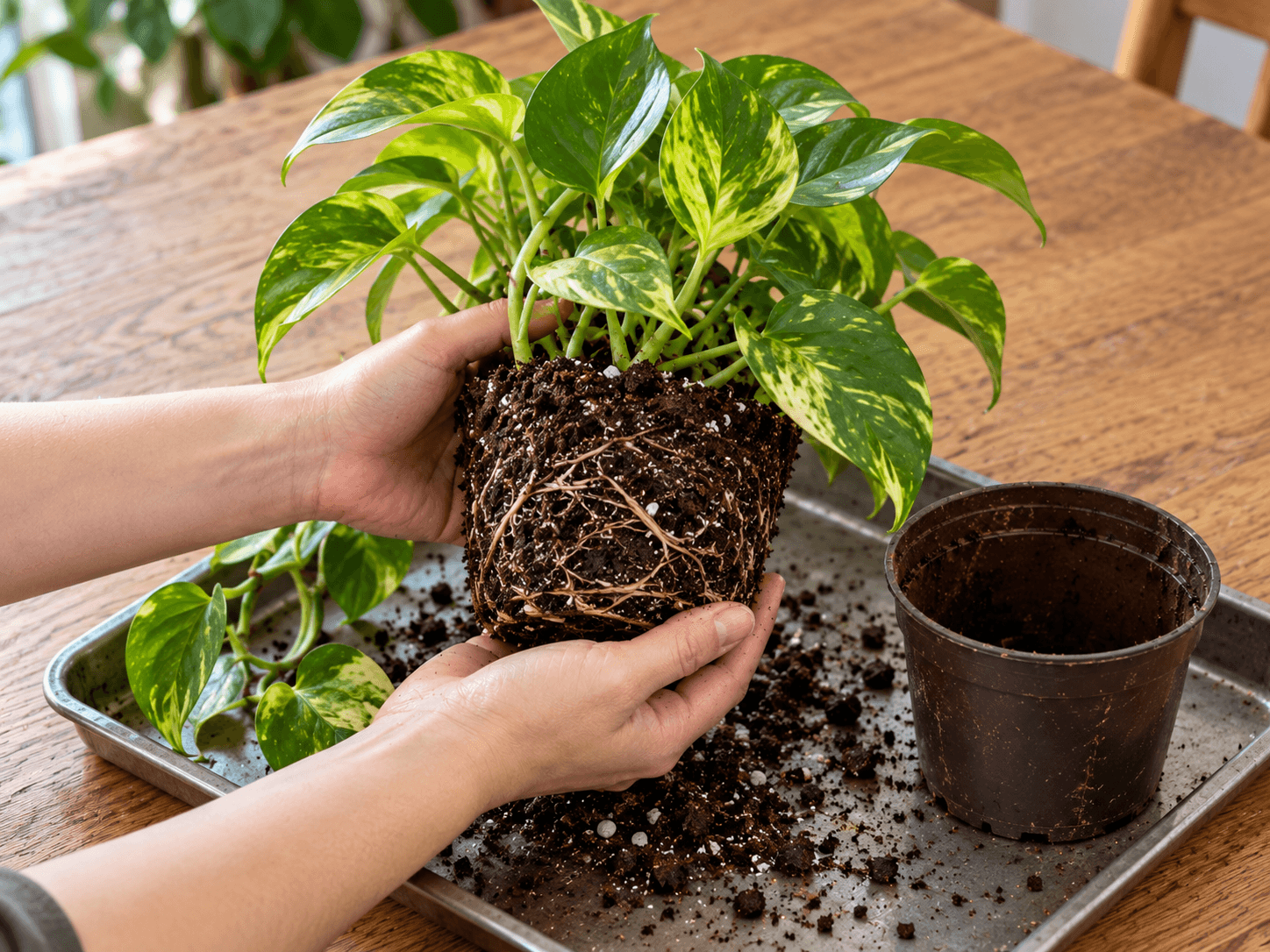
Use a loose, draining medium and allow it to dry between waterings. A hoya is an epiphyte, so a permanently soggy dense mix is a poor fit. Check the root zone rather than judging by the topmost bark. Repot when necessary, with a modest increase in container size, preferably outside a flowering period.
Keep the little spur
The short stalk that carried a cluster of flowers can flower again. Leave it attached after the petals fall. Maturity, light and the plant's condition all influence blooming, so a fertilizer bottle cannot promise a date. Photograph a suspected spur before tidying the vine; it is easier to leave a small odd-looking piece than to replace it.
Find a related guide below.
Back to the beginningSources & notes
Care guidance checked against these horticultural references on 20 October 2026.
- NC State Extension: Hoya carnosaEpiphytic habit, draining medium and persistent flowering spurs.
- NC State Extension: Plants grown in containersContainer materials, potting media, nutrition and indoor care.
- University of Minnesota Extension: Lighting for indoor plantsWindow exposures, low-light limits and supplemental lighting.