Choose the window before the fig
Ficus lyrata
A fiddle-leaf fig needs a usable bright position and a manageable watering routine. Start with the room before choosing the size of tree.
The short answer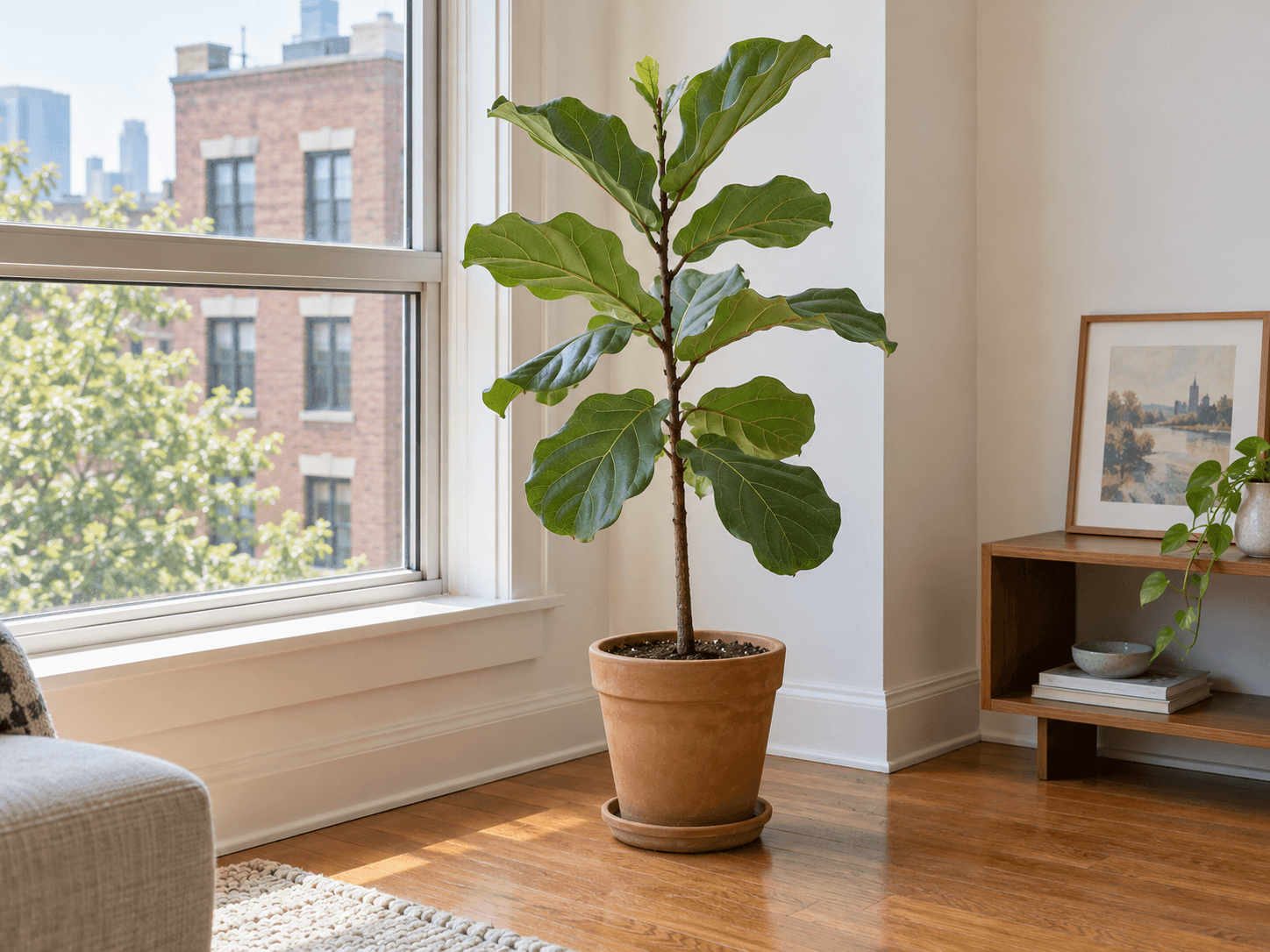
Measure the leafy part
Ficus lyrata has broad, leathery leaves with a narrowed middle, wavy edges and prominent veins. A young plant can fit comfortably beside a chair, then become awkward as its canopy expands. Measure the available width at leaf height as well as the space for the pot.
Walk through the room with the curtains open and closed. Check whether the proposed position is in a heater draft, against cold glass or behind a door. A place that works in a photograph may still require moving the plant every morning. Choose a position that can remain useful during ordinary life.
Make the bright position usable
Start near a bright window, with filtered light if direct afternoon sun is intense. A fig several metres into the room may receive much less light than the furniture around it suggests. If you change the exposure, do so gradually and watch the foliage rather than making repeated large moves.
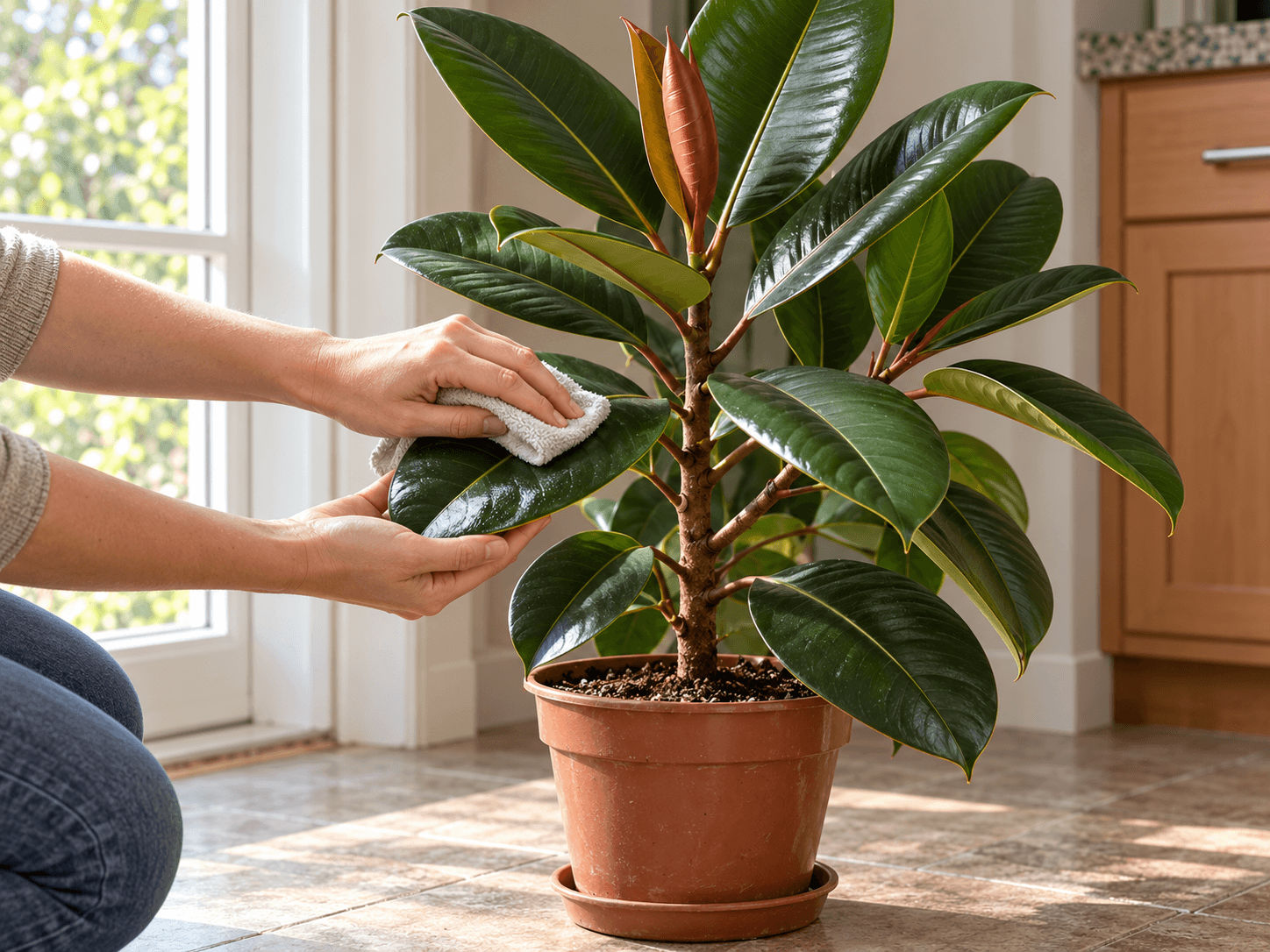
Keep access to both sides of the canopy for inspection and cleaning. Dust is easy to see on these large leaves; wipe gently with a damp soft cloth while supporting the blade. Leave newly opening tissue alone. Moving the pot only far enough to reach a leaf is different from relocating it to another room.
Check the pot before reacting to a leaf
Let the upper mix dry before watering thoroughly and draining. Do not use the number of fallen leaves to decide the amount of water. Both an overly wet root zone and a very dry one can cause trouble, and the same visible symptom can lead to opposite next steps.
- Feel the mix below the surface and check for water inside the outer pot.
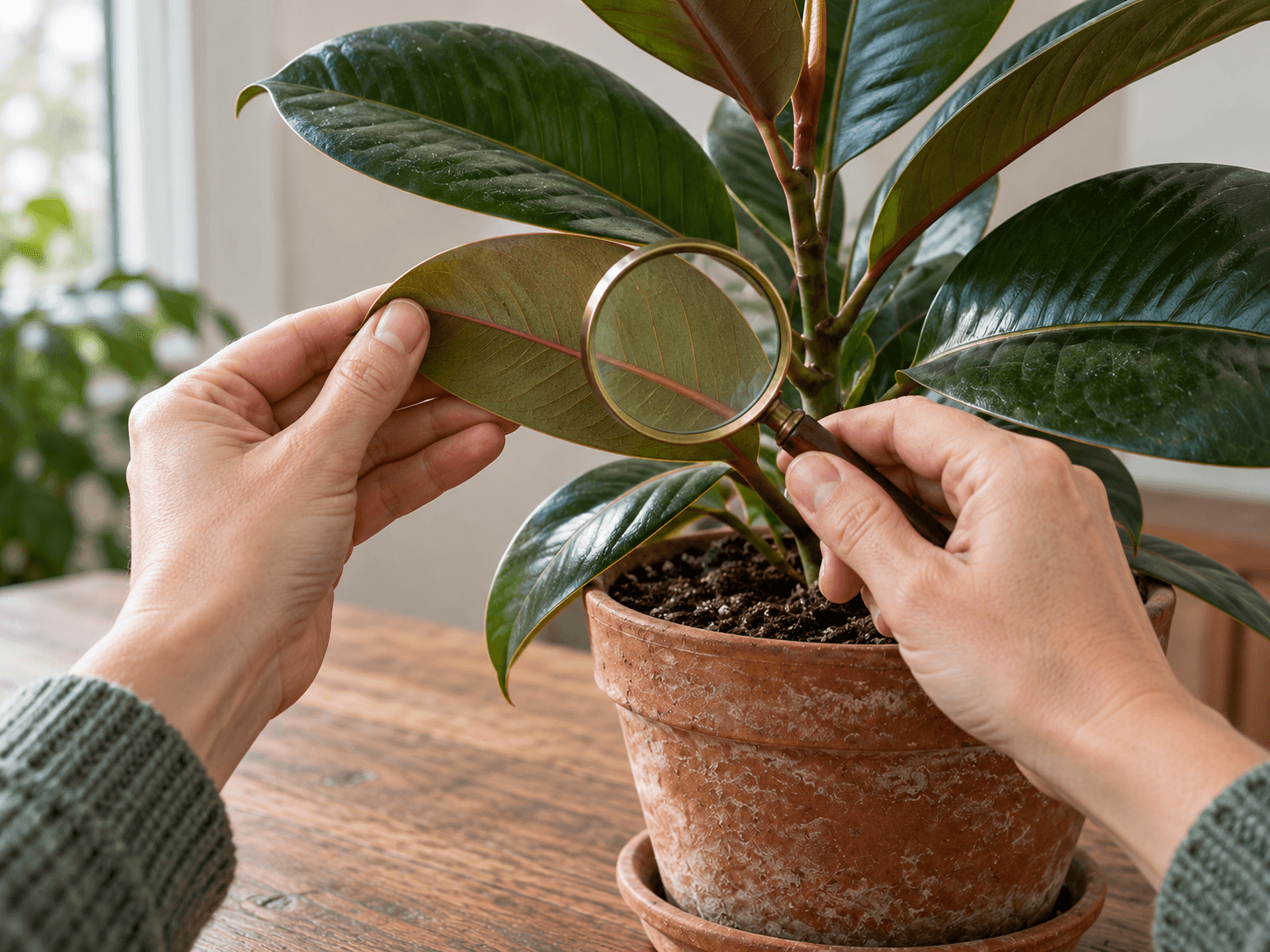
- Recall any recent move, cold exposure or change in heating. Inspect the undersides and leaf joints for pests.
- Photograph the affected area and correct the condition you can identify. If decline continues or the base is soft, inspect the roots rather than adding treatments at random.
Notice what happens at the tip
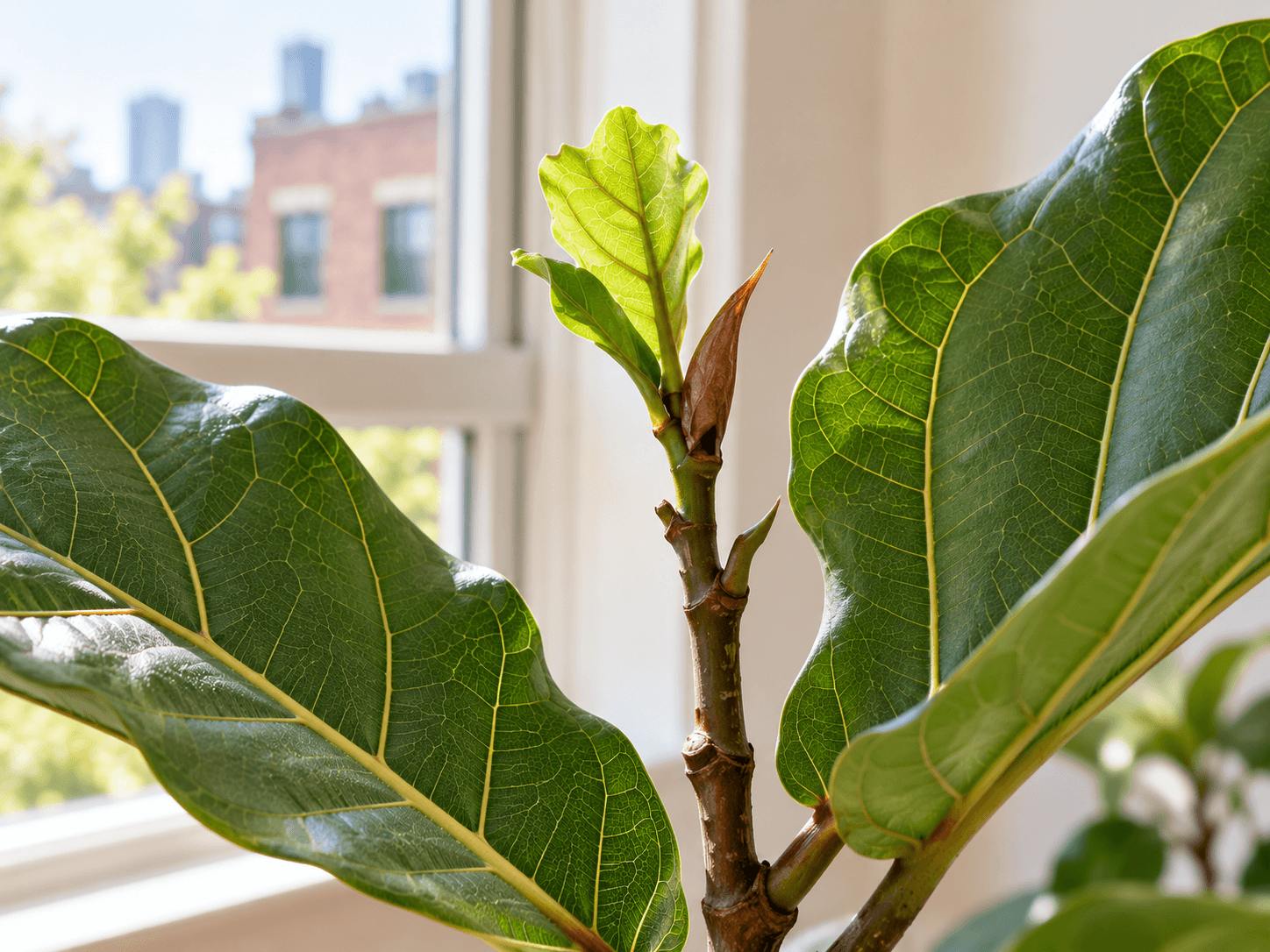
A marked old leaf may stay on the plant while new leaves develop normally. Keep dated photos of the growing tip and any changing marks so the two are not confused. You do not need to remove every imperfect leaf to make the plant look newly bought.
Find a related guide below.
Back to the beginningSources & notes
Care guidance checked against these horticultural references on 20 October 2026.
- NC State Extension: Ficus lyrataLeaf shape, indoor light, watering-related leaf loss and irritating sap.
- RHS: Ficus lyrataLeaf form, protected container growing, pruning and pest inspection.
- University of Maryland Extension: Watering indoor plantsMoisture and pot-weight checks; top and bottom watering.