One leaf, several leaflets
Heptapleurum arboricola
Follow a leaf stalk back to the branch before shaping an umbrella tree. The familiar green cluster is a single compound leaf.
The short answer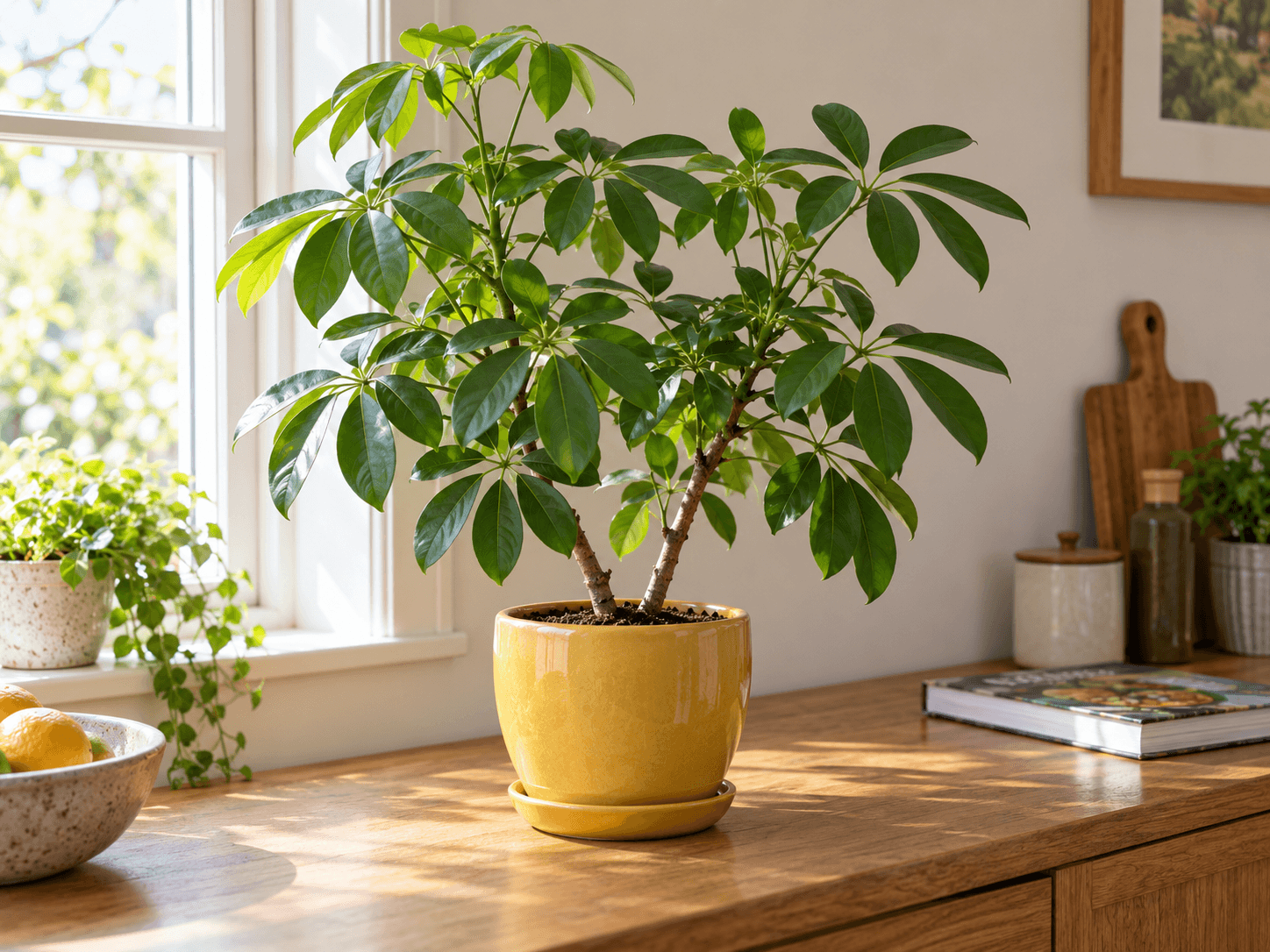
Find the common junction
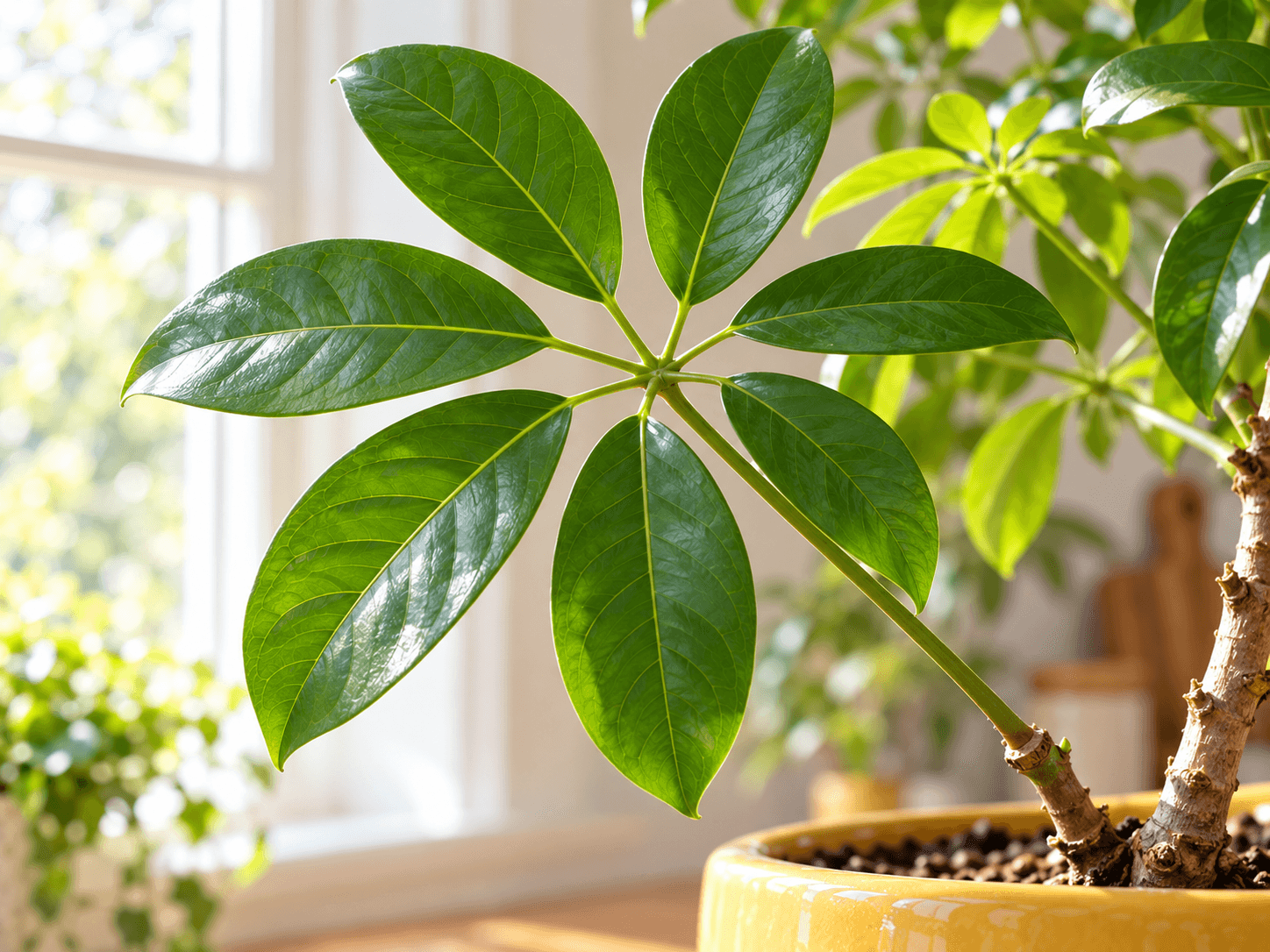
A dwarf umbrella tree usually has several oval leaflets radiating from a common point. Follow the single stalk below that point back to the stem. Understanding this arrangement makes inspection and pruning much less confusing: removing one leaflet or cutting its stalk is not the same as shortening a growing branch.
Labels may use Schefflera arboricola or Heptapleurum arboricola. Keep the species name when shopping, because umbrella tree also describes larger relatives. Dwarf is relative; this plant can still become a substantial indoor shrub.
Decide which branch needs shortening
Stand back before picking up the snips. Identify a branch that crosses a walkway, grows against the window or extends beyond the space available. Trace it from the tip to its connection with the rest of the plant. This is easier if you move neighbouring leaves gently aside without pulling them.
On a healthy growing plant, shorten an overlong stem above a suitable node with clean, sharp tools. Make a few cuts, then allow time to see the response. If every new shoot is weak and stretched, review the light before trying to maintain a compact shape by repeated trimming.
Bright light and a reachable pot
A bright position with filtered sunlight is a useful starting point. Protect foliage from abrupt strong sun and leave room for the outer leaflets. A crowded sideboard makes it difficult to see the mix or reach the back of the canopy, even when the plant technically fits.
Let the upper mix dry, then water thoroughly and drain. Check more deeply if the container is large or dries slowly. Leaf drop can accompany both excessive wetness and severe drying, so do not choose a watering response from the fallen leaf alone.
Use the leaf structure to inspect it
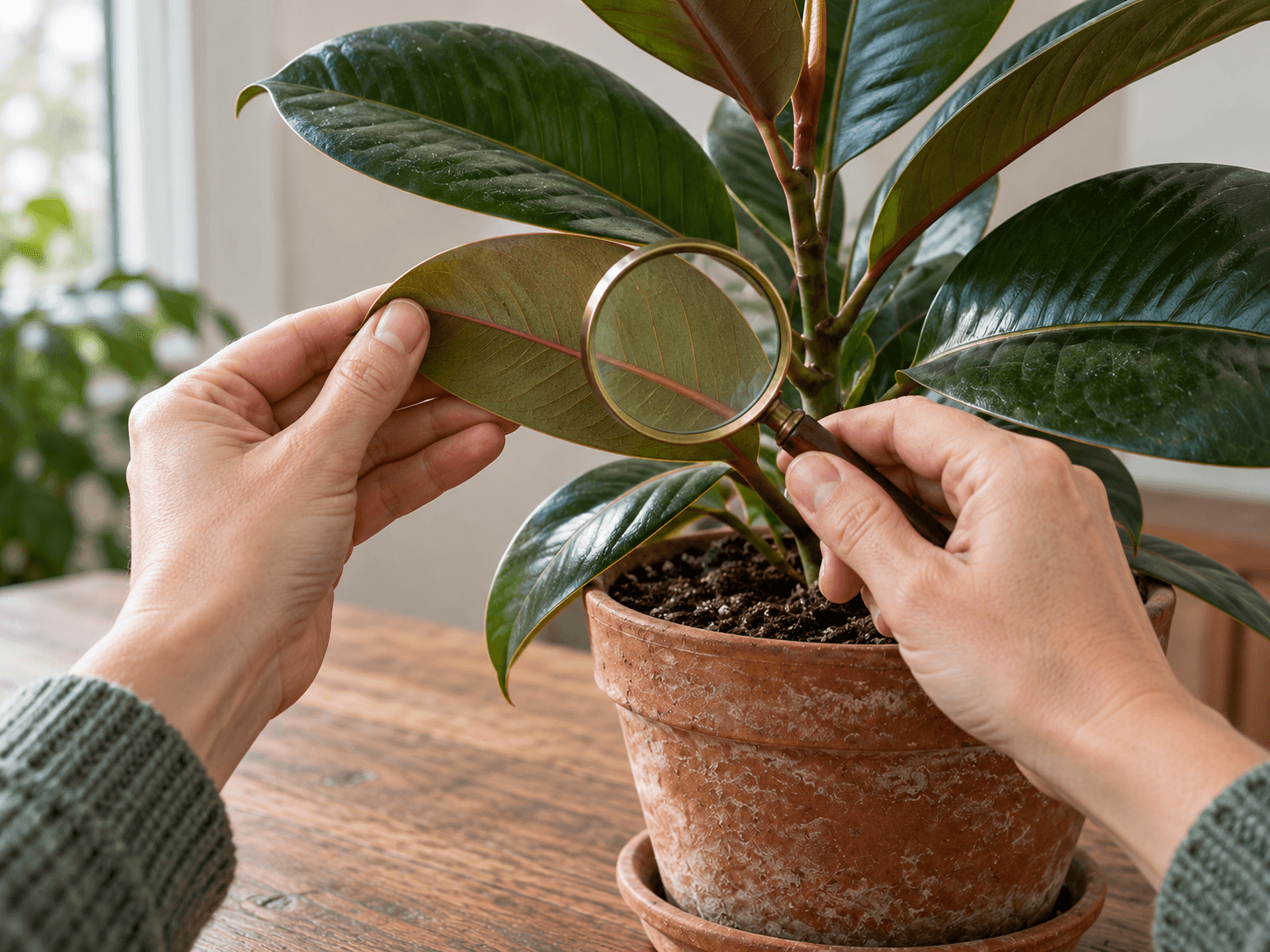
Look beneath the leaflet cluster, along the long stalk and where it meets the stem. Scale and mealybugs can be missed when only the upper green surfaces are checked. A little space around the plant makes these regular inspections easier than repeatedly lifting it off a crowded shelf.
Find a related guide below.
Back to the beginningSources & notes
Care guidance checked against these horticultural references on 20 October 2026.
- NC State Extension: Heptapleurum arboricolaCompound leaf structure, size, light, water and pet toxicity.
- RHS: Schefflera arboricolaIndoor cultivation, seasonal watering, propagation and pests.
- University of Maryland Extension: Watering indoor plantsMoisture and pot-weight checks; top and bottom watering.