Keep the stripe with the division
Separate established growth at the rhizome when there is a reason to divide. Leaf cuttings may not preserve the familiar yellow margins.
The short answer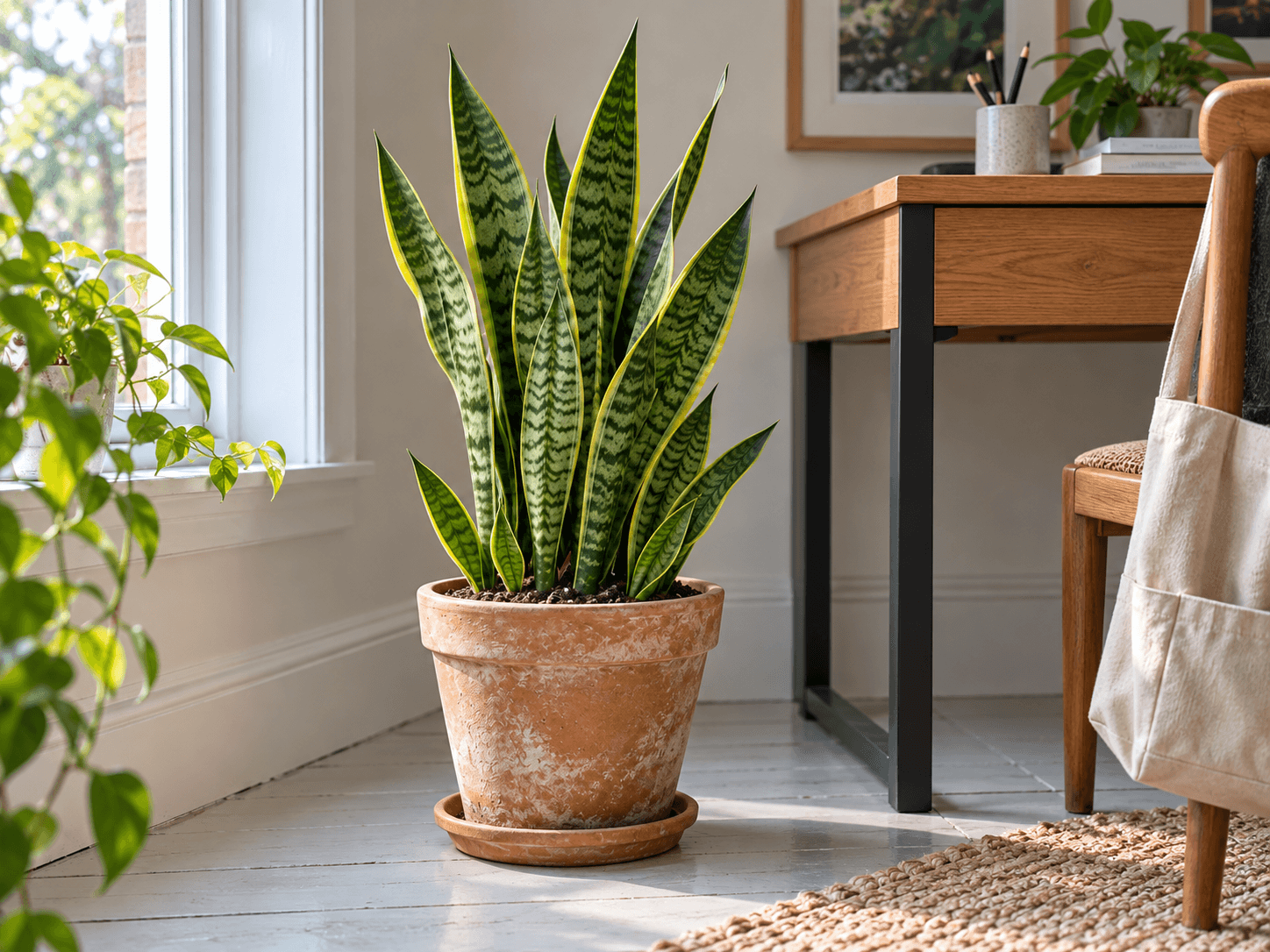
Choose division for a reason
A crowded healthy clump may be ready to split during planned repotting. A single small plant does not need to be divided simply because a new shoot appeared. If you want to retain yellow leaf margins, division is generally more dependable than starting from leaf sections, which can produce green offspring in variegated cultivars.
Find the underground connection
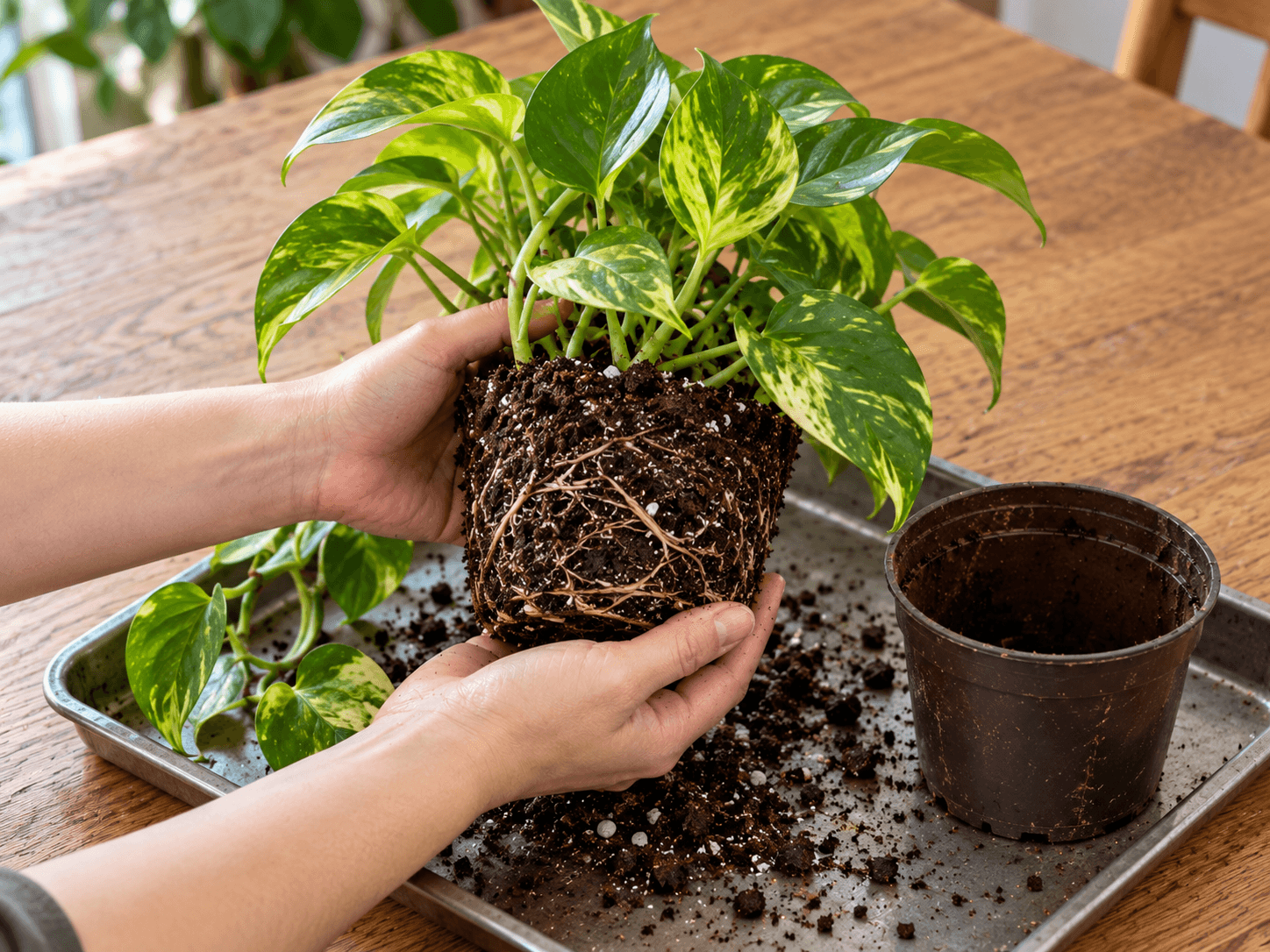
Ease the plant from its pot and follow a fan of leaves down to its roots and the thick rhizome joining it to the next fan. Find a division that will leave roots and healthy leaves on both pieces. If they will not ease apart, cut the connecting rhizome with a clean sharp tool. Leave an unrooted new shoot attached for now; pulling out individual leaves does not produce a rooted division.
Fit the remaining roots
Use a draining container only large enough for the section and a little growth. Keep the planting depth appropriate and use a porous medium. A tall division may need temporary support rather than a much larger wet pot for ballast. Handle the cut areas carefully and avoid unnecessary root damage while arranging the leaves.
Allow its slow pace
Keep the division in bright indirect light and allow the mix to dry between waterings; an unchanged leaf is not a request for another drink. Snake plants can take time to resume visible growth, particularly in low light. Check that the base stays firm. Softening at the base or persistently wet mix needs investigation, while a firm plant with no new shoot can be left to settle.
Find a related guide below.
Back to the beginningSources & notes
Care guidance checked against these horticultural references on 20 October 2026.
- Royal Horticultural Society: Growing sansevieriaDivision and loss of some variegation through leaf cuttings.
- NC State Extension: Dracaena trifasciataCurrent botanical name, dry-down and root-rot risk.
- University of Minnesota Extension: Clean tools and containersRemove debris before disinfection; prevent transfer between plants; follow product precautions.
- Iowa State University Extension: Division and offsetsComplete rooted sections, recovery, fresh medium and appropriately sized pots.