Check the jar before adding water
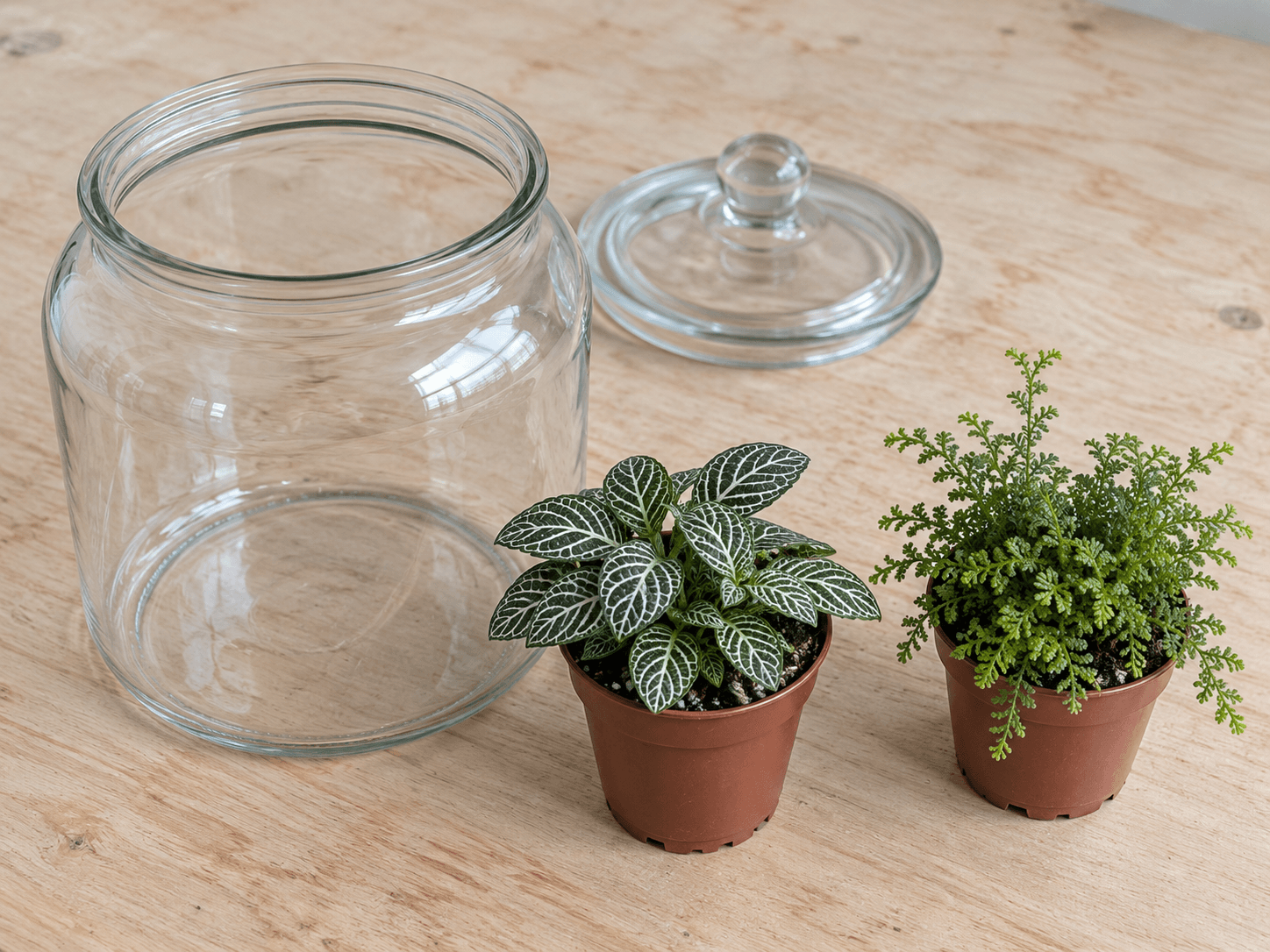
Read the glass, plants and potting mix together. A closed terrarium needs small, deliberate adjustments rather than the watering routine of an open pot.
The short answer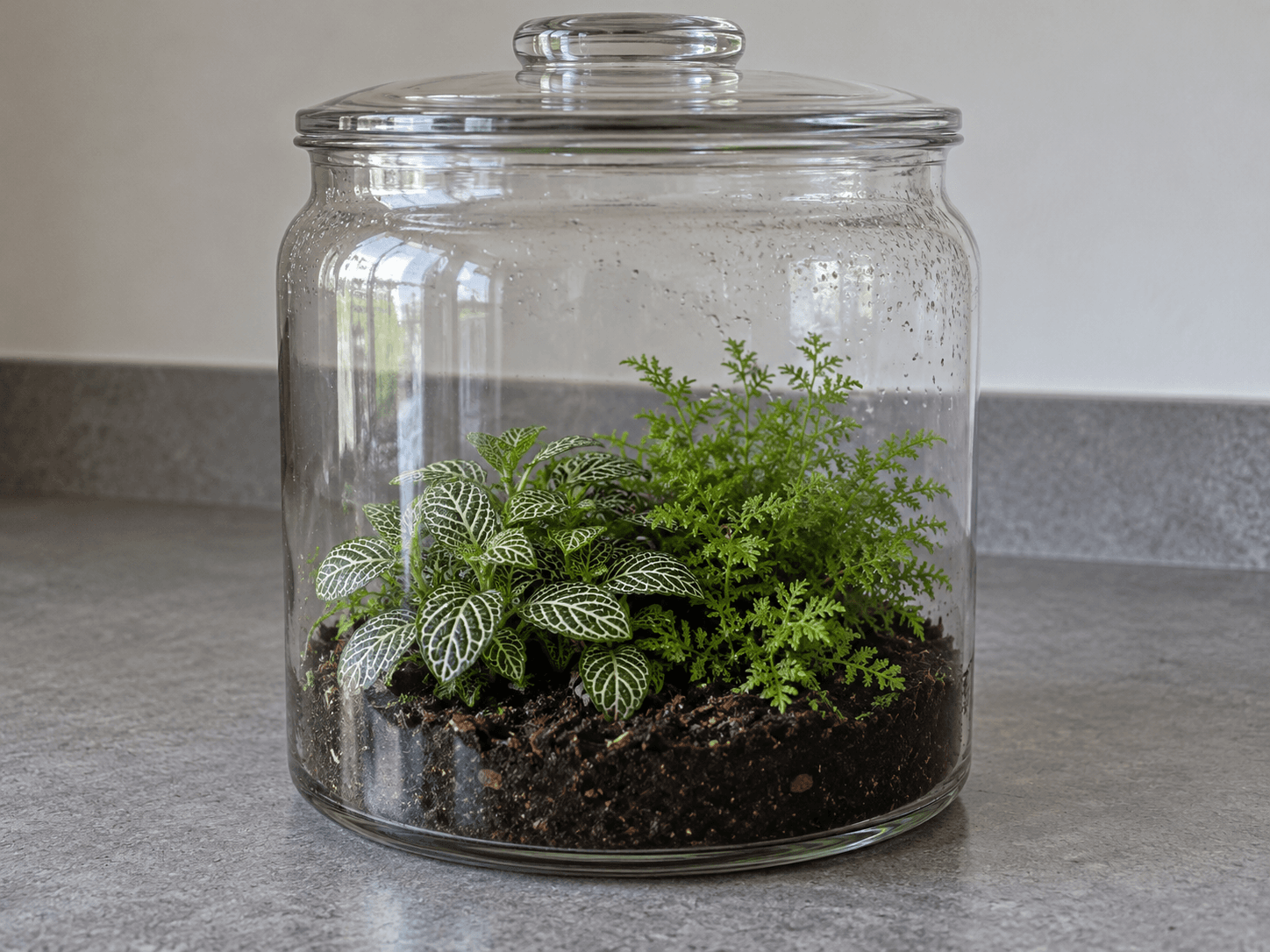
Give the glass a suitable position
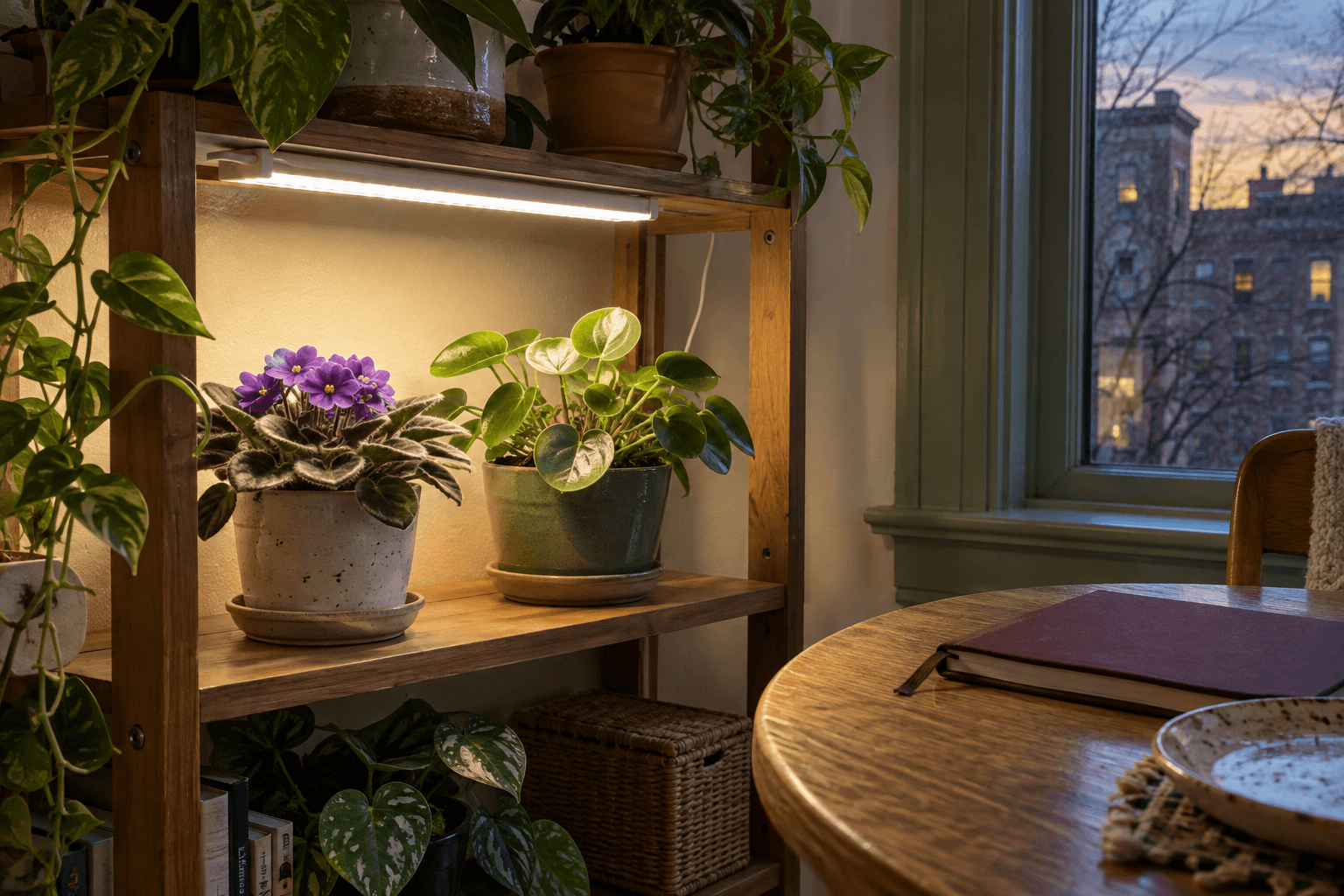
A sealed jar can overheat in direct sun. Choose useful indirect light and check the position as the seasonal sun angle changes. An attractive shelf at the back of a room may still need a properly placed grow light. Keep the lid accessible; a jar you cannot open easily will be difficult to maintain.
Start by noting the plants, the date and whether the jar was recently watered. A gift terrarium may arrive freshly planted and damp. Ask its maker what is inside and how it was set up before treating a clear patch of glass as a reason to add water.
Use more than the glass
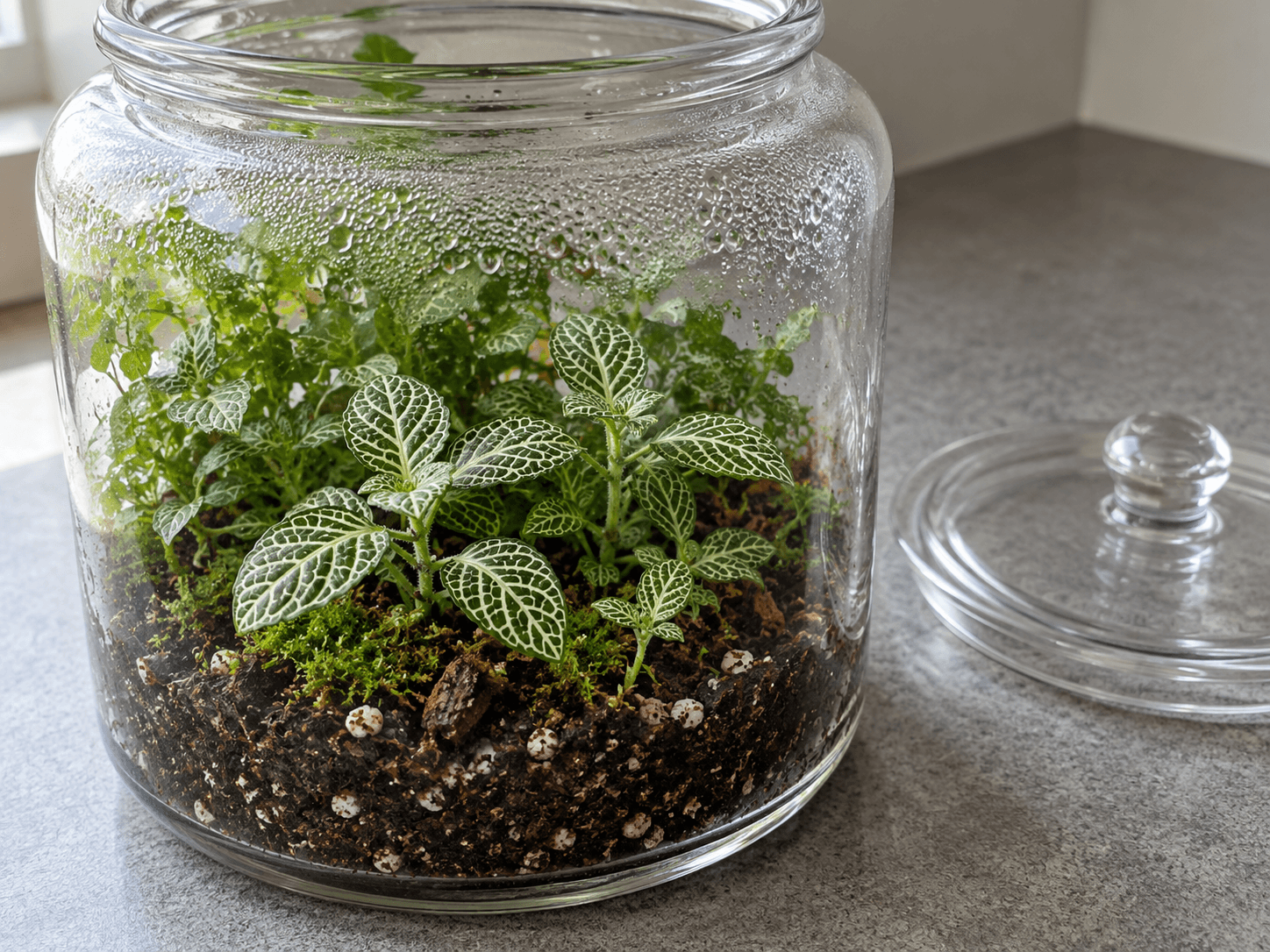
| Observation | Next check |
|---|---|
| Light condensation and firm plants | Look at the mix. If it is moist, leave the watering alone. |
| Persistent heavy condensation and very wet mix | Open the lid temporarily, wipe excess from the glass and look for decaying material. Do not add more water. |
| Clear glass and a plant beginning to wilt | Check the medium directly. Wilt in wet mix needs investigation; a genuinely drying planting may need a small addition of water. |
Water cautiously, then check again over the next few days. There is no drainage hole to carry surplus away. A layer of stones at the bottom does not change that fact. Record the addition so another person does not repeat it later that afternoon.
Keep access and growing room
Remove fallen leaves and cuttings instead of leaving them inside the jar. Pinch or trim suitable plants before they crowd the lid or press against wet glass. A long tool helps reach a leaf, but should not be used to pull blindly at a hidden stem.
If one plant repeatedly fills the container, move it to a more suitable home. It is easier to keep two compatible plants accessible than to maintain a tightly packed collection. Do not add fertilizer simply because growth is slow; limited growth can be useful here.
Know when to open it properly
Soft, collapsing growth or spreading decay warrants a closer inspection. Remove affected material, assess how wet the medium is and reconsider the planting conditions. Do not seal a visibly deteriorating plant back inside and hope the closed system will correct it.
Find a related guide below.
Back to the beginningSources & notes
Care guidance checked against these horticultural references on 20 October 2026.
- RHS: Terrariums and bottle gardensClosed-container conditions, condensation, compatible plants and sparse watering.
- University of Missouri Extension: TerrariumsCompatibility, growth habit, lack of external drainage and ongoing maintenance.
- University of Illinois Extension: Bottle terrariumsMoisture cycling, light, removal of debris and pruning.
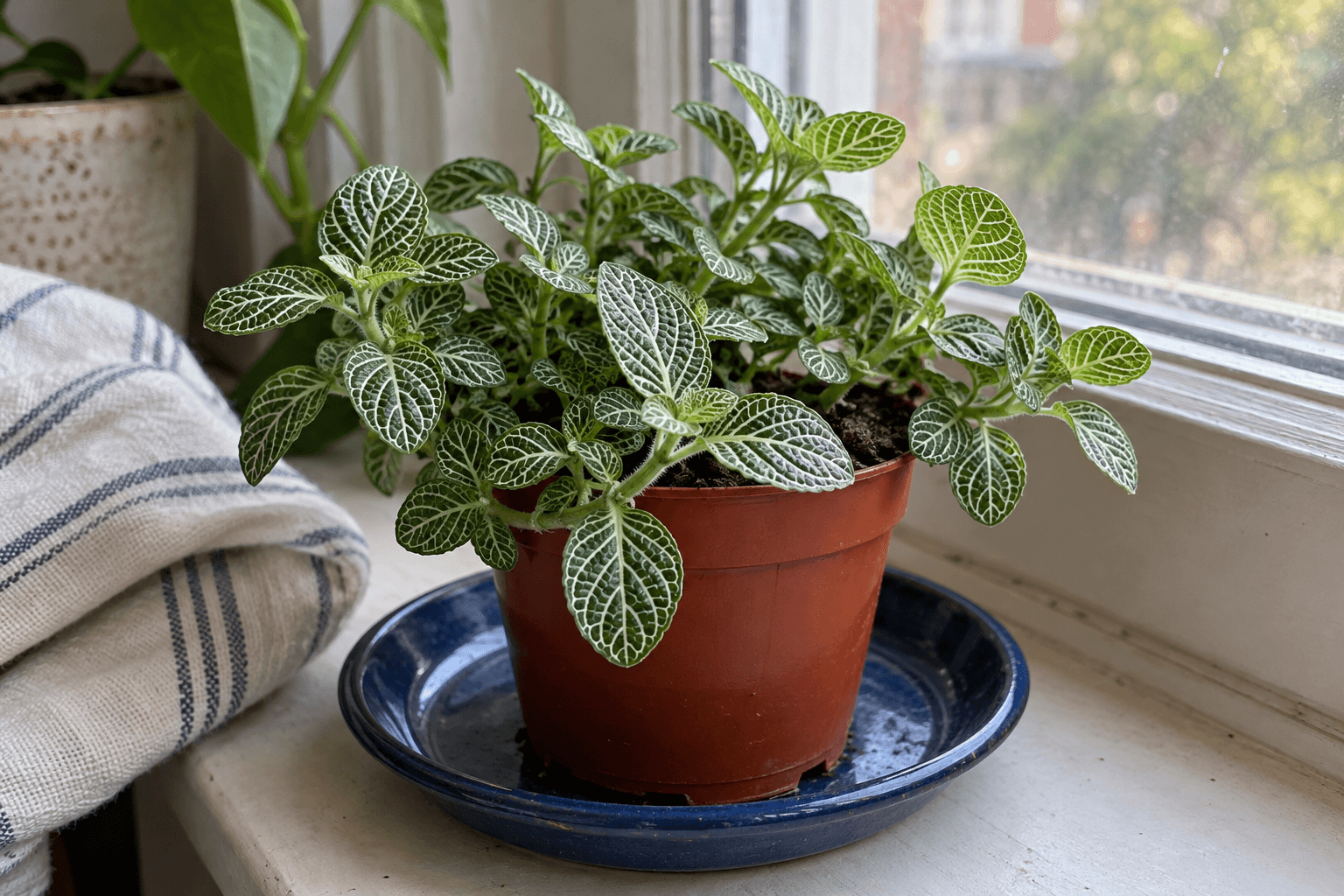
- NC State Extension: Fittonia albivenisLow spreading habit, filtered light and moisture requirements.