Leave room for the plants to grow
A small nursery pot does not guarantee a small plant. Choose compatible plants for the container you can actually maintain.
The short answer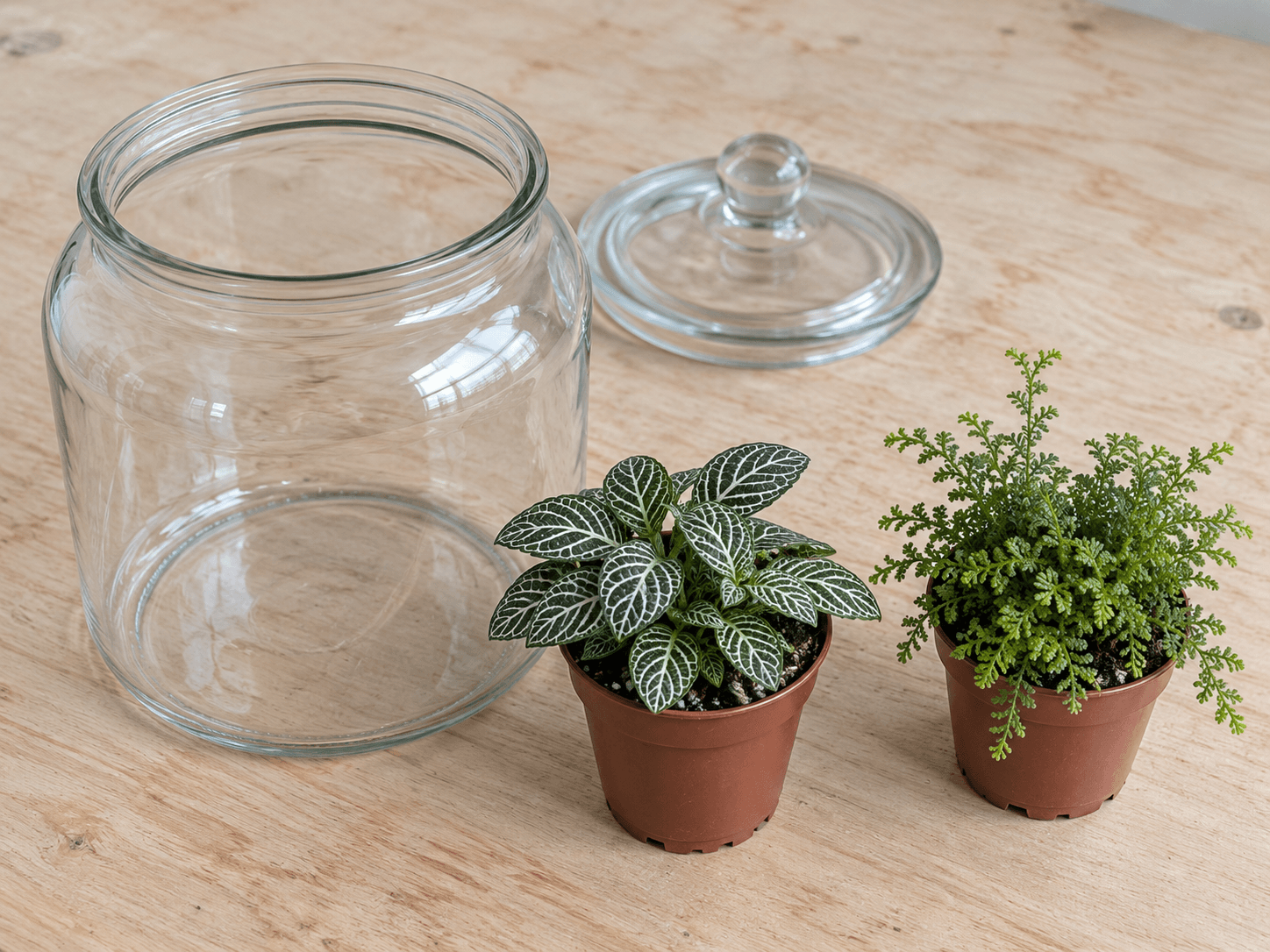
Choose the container before the collection
Measure the space above the planned potting mix, not the jar height from the counter. The neck may be much narrower than the base. Check whether your hand or a suitable tool can reach the far side without crushing a plant at the opening.
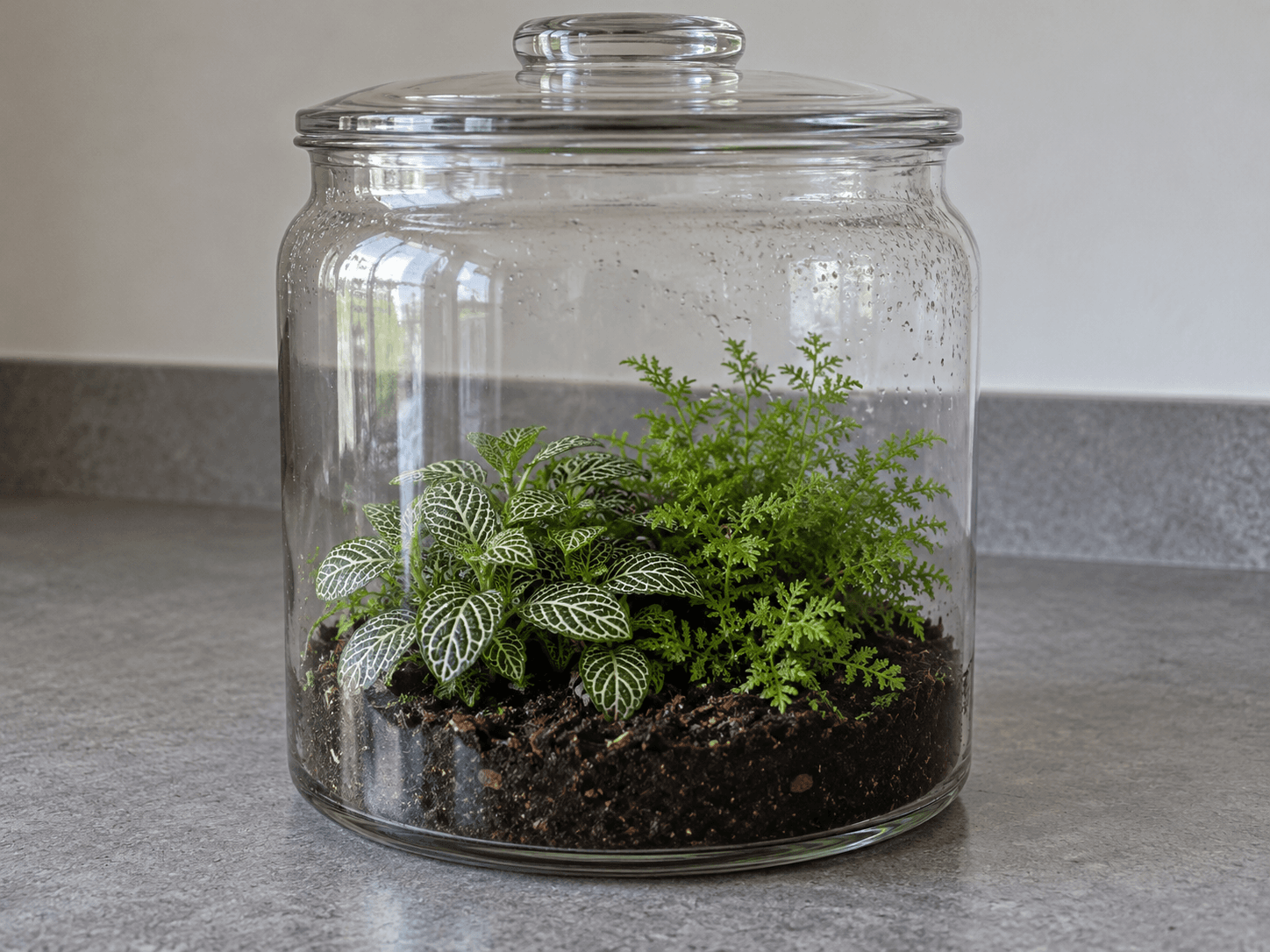
A clear, wide opening makes the first planting and later repairs easier. Set the still-potted candidates beside the container before removing them. If their leaves already fill its footprint, choose fewer plants or a larger jar. The empty spaces will not remain empty indefinitely.
Choose a compatible starting pair
| Plant | Why consider it | What to plan for |
|---|---|---|
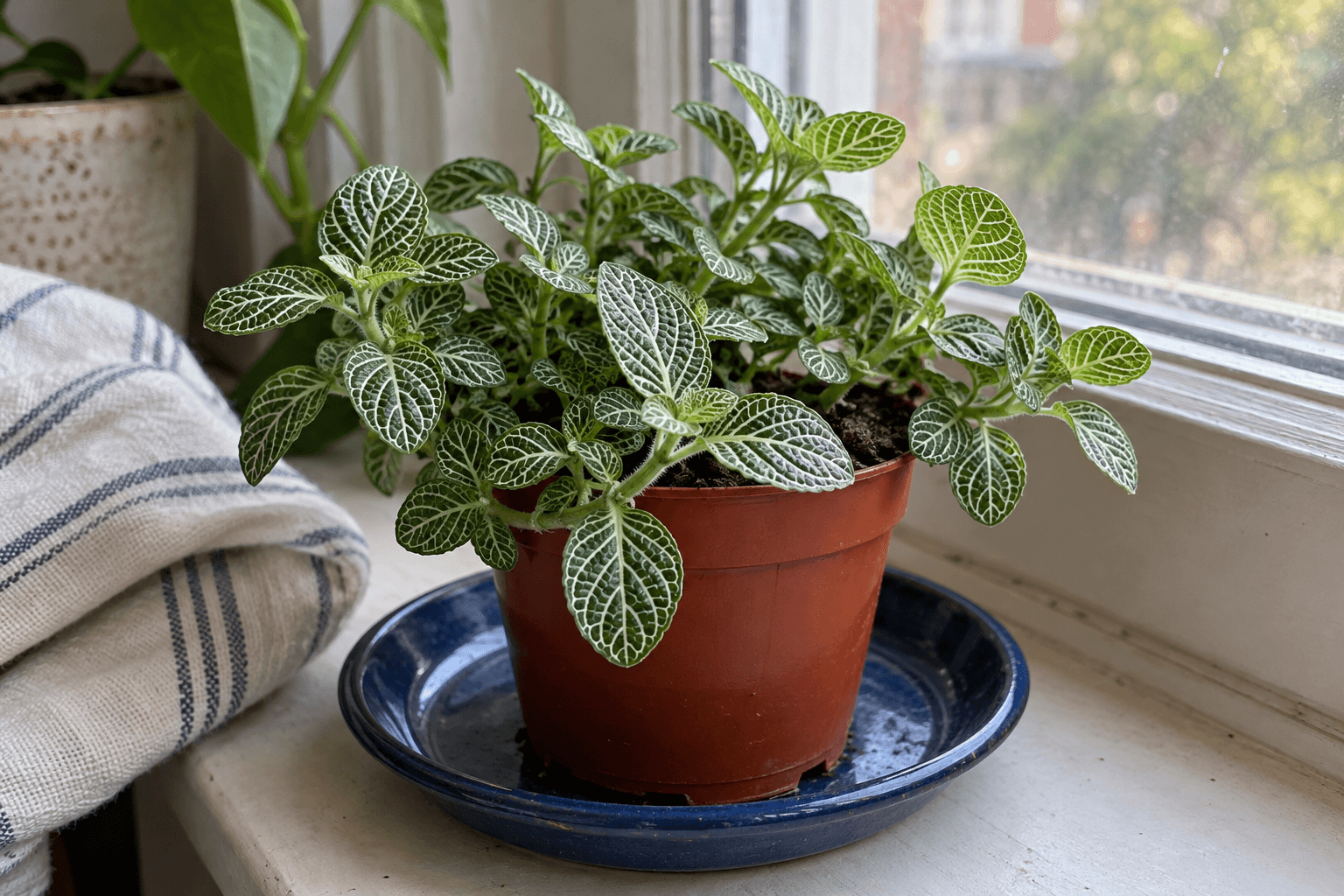
| A compact Fittonia albivenis cultivar | Low growth and patterned leaves suit close viewing in indirect light. | Creeping stems spread sideways. Keep the mix moist without saturating it; select a genuinely compact form. |
| Selaginella kraussiana | Fine branching growth suits humid conditions and indirect light. | This spikemoss can spread quickly despite its low height. Allow access for trimming and do not crowd the first planting. |
Scroll to see all columns
These are candidates, not a compulsory shopping list. One suitable plant is enough for a small container. Read the botanical label: a tray marked terrarium plants may include young specimens that will soon outgrow the display.
Look sideways as well as upwards
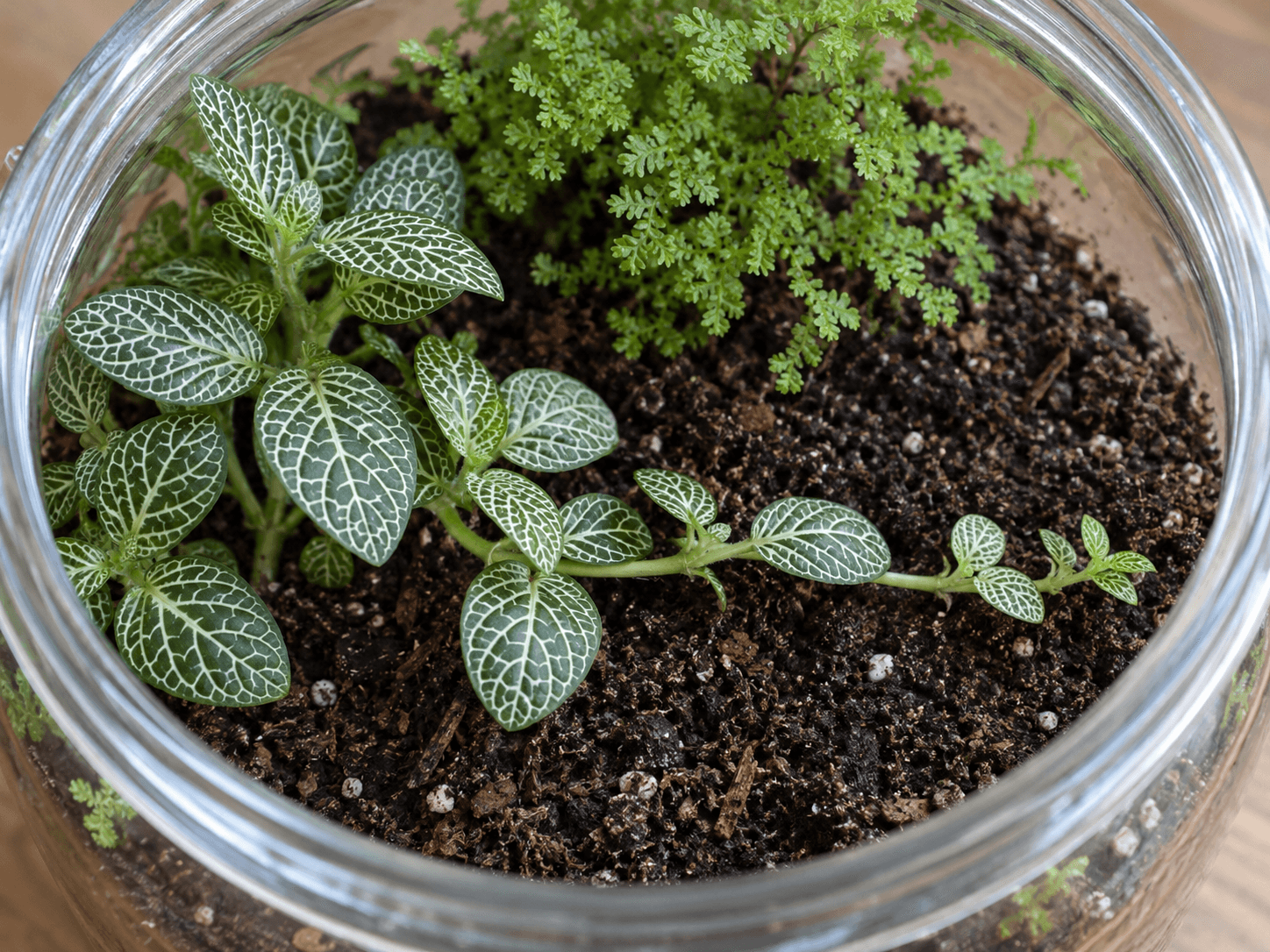
Fittonia can root along creeping stems, while spikemoss forms a spreading mat. Their low outlines can hide how much space they will occupy. Place the plants where you can follow those stems and remove trimmed material without lifting the entire planting.
Avoid building the arrangement around a cutting being permanently small. A climbing plant may fit today and quickly reach the lid. Ask what the mature habit is and whether keeping it compact would require more pruning than you want to do.
Keep incompatible care separate
A jade or echeveria needs a different moisture routine from a closed, humid Fittonia planting. A separate draining pot is a straightforward way to meet that need. Opening the jar occasionally does not make two incompatible root environments the same.
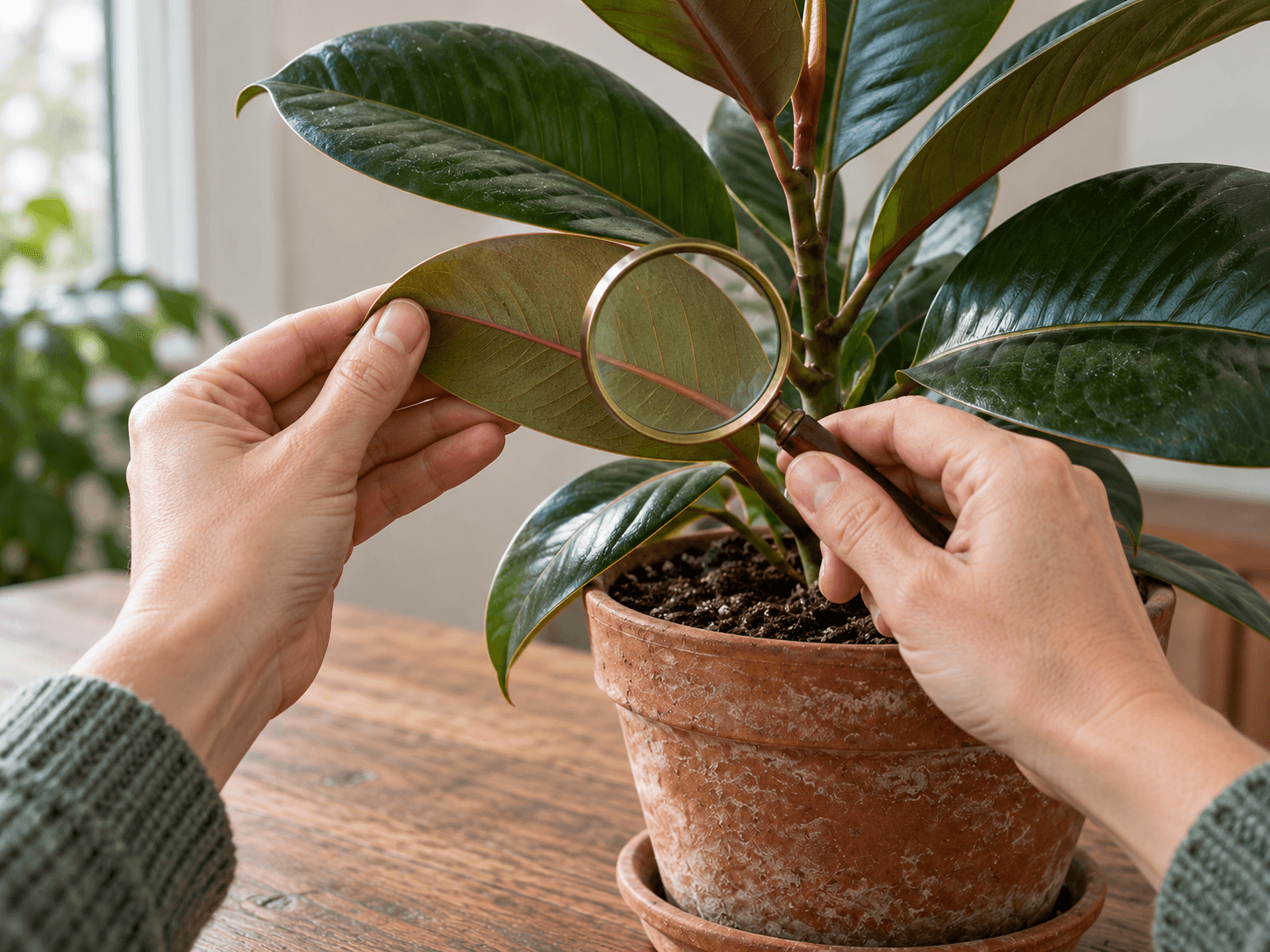
- Inspect each candidate for pests and damaged growth before combining it with other plants.
- Keep the botanical labels or photograph them. Save a simple list outside the jar.
- Leave enough room to inspect the surface and reach a fallen leaf.
- Keep an alternative pot available for a plant that outgrows the arrangement.
Find a related guide below.
Back to the beginningSources & notes
Care guidance checked against these horticultural references on 20 October 2026.
- RHS: Terrariums and bottle gardensClosed-container conditions, condensation, compatible plants and sparse watering.
- University of Missouri Extension: TerrariumsCompatibility, growth habit, lack of external drainage and ongoing maintenance.
- NC State Extension: Fittonia albivenisLow spreading habit, filtered light and moisture requirements.
- NC State Extension: Selaginella kraussianaLow mat-forming habit, rapid spread, humid conditions and root moisture.