A small plant that notices drying
Fittonia albivenis
Fine pale veins and low spreading growth suit close-up viewing. A nerve plant needs a moisture routine you can actually maintain.
The short answer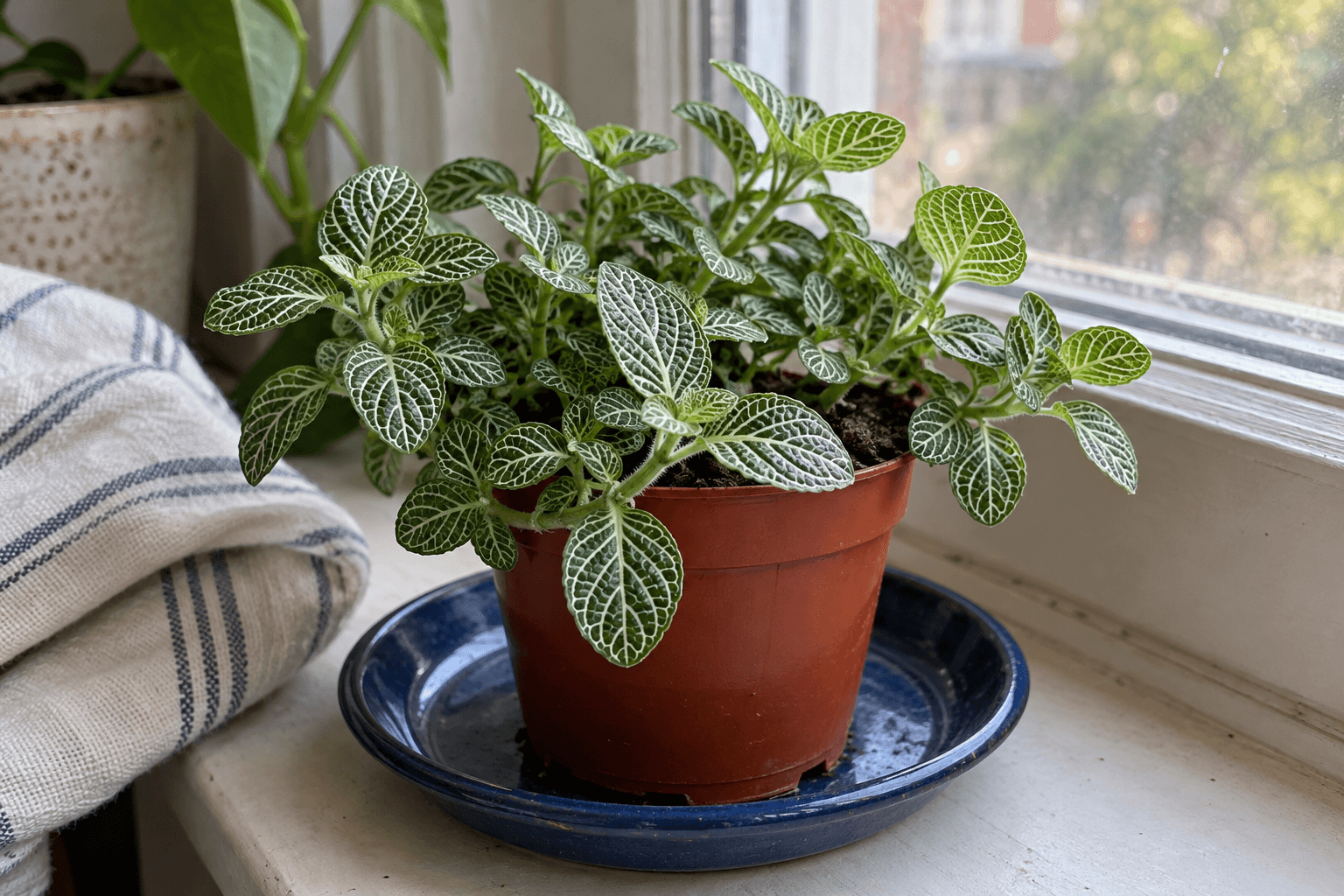
Bring it within view
A nerve plant is small enough that its leaf pattern can disappear on a high shelf. Keep it where you can see the fine contrasting veins and reach the medium. It spreads rather than forming a tall trunk. A wide view of a healthy plant is more useful for identification than a single enlarged leaf photograph.
Filtered light and steady care
Choose bright to moderate indirect light and avoid harsh sun. Its fine roots and foliage are not a good match for repeatedly drying out on a hot sill. A terrarium can provide suitable conditions, but it introduces its own moisture and ventilation decisions. Start with a manageable pot if you are still learning how the plant uses water.
Check before rescuing
If the foliage collapses, test the root ball. A dry plant may recover after appropriate watering; a wilted plant in wet mix needs a different investigation. Repeatedly pushing it to collapse is stressful and unnecessary. Check more often as you learn its routine, without automatically adding water on every inspection.
Choose it for your routine
This is a satisfying close-up plant for someone who enjoys regular observation. It may be a poor first choice for a person away for long stretches without help. Be honest about that fit before buying. The best small plant is the one whose care fits the space and attention available, not the one that merely fits the smallest pot.
Find a related guide below.
Back to the beginningSources & notes
Care guidance checked against these horticultural references on 20 October 2026.
- NC State Extension: Fittonia albivenisLow spreading habit, filtered light and moisture requirements.
- University of Maryland Extension: Watering indoor plantsMoisture and pot-weight checks; top and bottom watering.
- University of Maryland Extension: Diagnose indoor plant problemsOverlapping causes of wilt, yellowing, poor growth and root damage.