Look past the reduced sticker
A torn leaf can be a reasonable compromise. An unknown problem needs a closer look, a suitable home and an honest estimate of the care involved.
The short answer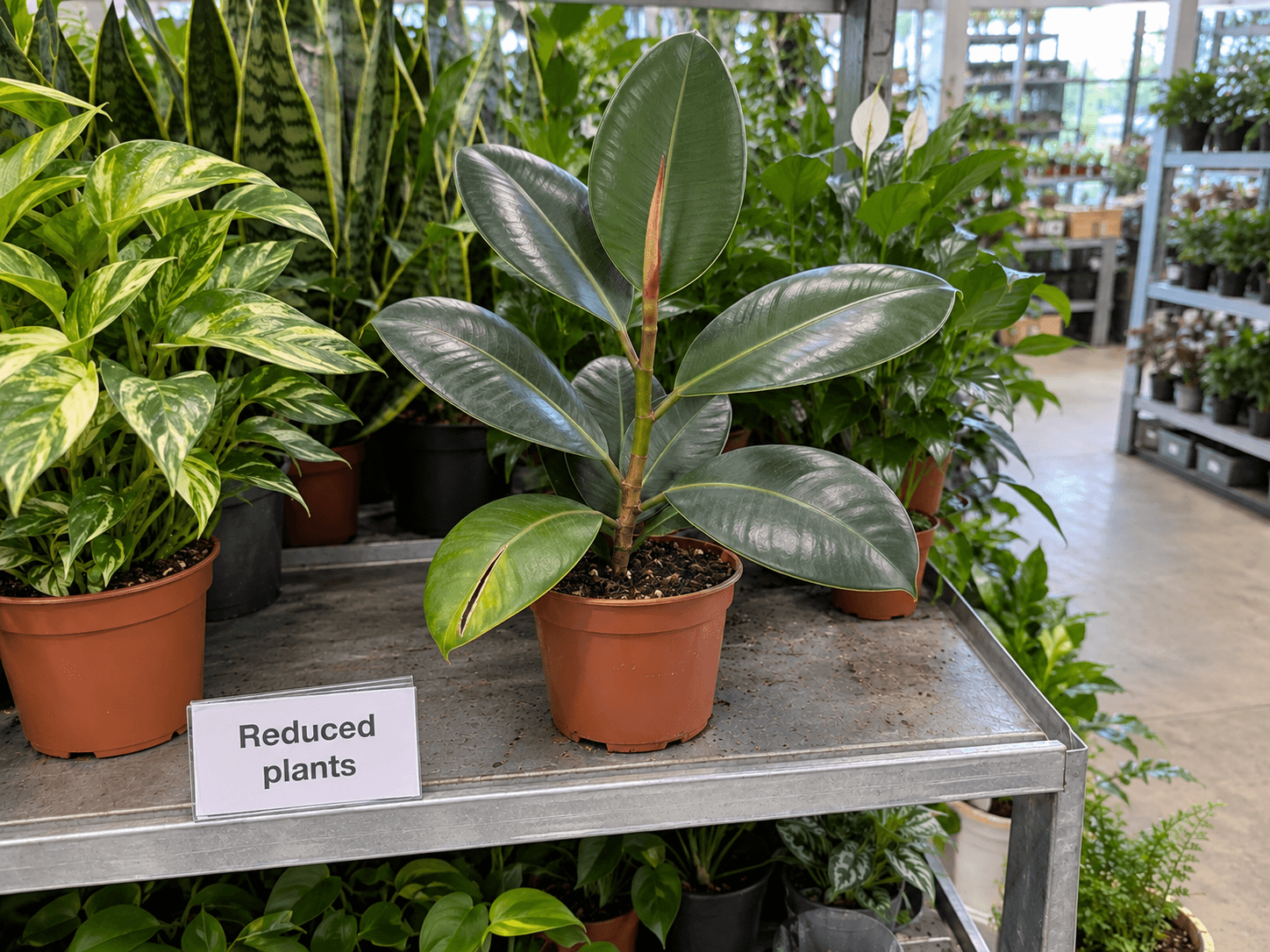
Ask what changed the price
A finished flower display, a damaged pot and a plant with unexplained collapse are different purchases. Ask how long it has been on the shelf and what staff have noticed. Keep an uncertain answer uncertain. "Probably just thirsty" does not explain a wilted plant whose mix is already wet.
Find the name before deciding. A healthy plant that needs more light or space than you can offer is still a poor fit. Check the size it can reach and whether its normal care suits your home. The bargain is the plant you want to live with, including its imperfect old leaves.
Work from the leaves down to the pot
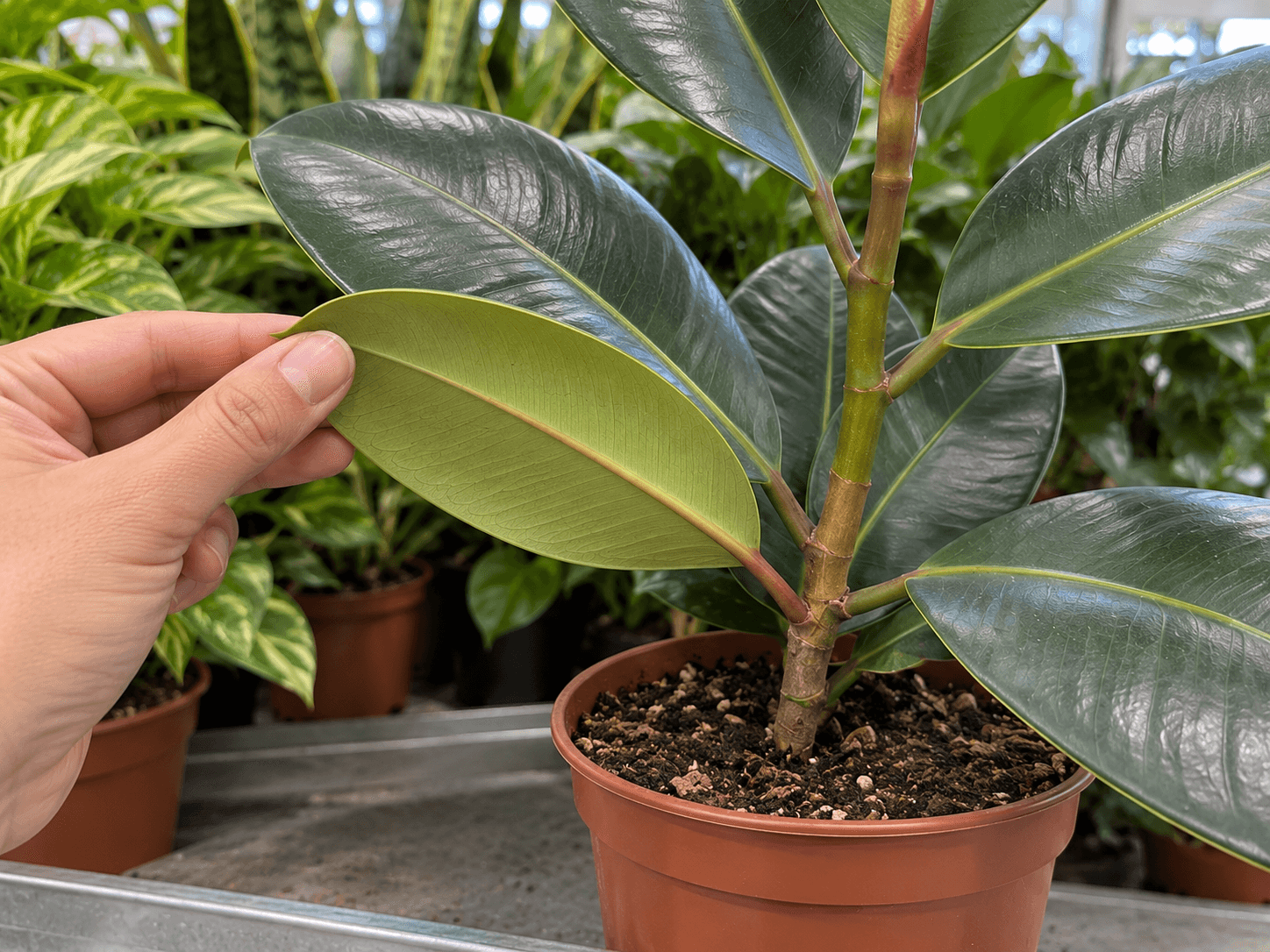
- Look at the whole plant: is damage confined to one old leaf, or present across new and old growth?
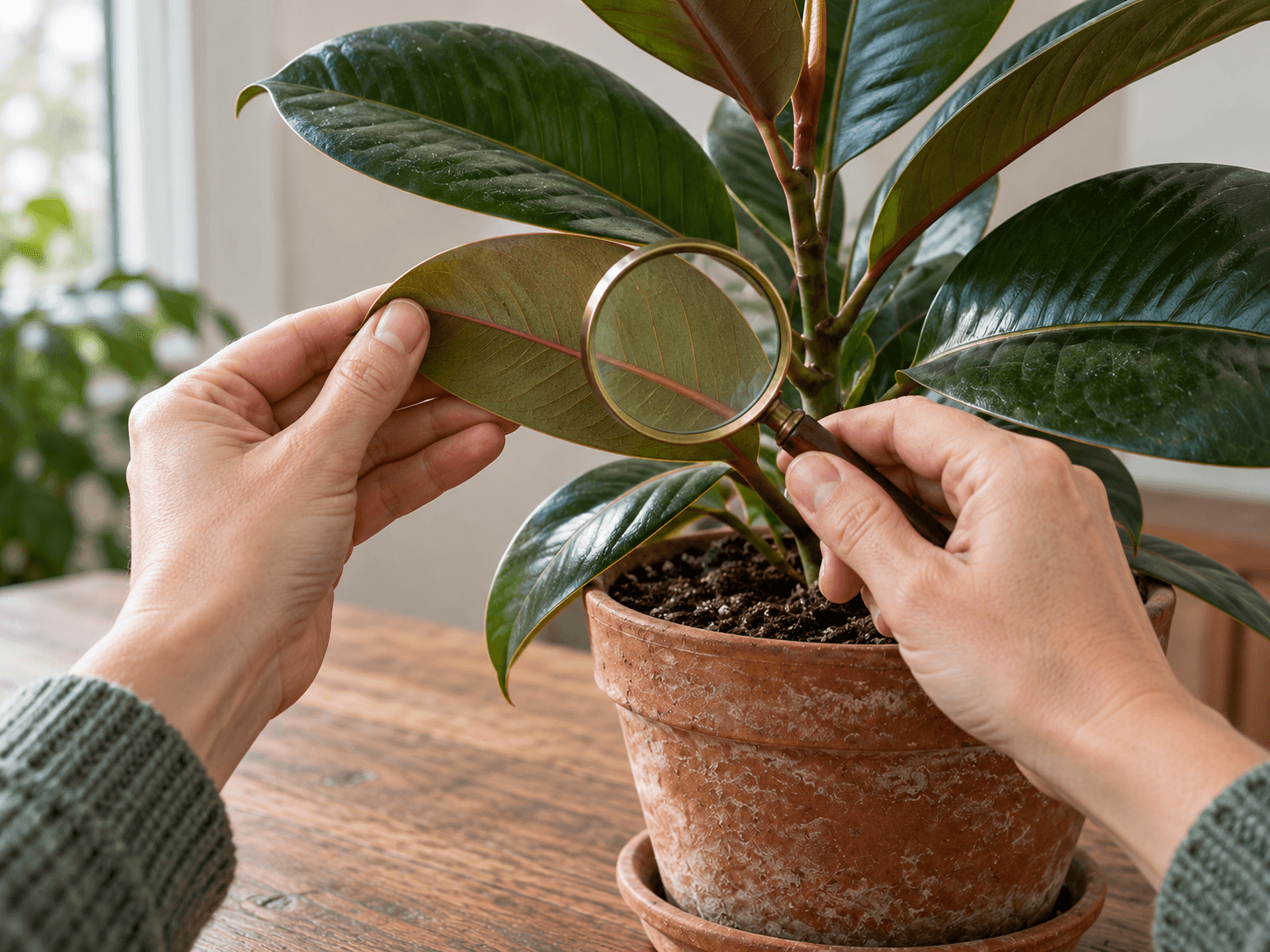
- Check leaf undersides and stem joints for insects, webbing, sticky residue or unfamiliar deposits. Ask staff before handling delicate foliage.
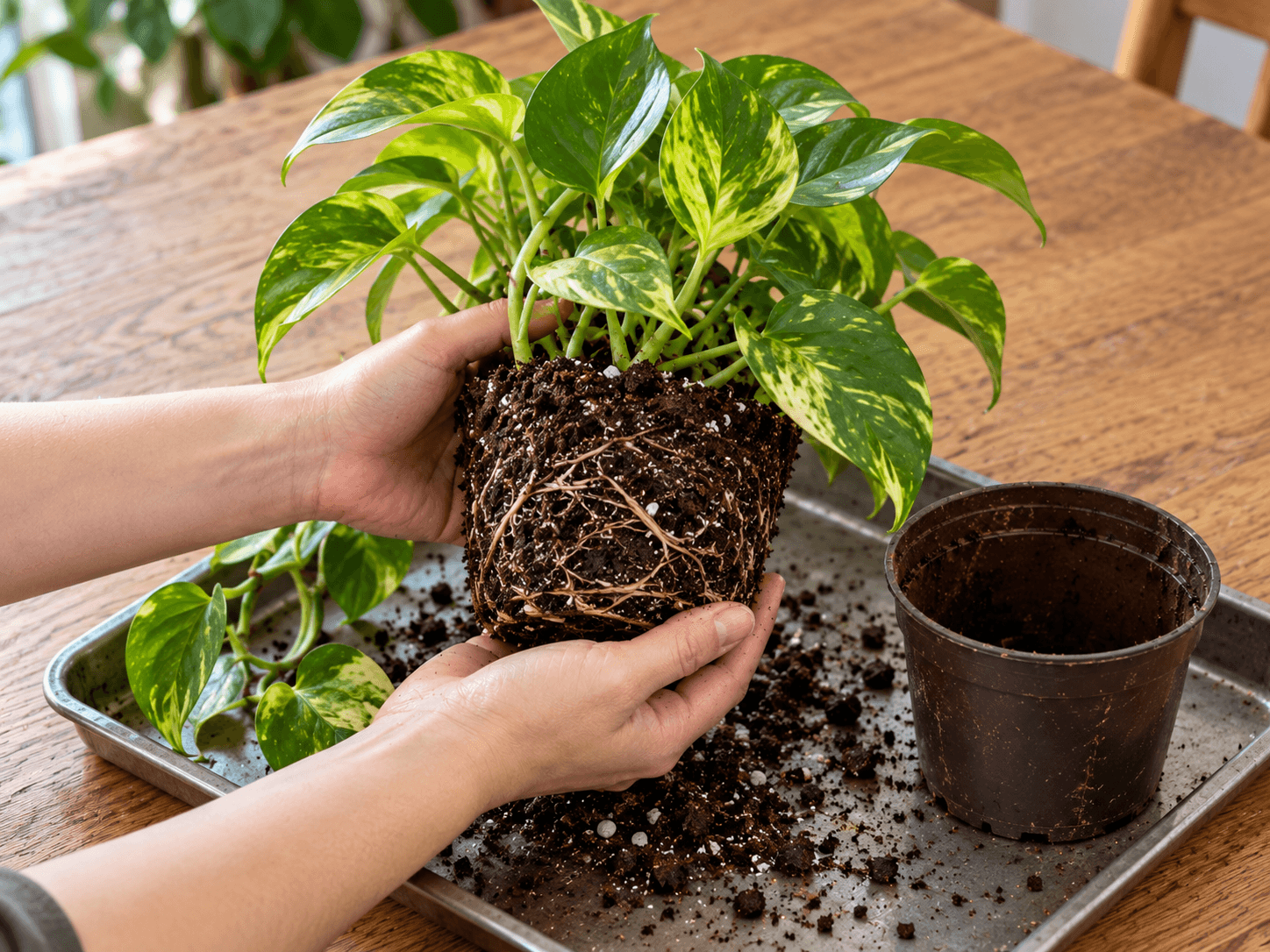
- Check whether the mix is wet or dry and whether the pot has drainage. Ask staff to help inspect an outer container or roots if needed; do not pull a shop plant out by its stem.
- Look at nearby stock too. If there are pest signs you cannot identify or manage, leave the plant and avoid putting it into your collection.
Choose the compromise deliberately
| Finding | Useful next decision |
|---|---|
| One torn older leaf; otherwise plausible growth | Decide whether you like the plant with that permanent mark. Still complete the pest and pot checks. |
| Wilt with dry mix | Ask about its care history; dryness is a clue, not a recovery guarantee. |
| Wilt with wet mix, soft stem bases or widespread decline | Treat this as an unresolved problem. A healthier specimen may be the better purchase. |
| Unknown identity or no suitable space at home | Resolve that gap before buying. |
Count any necessary pot, mix and time alongside the price. Do not buy a plant solely because it looks in need of rescue. Leaving an unsuitable specimen on the shelf is a practical decision, especially when you cannot separate it from plants you already own.
Bring home the history as well as the pot
Keep its label and a photograph of its condition at purchase. Transport it protected from unsuitable temperatures, then inspect it again at home. Give it appropriate light and separate observation space. Check moisture before watering; do not automatically repot, feed and prune on the same afternoon.
Respond to what you actually find. A genuine drainage or root problem may need action, while a cosmetic tear can stay. Compare subsequent growth with the arrival photograph. The first-fortnight guide covers this settling-in period in more detail.
Find a related guide below.
Back to the beginningSources & notes
Care guidance checked against these horticultural references on 20 October 2026.
- Royal Horticultural Society: Growing houseplantsIndoor conditions, seasonal care, humidity and holiday planning.
- University of Minnesota Extension: Managing insects on indoor plantsInspection, isolation, pest signs and integrated management.
- Iowa State University Extension: Diagnosing houseplant problemsDistinguishing environmental damage, cultural problems, pests and disease.