A smaller fern for the desk
Hemionitis rotundifolia (Pellaea rotundifolia)
Round leaflets on wiry dark stems, without the spread of a Boston fern. Start by checking which button fern the label actually means.
The short answer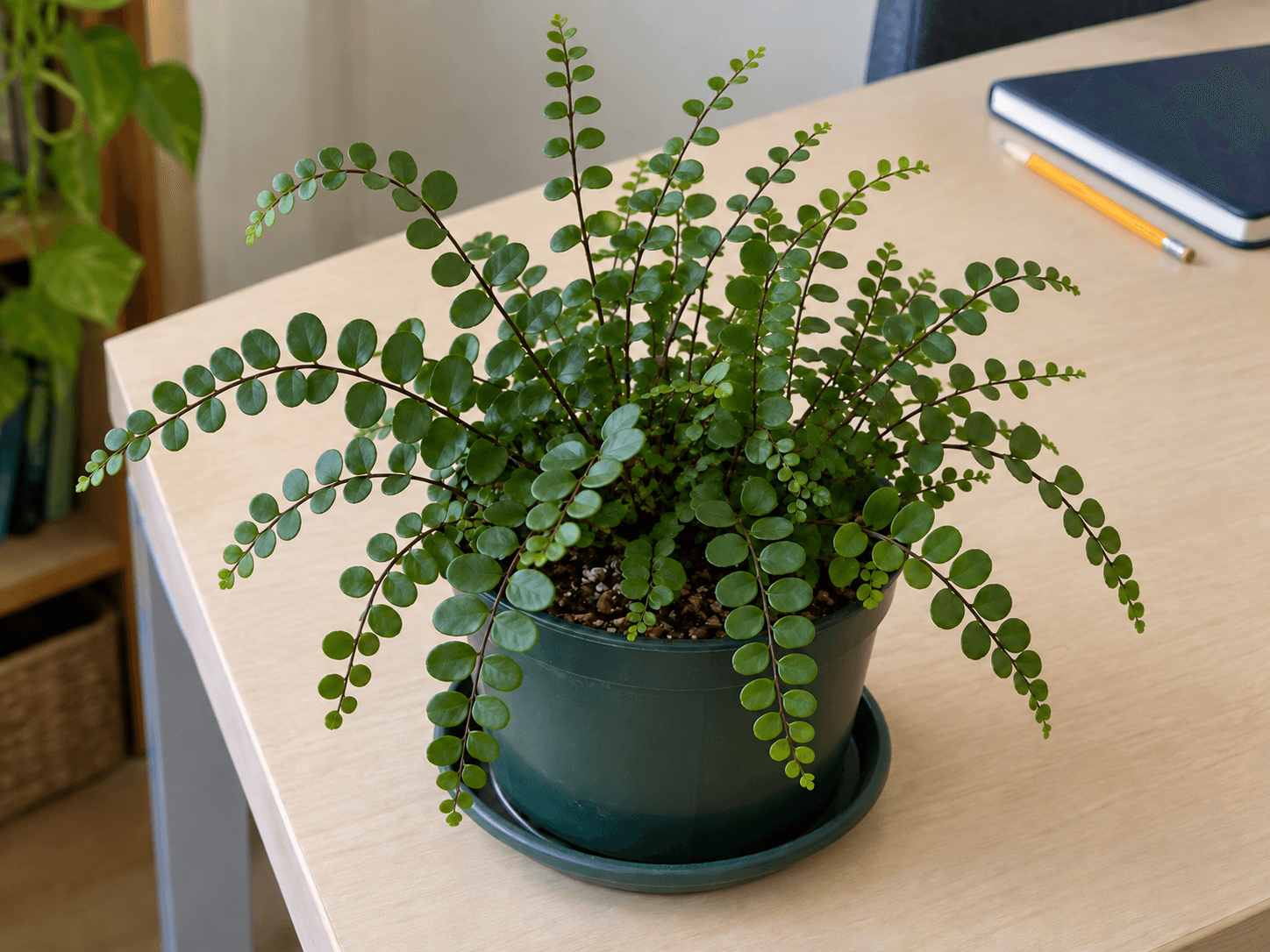
Read the second half of the label
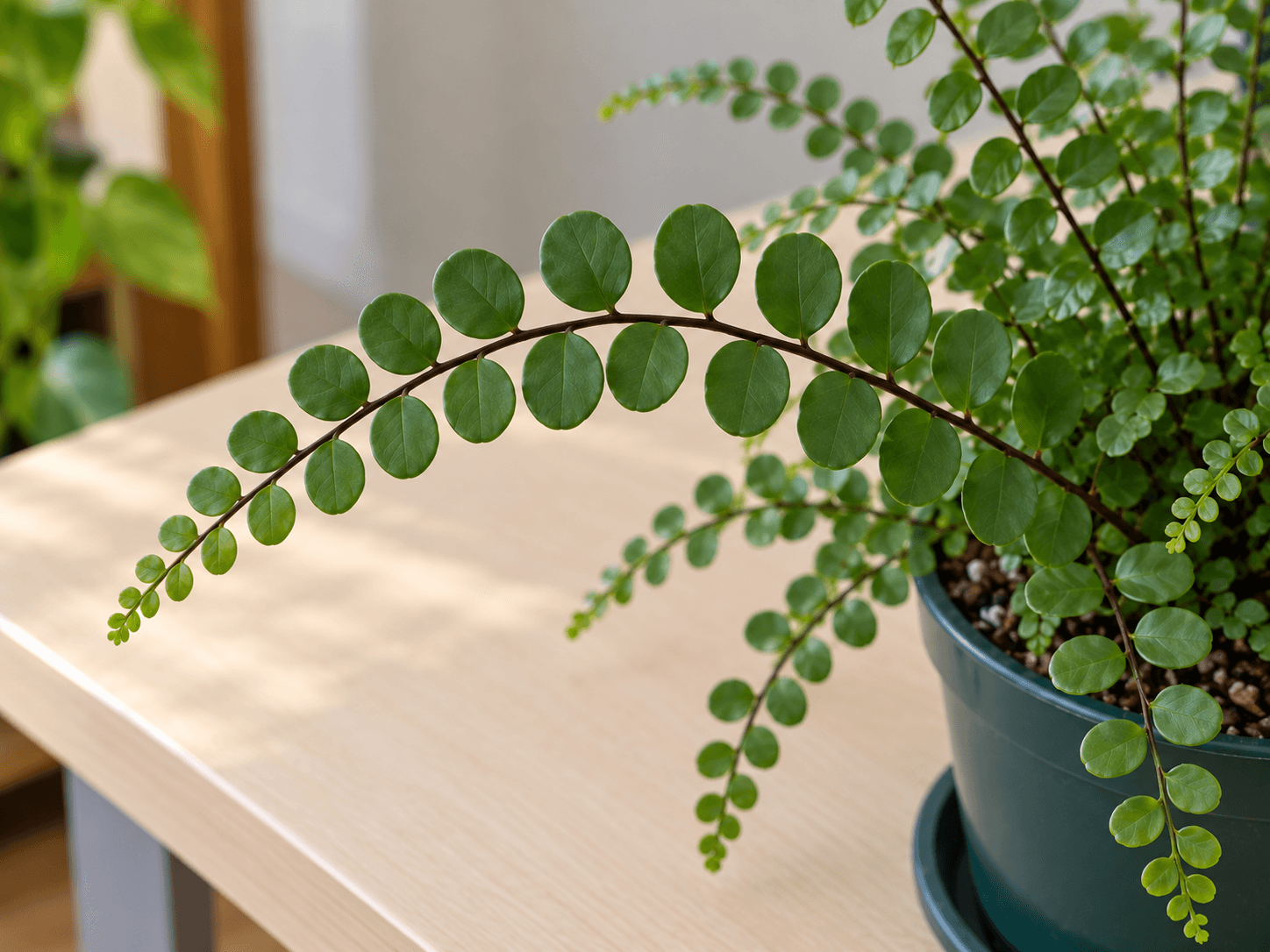
Look for little round, smooth-edged leaflets along thin dark frond axes. This plant is widely sold as Pellaea rotundifolia; Kew and NC State currently list it as Hemionitis rotundifolia. Both names help when searching. A lemon button fern is a different plant, so instructions attached to that name are not automatically interchangeable.
Keep a photograph of the full label, including the smaller botanical type. A picture of a price sticker is surprisingly unhelpful six months later. If the label only says fern, compare the whole frond with a botanical reference rather than deciding from one detached leaflet.
Small does not mean light-free
A place near a window with filtered light is more useful than the dark space behind a monitor. Protect the fronds from harsh midday exposure. This fern stays relatively compact, but its arching growth still needs a little clear space around the rim.
Set the pot beside your work area, then sit down as usual. Can you reach a drawer without catching a frond? Can you lift the pot without moving the keyboard? These ordinary checks are a better test of a desk plant than how it looks in an empty photograph. Leave the saucer in place to protect the surface.
Check the pot before the calendar
A button fern appreciates drainage and does not demand the constantly humid conditions associated with some other ferns. Water when the upper mix starts to dry, taking pot weight and conditions below the surface into account. Do not let the whole root ball repeatedly become bone dry, or keep topping up a wet pot because the leaflets look delicate.
For a small desk plant, carry the nursery pot to the sink, water it and let it drain before returning it. This gives you a chance to look underneath. If the saucer holds water later, empty it rather than leaving the roots to stand in the runoff.
Keep the fronds you have
Remove fully dead fronds with a clear view of the base, without shortening every healthy frond to make a rounded haircut. Browning after a spell away is a reason to check the root ball and room conditions. It is not evidence that the plant needs a larger pot or a strong feed.
Find a related guide below.
Back to the beginningSources & notes
Care guidance checked against these horticultural references on 20 October 2026.
- NC State Extension: Hemionitis rotundifoliaButton fern identity, rounded leaflets, drainage and tolerance of lower humidity.
- Kew Plants of the World Online: Hemionitis rotundifoliaAccepted name in this taxonomy and the synonym Pellaea rotundifolia.
- RHS: Pellaea rotundifoliaCompact arching fronds and moist, draining growing conditions.
- University of Maryland Extension: Watering indoor plantsMoisture and pot-weight checks; top and bottom watering.