Make room for the fern
Nephrolepis exaltata
A Boston fern needs more than a handsome hanging basket. Plan for regular moisture checks, accessible fronds and enough room.
The short answer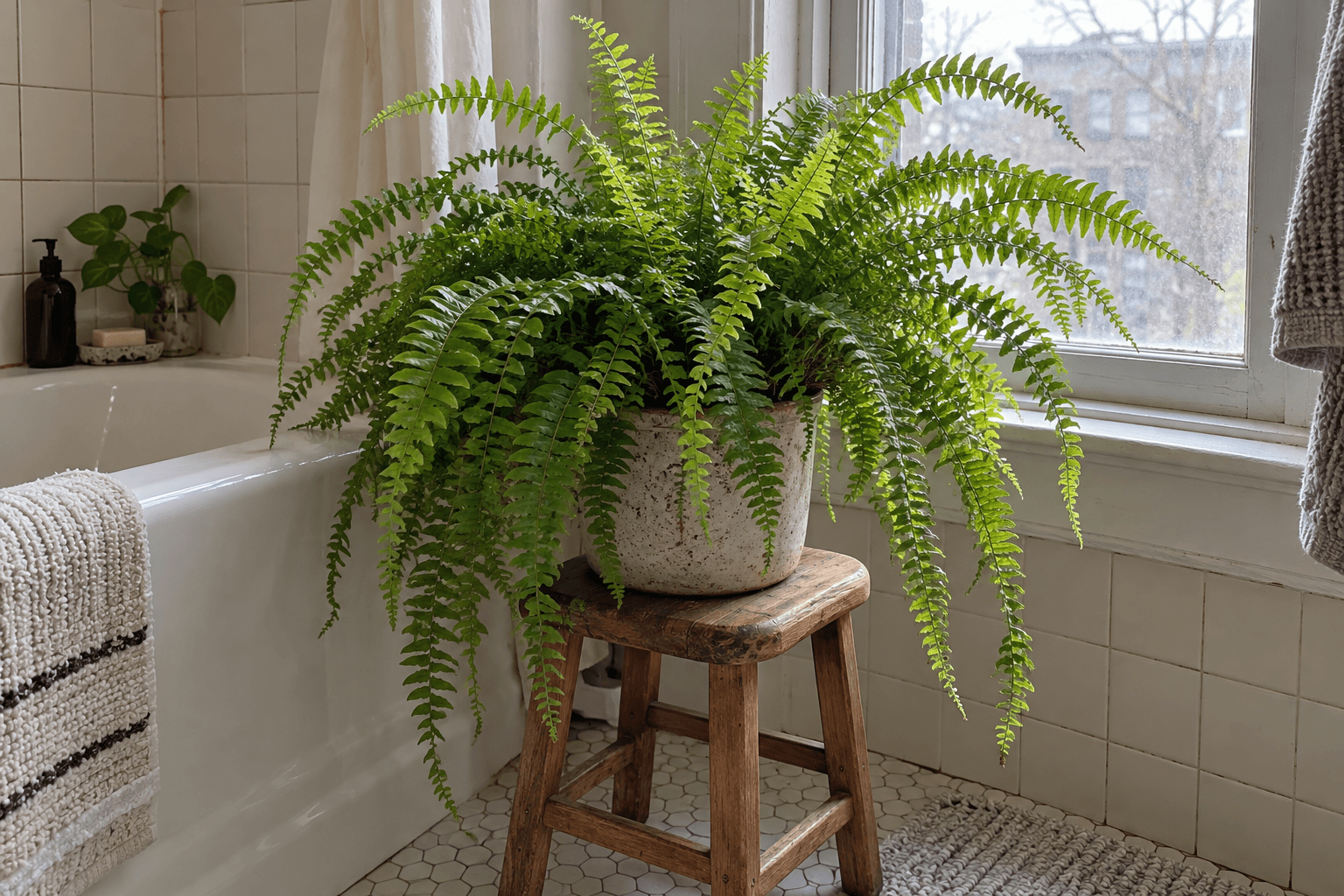
Measure the fronds, too
The pot fits on the stool; the fronds may not fit beside the door. Boston fern cultivars vary in size, and their arching growth needs clearance. Place the plant where passing coats will not repeatedly break the tips. A hanging basket is useful only if you can safely lower it to check and drain it.
This is not the jade routine
A fern's fine foliage and moisture needs call for closer attention than a succulent. Check the medium regularly and water before the root ball becomes thoroughly dry, while maintaining drainage. Cool, low-light conditions can reduce water use. A dry surface does not justify leaving the base submerged in a decorative container.
Compare moisture and pot weight before wateringChoose the actual conditions
Bright filtered daylight and higher humidity suit this fern. A sun-baked sill or hot air outlet can dry the foliage quickly. Bathrooms are possibilities, not guarantees: consider their windows, ventilation and overnight temperature. Avoid positioning a large pot on a narrow ledge simply because the room gets steamy for ten minutes.
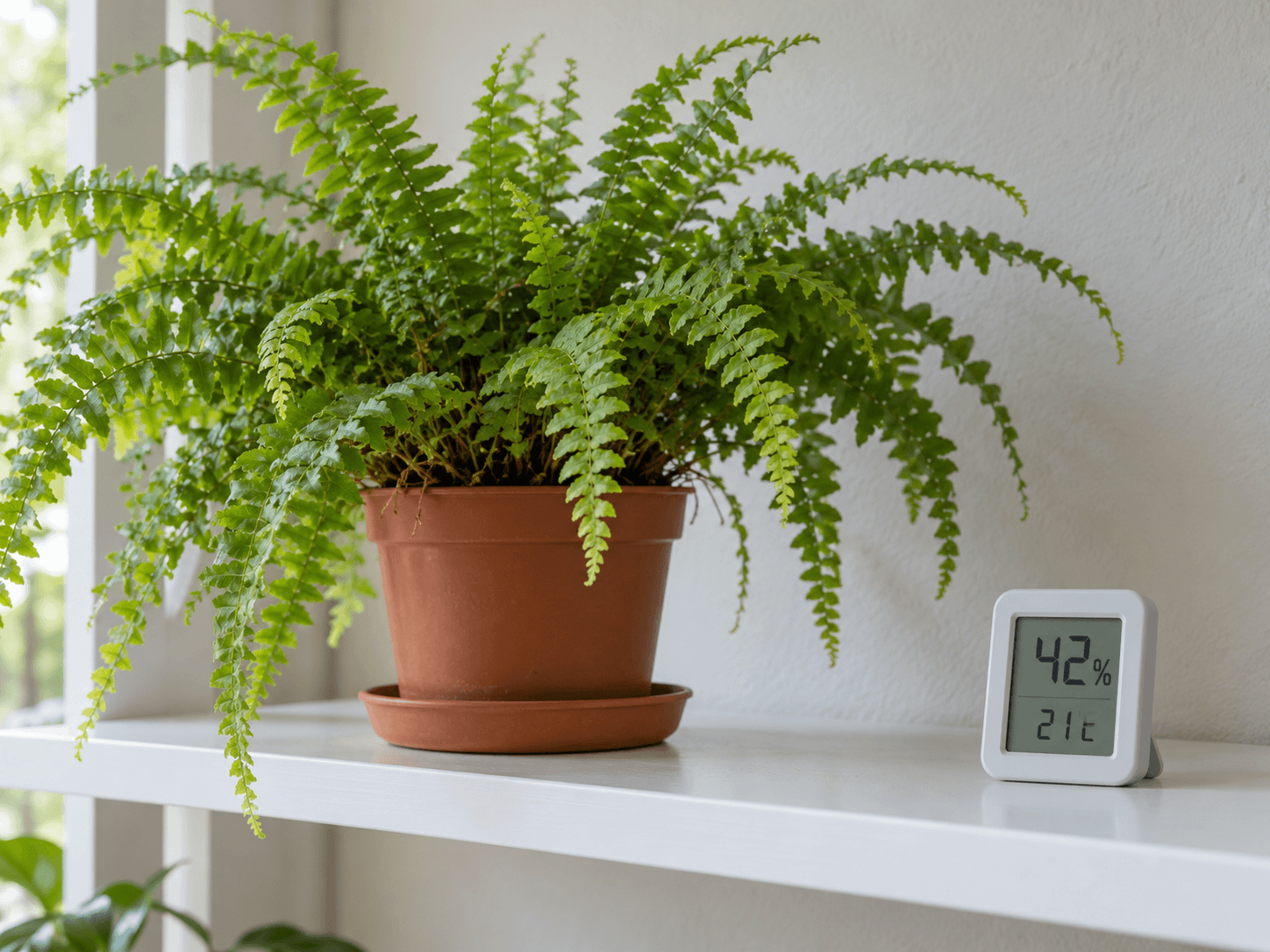
If drying fronds make you suspect the air, measure humidity near the plant rather than relying on how the room feels. Check the root ball at the same time: raising room humidity does not rewet dry mix. Move away from direct hot airflow first, and keep any room humidifier clean. Condensation on windows is a reason to reassess the setting, not to keep increasing it.
Compare practical ways to manage humidity at homeLook underneath before removing
Brown dots arranged regularly under a mature frond can be sori, the structures that produce spores. They do not automatically indicate a pest. Compare the pattern with the linked botanical photographs. Remove fully dead fronds with clean tools, but leave healthy growth in place. A little unevenness is ordinary; increasing widespread loss deserves a moisture and pest inspection.
Find a related guide below.
Back to the beginningSources & notes
Care guidance checked against these horticultural references on 20 October 2026.
- NC State Extension: Nephrolepis exaltataBoston fern moisture, humidity, fronds and spore structures.
- University of Maryland Extension: Watering indoor plantsMoisture and pot-weight checks; top and bottom watering.
- University of Minnesota Extension: Managing insects on indoor plantsInspection, isolation, pest signs and integrated management.
- Iowa State Extension: Raising humidity for houseplantsHumidity preferences, humidifiers, local measures and the limits of misting.
- Health Canada: Cool-mist humidifiersHygrometer use, seasonal humidity guidance, reservoir cleaning and emptying.