A support that fits the plant
Choose a stable support, identify the main stem and leave leaf stalks free to move.
The short answer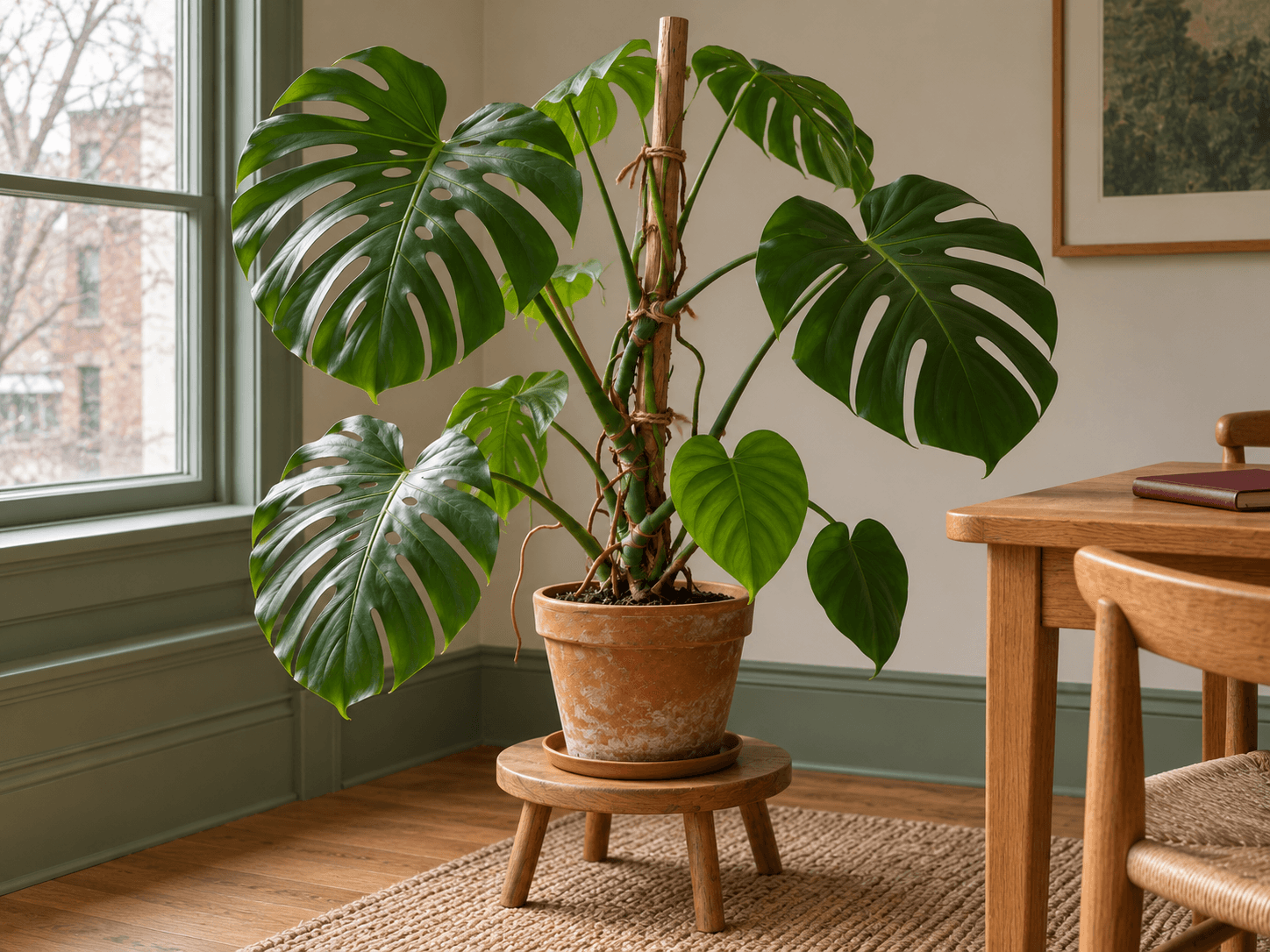
Follow the main stem first
Several leaf stalks can make a young monstera look like a bunch of separate stems. Trace them back to the thicker climbing stem, where nodes and aerial roots develop. That is the structure you are trying to support. Pulling all the leaf stalks tightly into a bundle makes a neat photograph but restricts their normal positioning.
Make the base stable
Consider the weight of the plant, pot and support together. A tall pole in a light, narrow container can make the whole arrangement easier to tip. Fit the support securely, ideally while planned repotting allows you to see the roots. Do not blindly force a sharp stake through the centre of a crowded root ball.
Attach without forcing a straight line
Bring a flexible part of the main stem towards the support gently. Use broad, soft ties with room for growth. An older rigid stem may not follow the shape you imagined; work with its position rather than cracking it. Keep new leaves clear and check ties again as the stem thickens.
Choose maintenance you can keep up
Moss supports and simple stakes involve different care. If using a moist rooting support, consider where its drainage goes and how you will maintain it without saturating the pot. Check stability after watering and as the top grows. Keep the arrangement clear of a busy walkway, and ask for help moving a heavy container.
Find a related guide below.
Back to the beginningSources & notes
Care guidance checked against these horticultural references on 20 October 2026.
- University of Wisconsin Extension: Monstera deliciosaClimbing stems, aerial roots and stable supports.
- NC State Extension: Monstera deliciosaIdentity, climbing habit, light, watering and sap irritation.
- University of Maryland Extension: Potting and repottingRoot-ball placement, aeration and why not to add gravel.