Folded leaves do not always mean thirst
Oxalis triangularis
Purple oxalis folds its leaflets and can take a rest from growth. Distinguish daily movement from dieback before deciding whether it needs water.
The short answer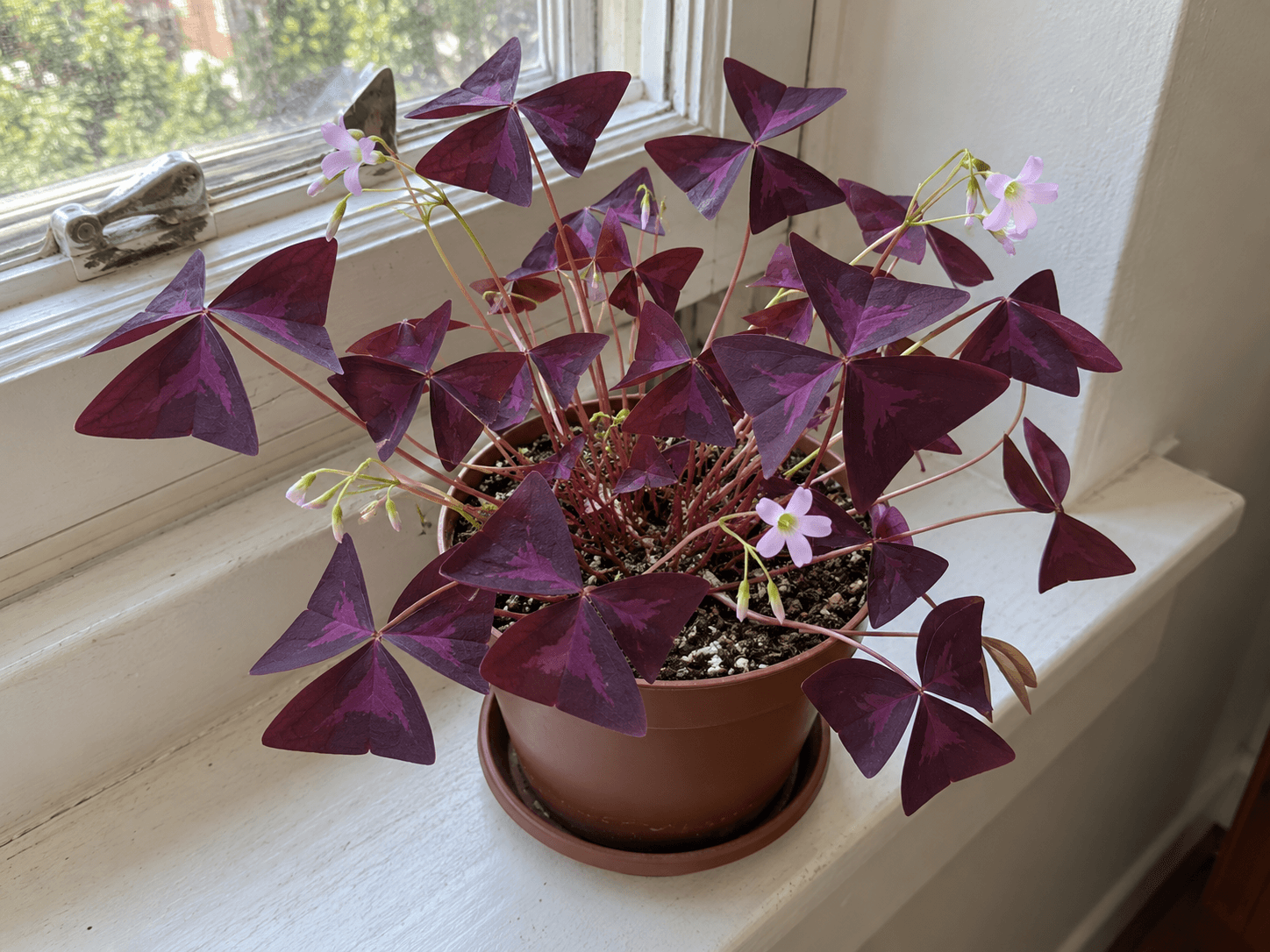
Three leaflets on one stalk
Each familiar purple leaf consists of three triangular leaflets joined at the top of a slender stalk. Pale pink or white flowers grow on separate stalks. The plant is often sold as a shamrock, but it belongs to Oxalis rather than the clover genus Trifolium.
The stalks are delicate. Place the pot where curtains and sleeves will not repeatedly catch them. A newly broken stalk is a handling problem, not evidence that the whole plant needs more humidity or a stronger fertilizer.
Compare morning with evening
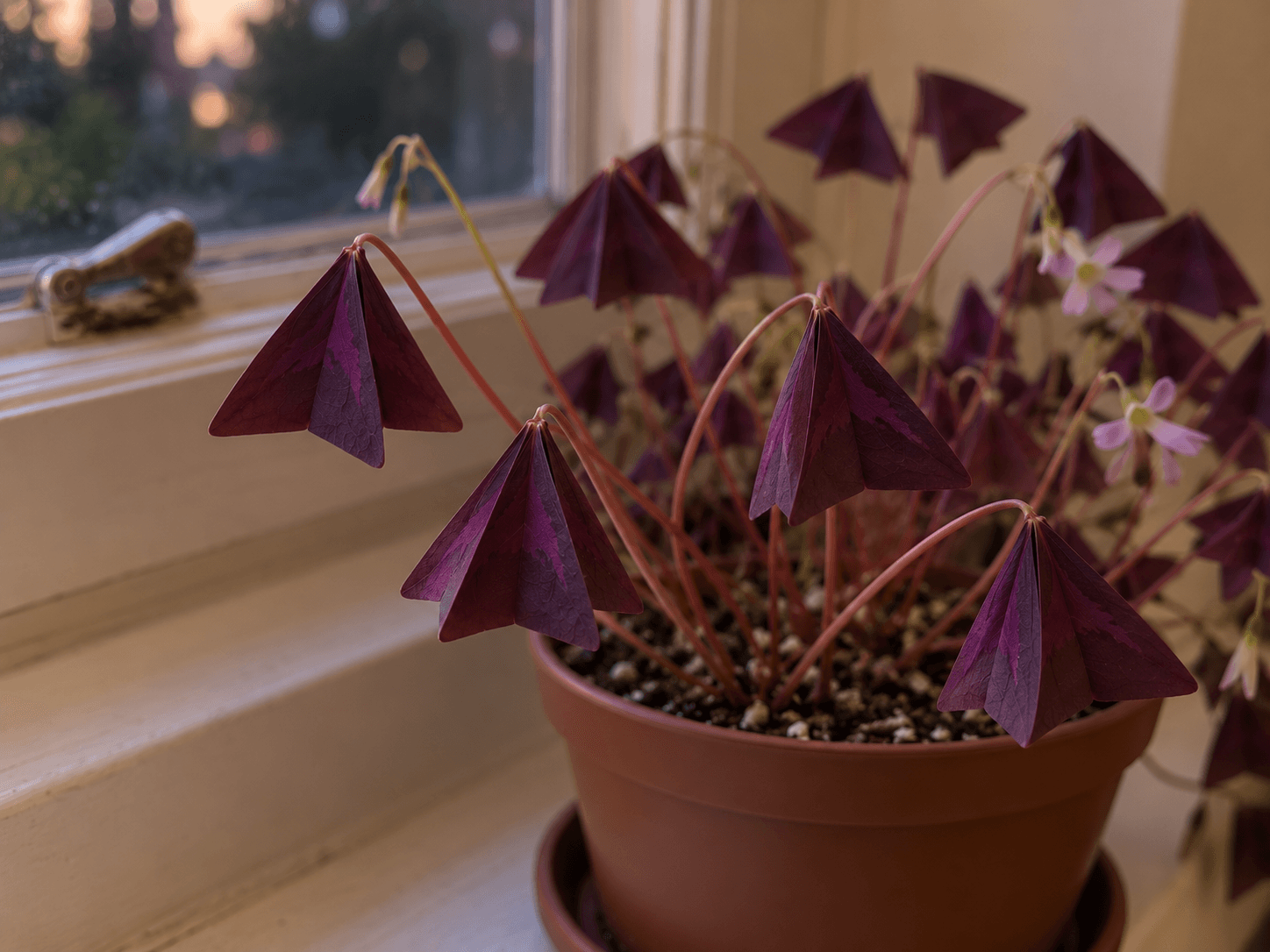
Leaflets close at night and can move when disturbed. Before watering a plant that looks different after sunset, compare it in daylight and check the mix. Firm stalks with folded leaflets are a different observation from soft collapsing tissue.
Take photographs from the same position at two times of day if you are unsure what is changing. Follow an individual leaf rather than judging the whole clump by its silhouette. Daily reopening helps distinguish normal movement from a lasting loss of foliage.
Water active growth according to the pot
Give the plant bright light, introducing stronger sun gradually, and let the surface of a well-drained mix dry between waterings. Wet the root zone and empty runoff. Excessive heat or severe drying can interrupt growth; a cool, bright indoor position is often easier to manage than a hot enclosed sill.
Keep the pot accessible so you can check beneath the leaves. The airy canopy may look dry while the lower mix remains wet. Fertilize only during active growth according to the product instructions, rather than feeding a resting plant to force its leaves back.
An empty-looking pot may still contain living growth
Oxalis triangularis grows from scaly underground rhizomes. It can lose foliage and rest, including after heat or drought stress. First rule out an ongoing wet-root problem or other damage. Remove fully dead foliage and reduce watering during a genuine rest instead of continuing the leafy plant's old routine.
Watch for new shoots and resume watering gradually as growth returns, keeping the pot in suitable light. Rest duration varies; a fixed date is less useful than the condition of the plant. Do not repeatedly dig it up just to check whether something is happening.
Find a related guide below.
Back to the beginningSources & notes
Care guidance checked against these horticultural references on 20 October 2026.
- NC State Extension: Oxalis triangularisThree leaflets, nocturnal folding, scaly rhizomes, dormancy and oxalates.
- University of Wisconsin Extension: Shamrocks, Oxalis speciesLeaf movement, bright conditions, growth-stage watering and rest.
- University of Maryland Extension: Diagnose indoor plant problemsOverlapping causes of wilt, yellowing, poor growth and root damage.