A tall begonia with spotted leaves
Begonia maculata
Begonia maculata grows upward on jointed stems. Give those stems light and support, with enough room to keep the leaves intact.
The short answer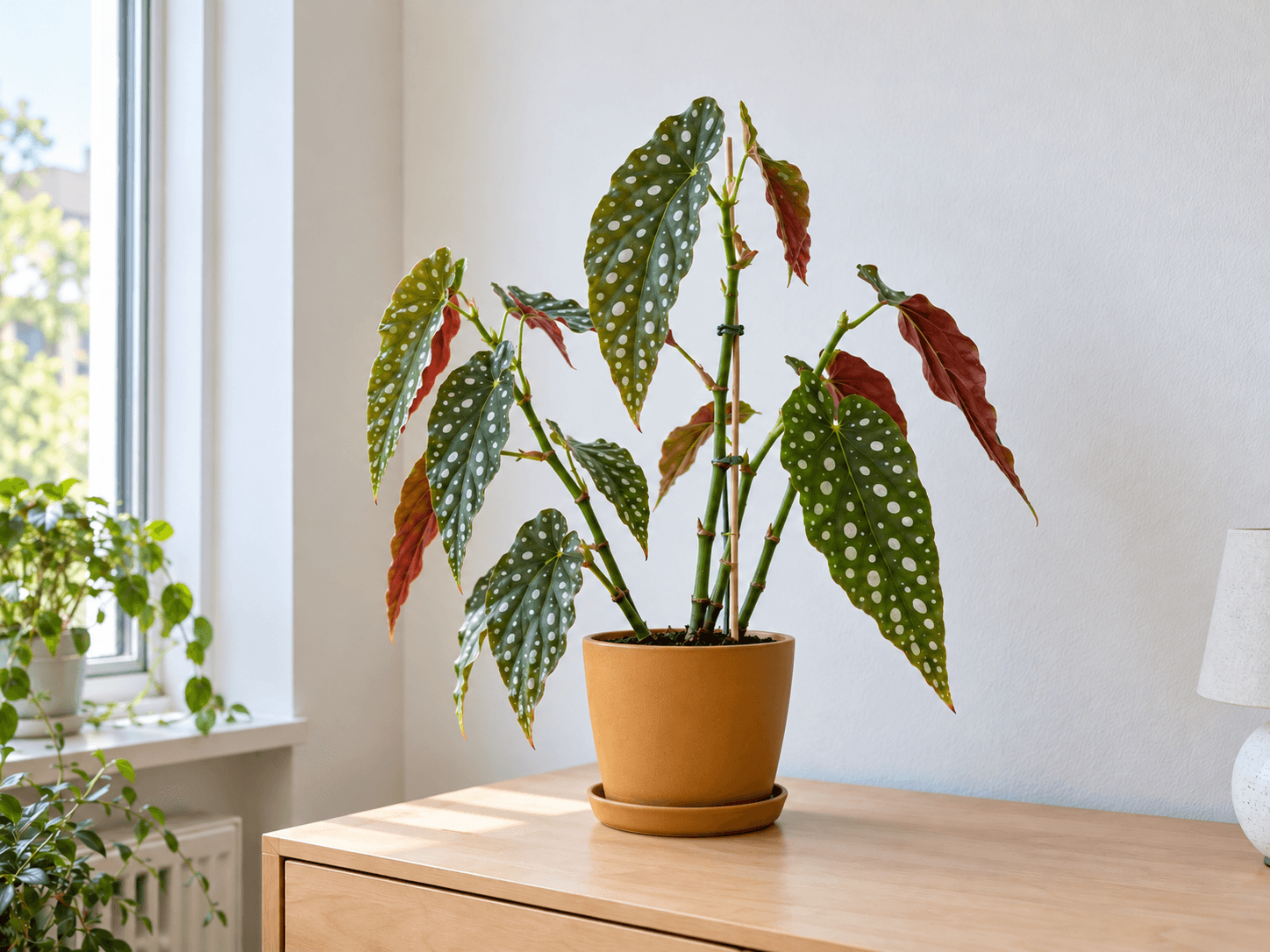
Look beyond the spots
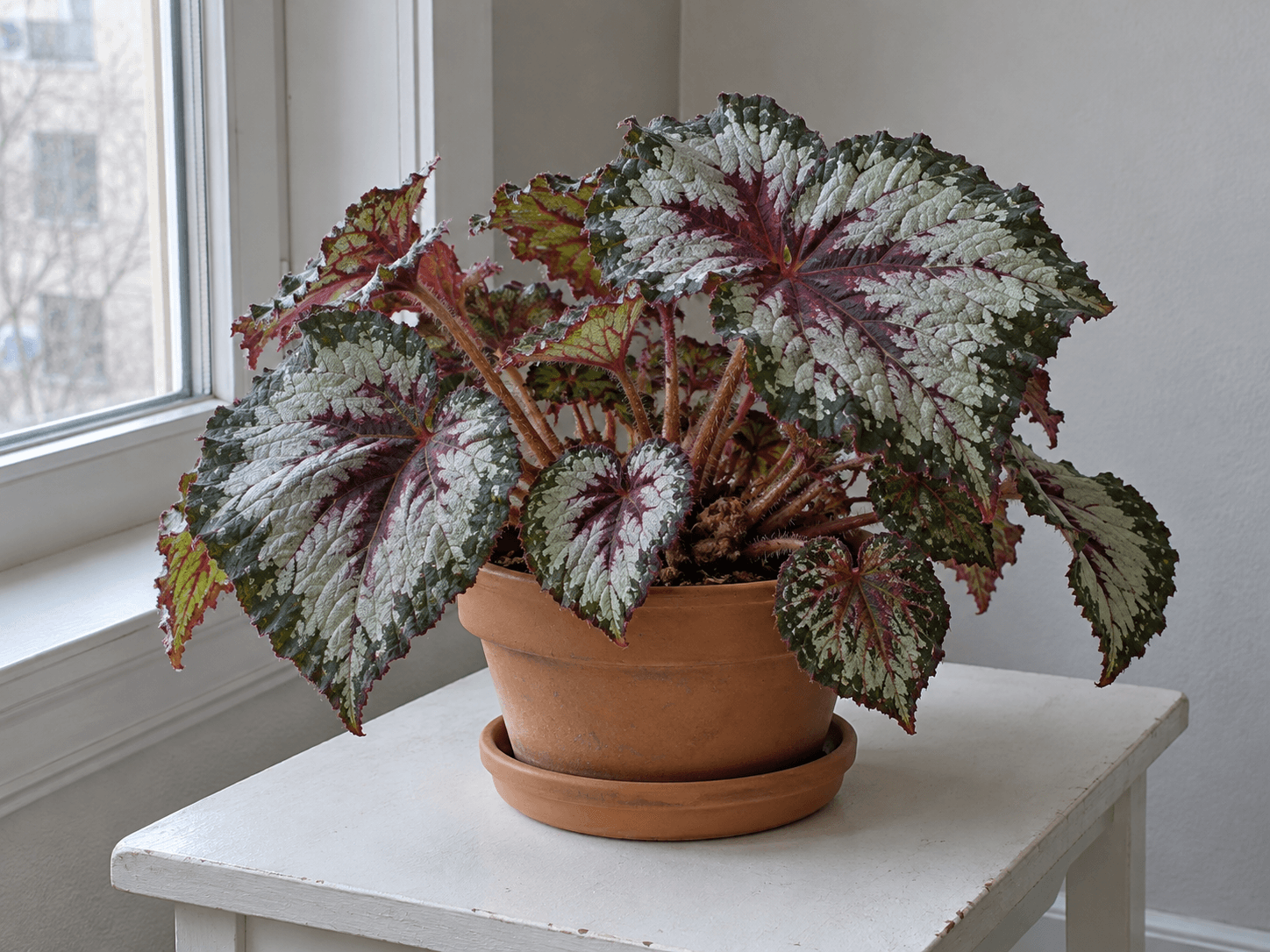
Begonia maculata has elongated, unequal-sided leaves with silver spots and reddish backs. Below them are upright stems with visible joints. Those canes explain the shape: this begonia will not remain a low mound like a rex begonia, even if both plants arrive in the same size nursery pot.
Spotted cane hybrids also turn up under the name polka-dot begonia. Keep the original label. A spotted leaf is a useful clue, but it does not settle an exact identity. For day-to-day handling, the upright cane habit is the immediate thing to notice.
Put the pot where it can gain height without growing into a shelf. A low sideboard works better than the gap under a kitchen cupboard. Check the route to the sink too: moving a tall, brittle plant through a narrow doorway is a job you will repeat.
Help the stems hold their shape
Use a bright window position protected from prolonged hot direct sun. A cane leaning toward a distant window is a reason to review the position, rather than adding a succession of taller stakes. Leave room between the leaves and the glass, particularly in a Toronto winter.
Avoid squeezing the plant behind a curtain that brushes the leaves whenever it opens. Move the pot by its base. The long leaves are easy to catch with a sleeve, and a broken blade does not grow back together. A small amount of clear space saves a surprising amount of tidying.
Reach the mix, then let it drain
Check an exposed patch of mix before watering. The surface can begin to dry while moisture remains below; the aim is to avoid both a saturated container and a completely dry root ball. Water the mix evenly, allow runoff to escape and check inside the cover pot before returning the plant.
Slower winter growth usually means a longer interval between waterings. Keep checking the pot, rather than preserving the summer routine. Feed during active growth according to the product label; extra fertilizer will not compensate for a dim position or waterlogged roots.
Tie the cane, not the leaf stalk
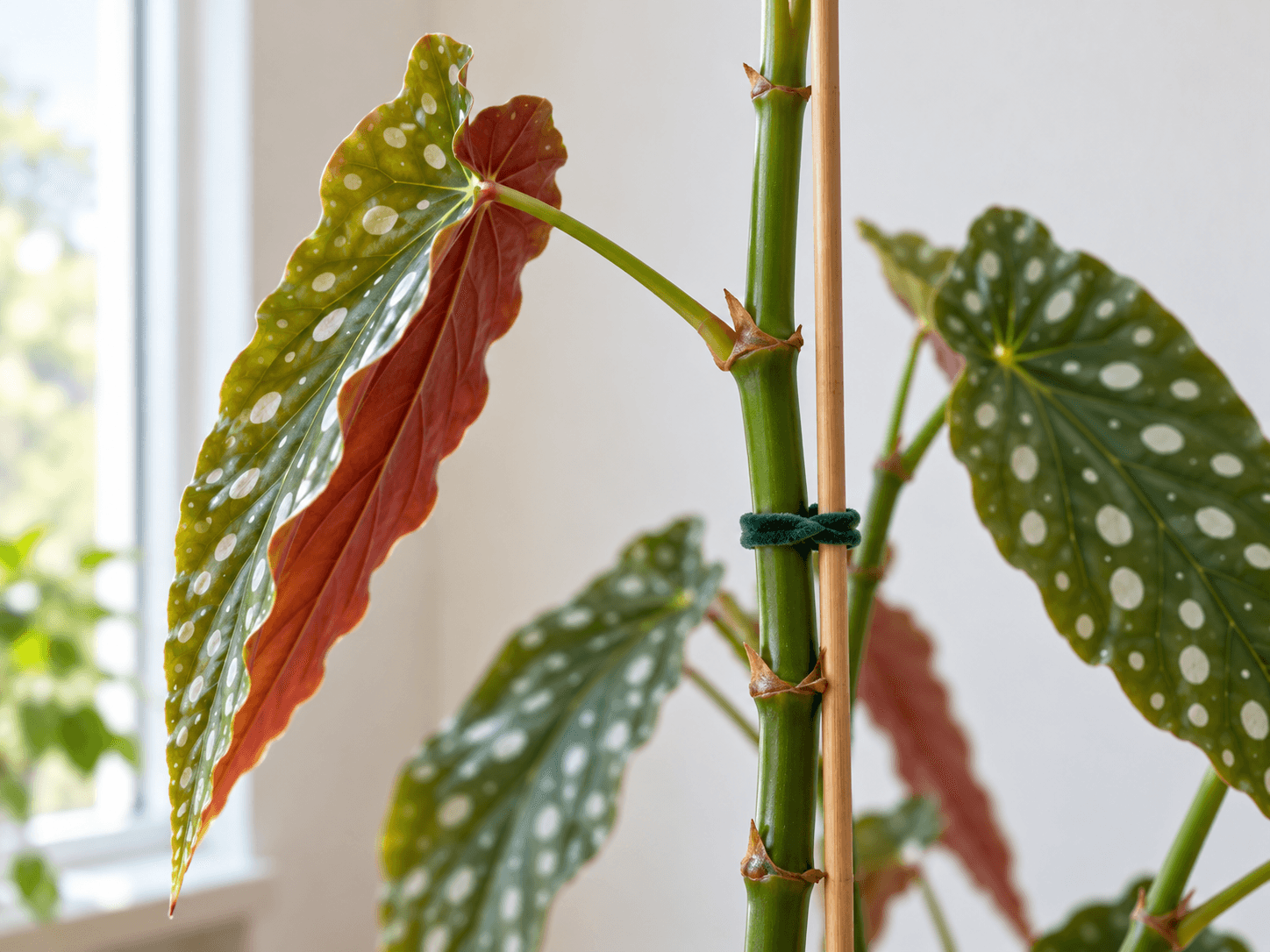
A stable stake and a loose soft tie can support a tall stem. Follow the cane with your eyes before fastening anything: the thinner stalk heading out toward a leaf is not the part to strap to the support. Check ties as growth thickens.
Find a related guide below.
Back to the beginningSources & notes
Care guidance checked against these horticultural references on 20 October 2026.
- RHS: Begonia maculataCane growth, filtered light, drainage, stem cuttings and pruning.
- Singapore NParks: Begonia maculataAsymmetric spotted leaves, maroon undersides and upright cane habit.
- RHS: Begonias as houseplantsDifferent begonia growth groups, watering, ventilation and crown care.
- University of Maryland Extension: Watering indoor plantsMoisture and pot-weight checks; top and bottom watering.