Move the plants before the work starts
Choose a clean growing place outside the work area, keep watering accessible and reassess the room before the plants return.
The short answer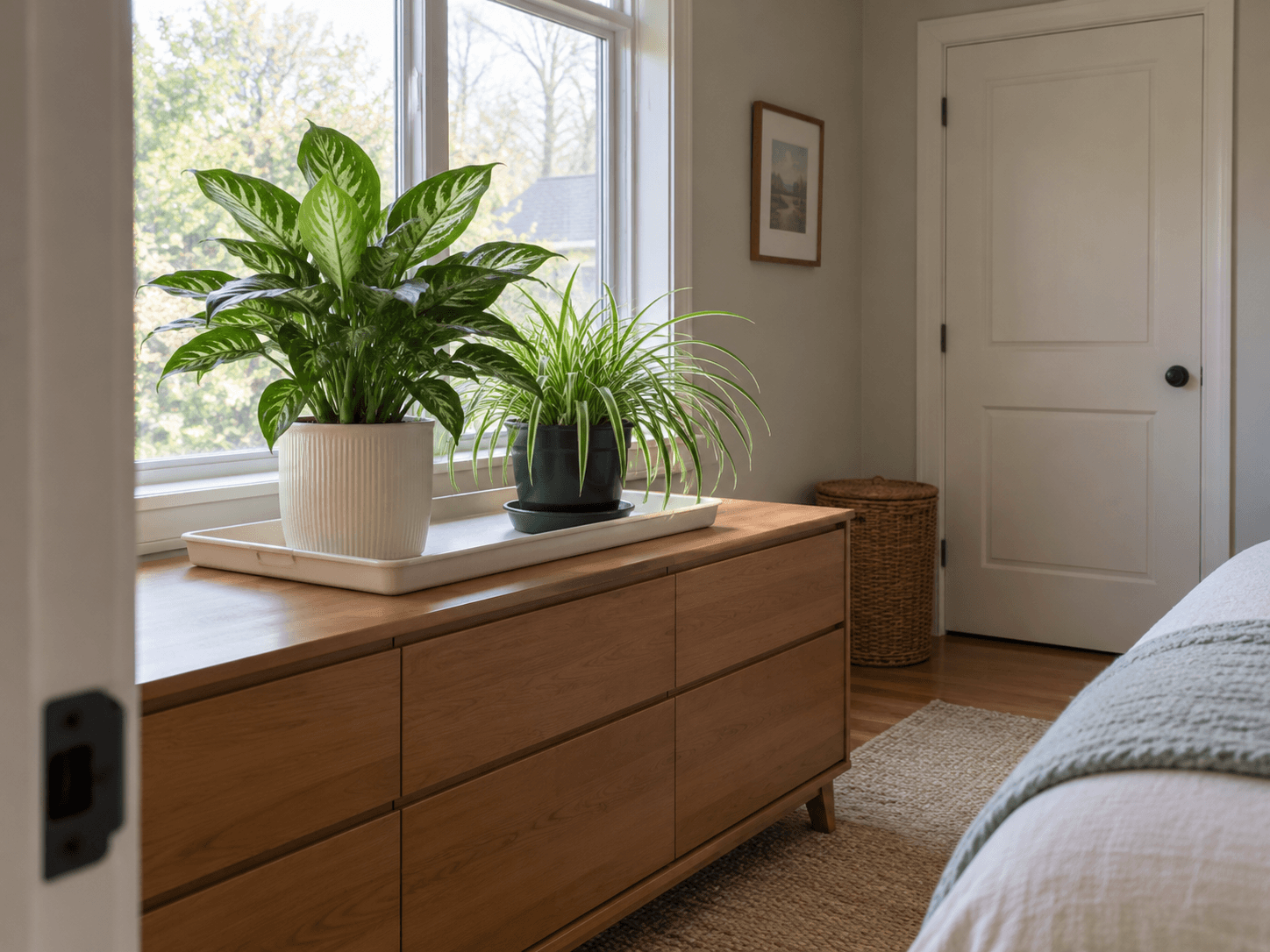
Choose the temporary room early
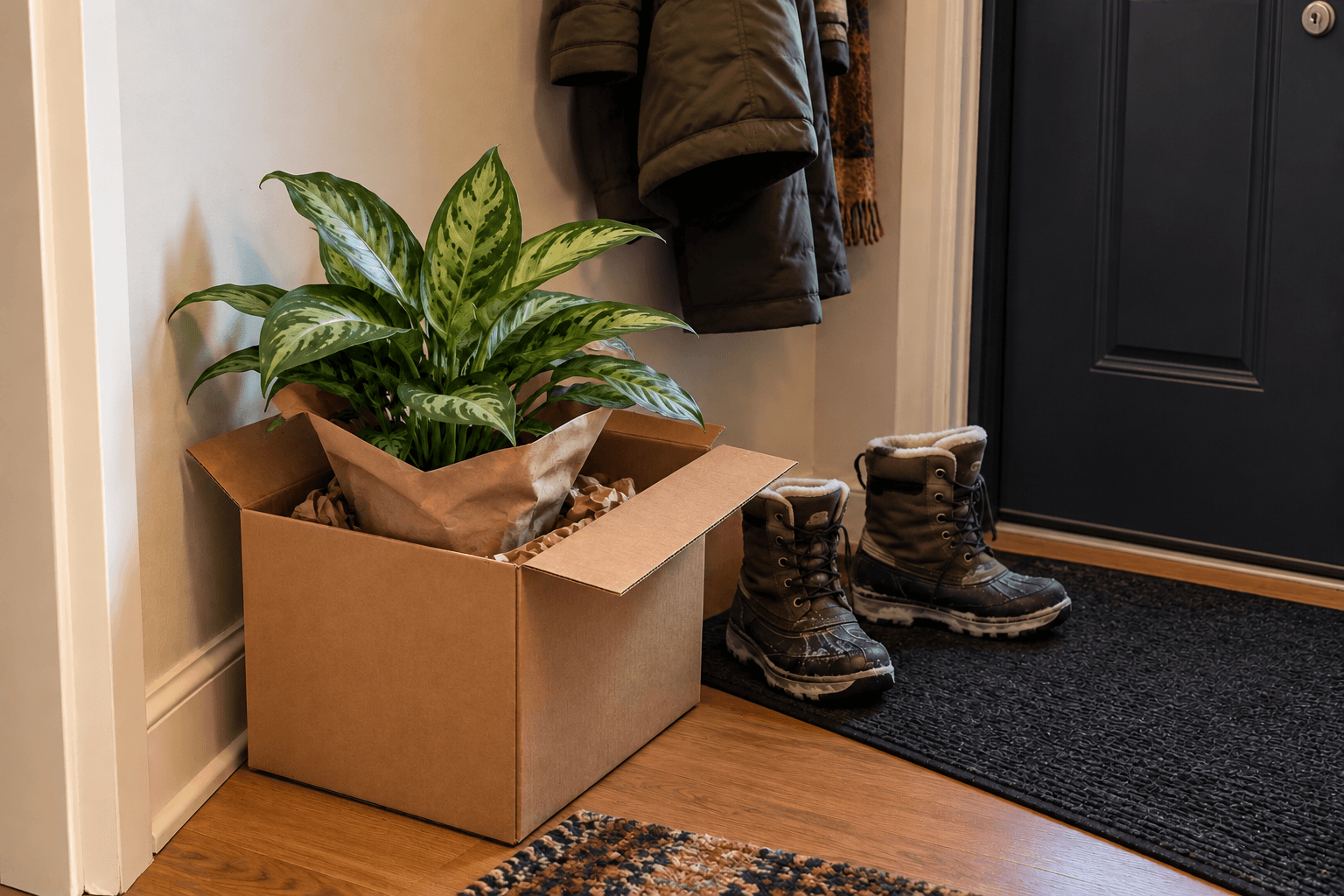
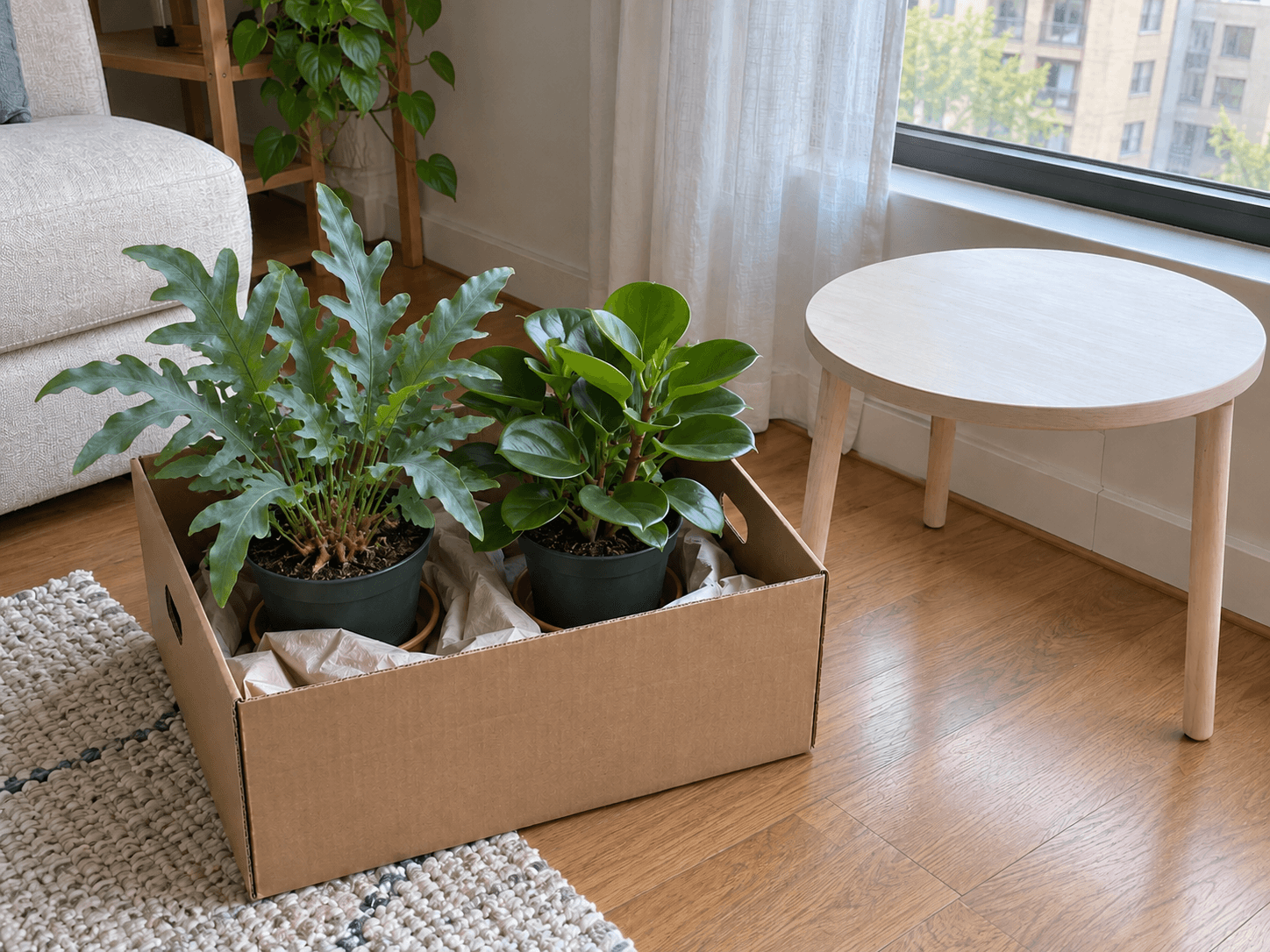
List the pots that need moving, including hanging plants and the heavy one behind the sofa. Measure the carrying route and arrange help where needed. Let the people doing the work know which areas will hold the plants so those spaces do not become the next place for stacked materials.
Match the temporary position to the plant. Keep useful window light, adequate warmth and enough room to inspect the mix. If no suitable clean room remains available, arrange another temporary home. Do not assume a dark garage or a cold balcony will be acceptable simply because the stay is meant to be short.
Make the temporary arrangement easy to maintain
Use appropriate saucers or trays to protect the new surface, and leave room to lift the inner pots out. Keep the watering route clear of tools and cables. Check moisture in the new conditions rather than continuing the old interval: less light or a cooler room can slow drying.
Transport protection should come off once a plant is safely placed. A covered plant can be forgotten, shaded or overheated. Keep it outside the work area rather than trying to carry out ordinary care underneath a dust sheet. Follow the project's instructions about access and when rooms can be used again.
Deal gently with ordinary surface dust
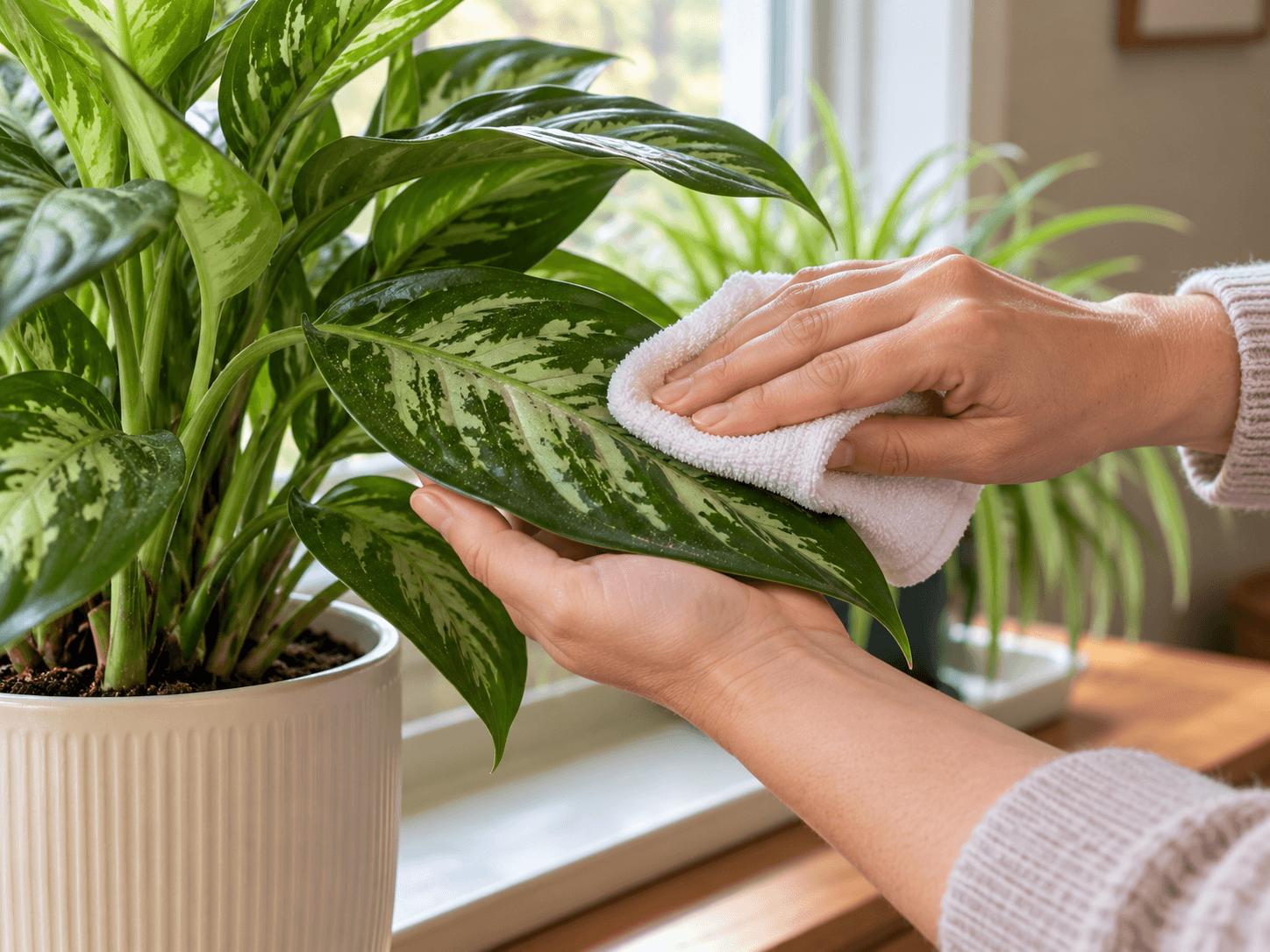
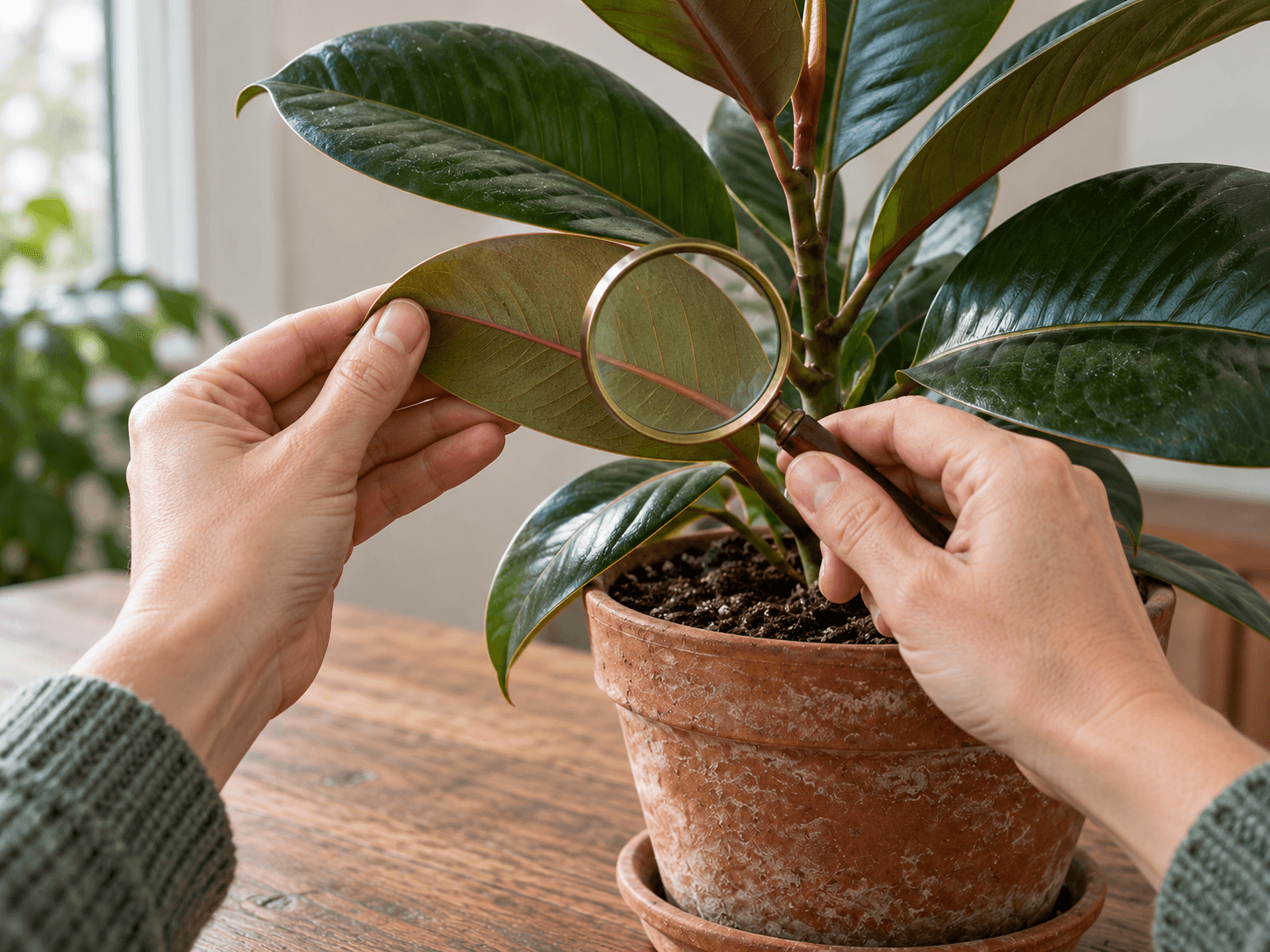
- Inspect the plant before cleaning, including the mix surface, stem joints and leaf undersides.
- For ordinary dust on smooth broad leaves, support the leaf and wipe lightly with a clean cloth dampened with plain water.
- Rinse the cloth frequently rather than dragging grit from leaf to leaf. Avoid oils, polishes and vigorous scrubbing.
- Use species-appropriate care for fine or hairy foliage. Do not apply solvents or household cleaners to an unknown residue.
Recheck the room before putting everything back
Wait until the room is ready for normal use and surfaces are clean. Inspect the intended position again: new curtains, glazing, shelving or a changed heating outlet can alter the plant's conditions. A familiar corner may no longer receive the same light.
Move the pots back carefully and introduce a stronger exposure gradually. Check for broken stems, pests and standing water. Resume observation rather than compensating with extra feed or an unnecessary repot. Record a changed position so later growth can be judged against the new setting.
Find a related guide below.
Back to the beginningSources & notes
Care guidance checked against these horticultural references on 20 October 2026.
- University of Maryland Extension: Grooming indoor plantsRemoving ordinary leaf dust with water and clearing dead plant material.
- University of Minnesota Extension: Lighting for indoor plantsWindow exposures, low-light limits and supplemental lighting.
- University of Maryland Extension: Watering indoor plantsMoisture and pot-weight checks; top and bottom watering.
- Royal Horticultural Society: Growing houseplantsIndoor conditions, seasonal care, humidity and holiday planning.