When the room gets hot
Reduce harsh window exposure, check the root ball and avoid watering every hot plant by reflex.
The short answer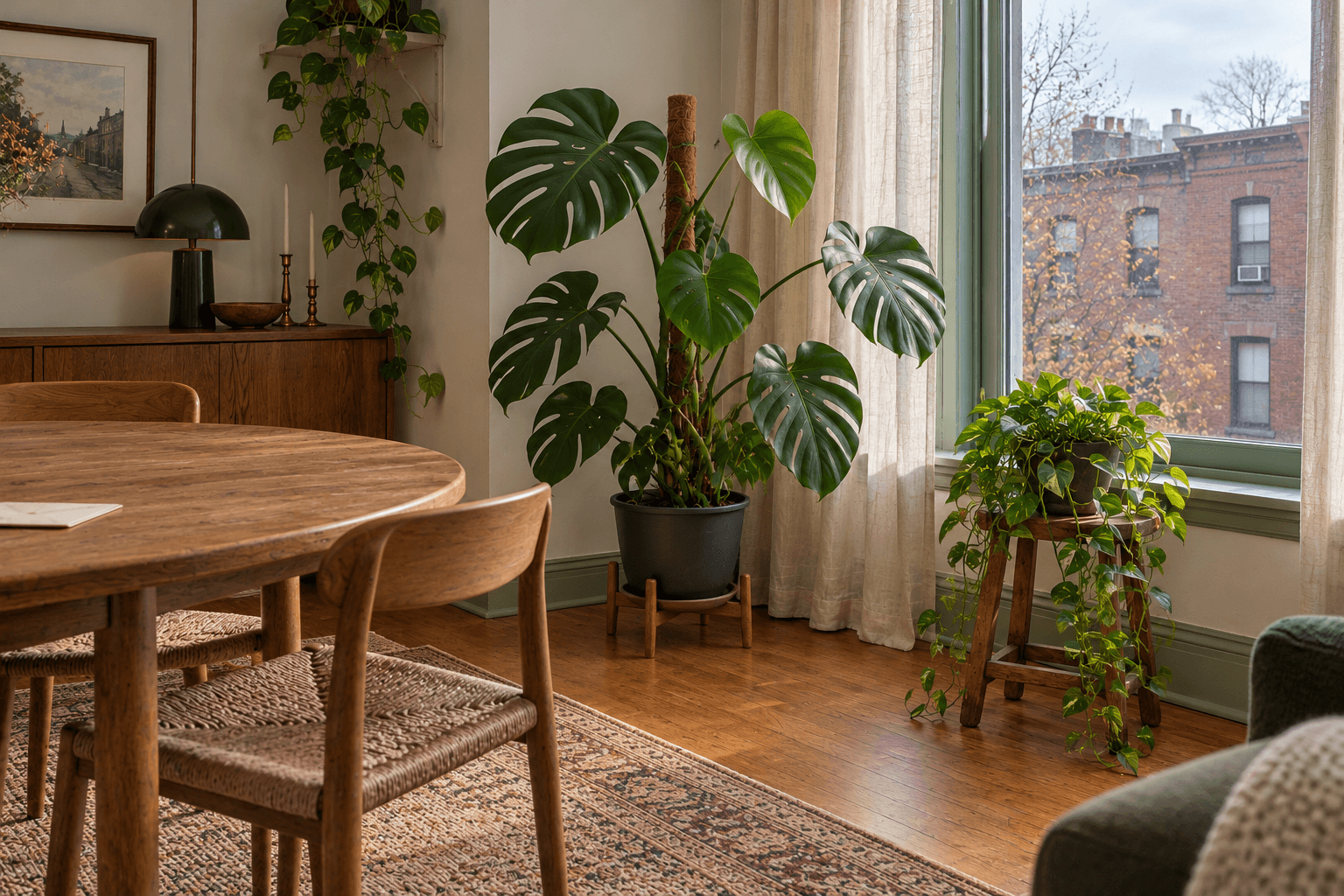
Check the hottest part of the day
A position that feels comfortable at breakfast may become much hotter later. Look for direct sun on foliage and containers, especially behind glass. A sheer curtain or a temporary move back from the window can reduce exposure. Preserve useful light while preventing leaves from sitting against hot glass, and avoid an abrupt transfer to a much darker room.
Check below the surface
Warm conditions can dry some pots quickly while a large or dense root ball stays damp inside. Lift manageable pots and check the medium before deciding. Water a genuinely dry plant thoroughly and let it drain. Do not leave an already wet pot in a full saucer because the leaves look tired during the afternoon.
Use airflow without a harsh blast
Keep reasonable room ventilation where practical, but avoid placing delicate foliage directly in a strong fan or cold air-conditioning stream. Check again after changing the airflow because drying may change too. If the household is away during the day, choose a position that remains workable without someone repeatedly opening and closing a blind.
Postpone optional disturbance
A hot spell is a poor time for unnecessary root pruning, heavy feeding or moving an indoor plant onto a sunny balcony. Keep conditions manageable and assess new damage after the plant has had time to recover. Scorched tissue will not turn green again. Watch the next growth and investigate persistent wilt rather than treating every symptom as a request for more water.
Find a related guide below.
Back to the beginningSources & notes
Care guidance checked against these horticultural references on 20 October 2026.
- University of Maryland Extension: Excess lightBleaching, scorch and adjustment to stronger exposure.
- University of Maryland Extension: Watering indoor plantsMoisture and pot-weight checks; top and bottom watering.
- Iowa State University Extension: Diagnosing houseplant problemsDistinguishing environmental damage, cultural problems, pests and disease.