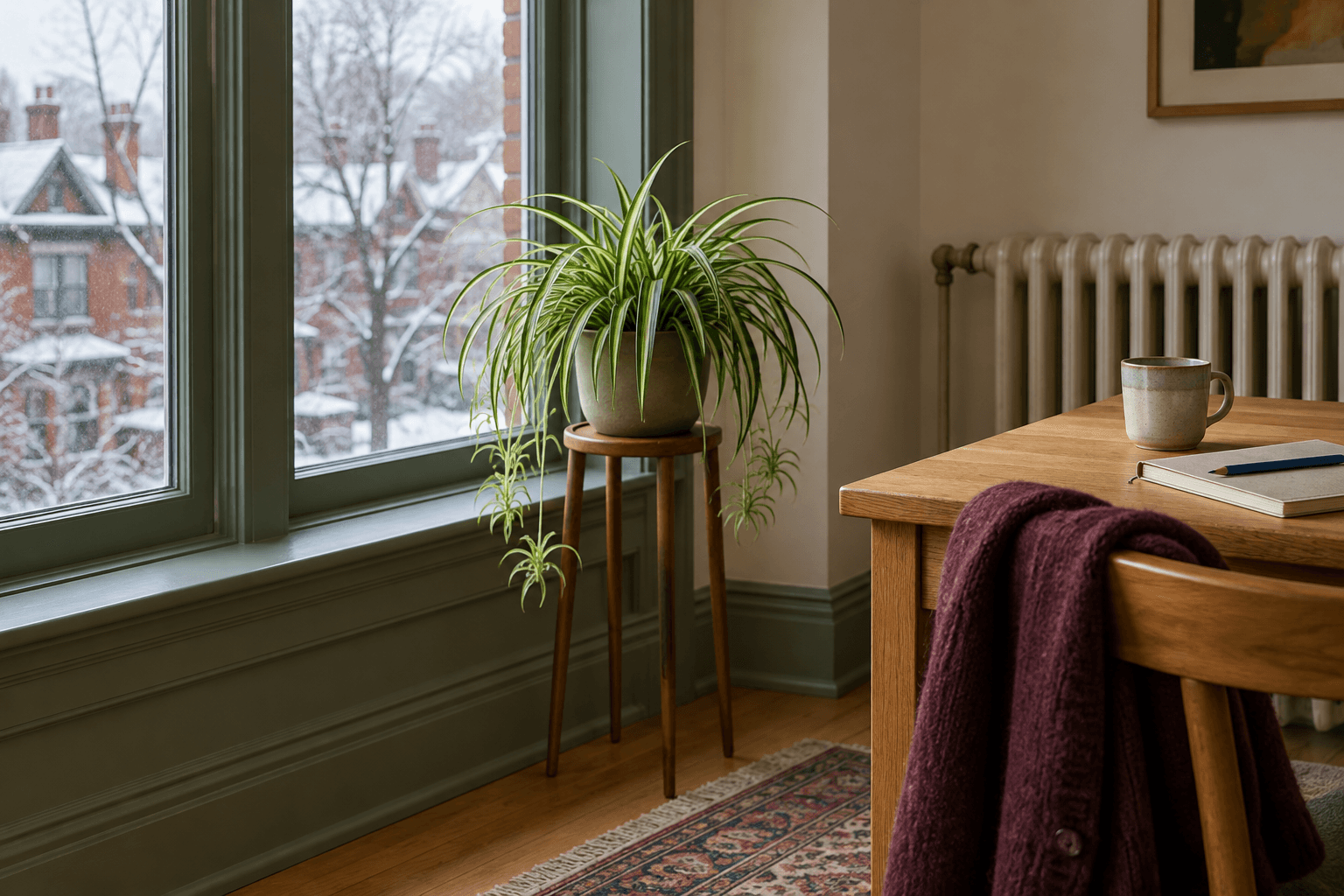
Make room before the cold arrives
Prepare a bright indoor place, inspect plants and adjust watering before outdoor nights become too cold.
The short answer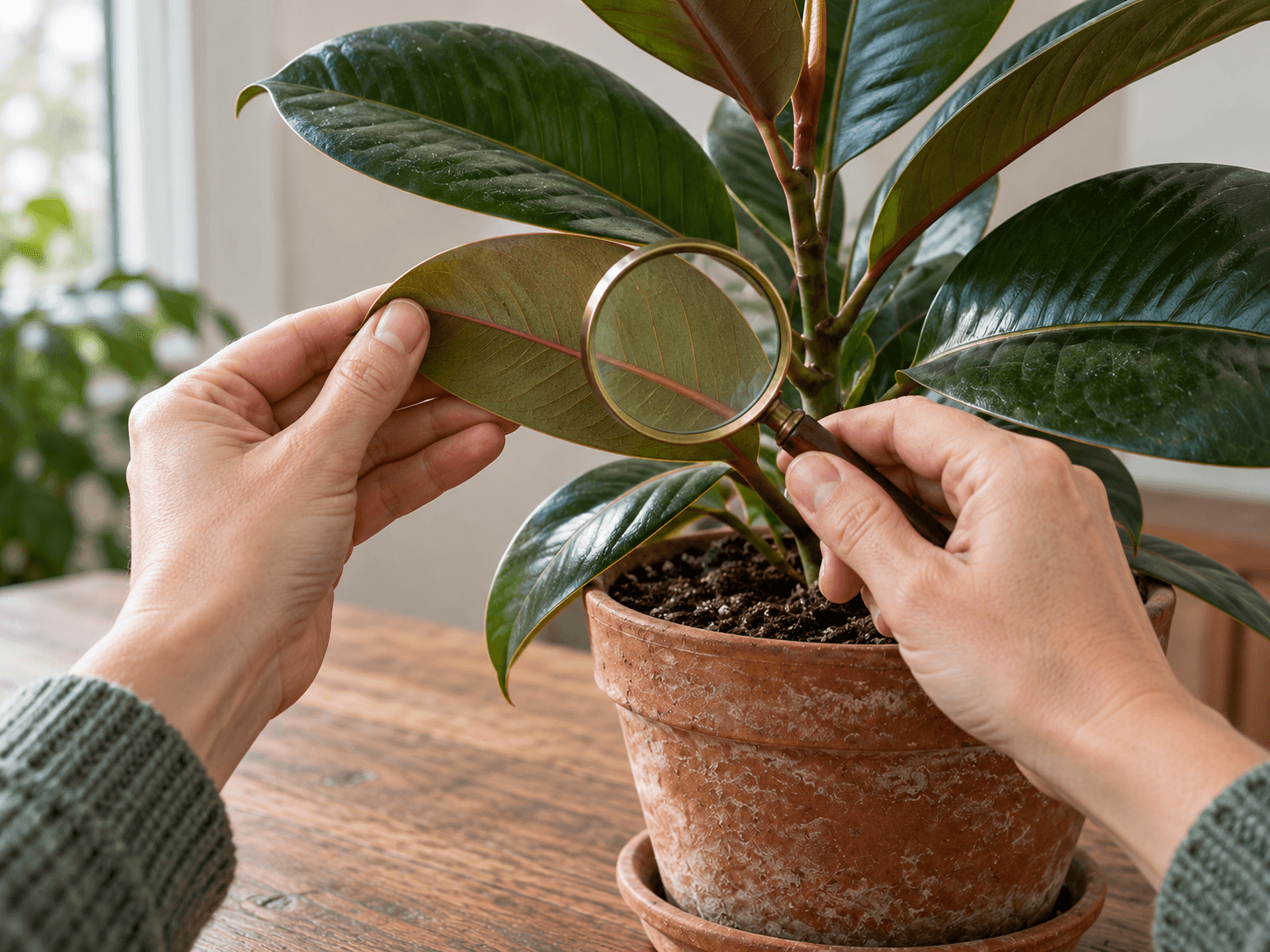
Clear the landing place first
Choose an indoor position with light appropriate to the species and room for the whole plant. Clean the surface and check that saucers fit. A summer of growth may have changed both width and weight. Do this while the forecast still gives you time; a cold night is an awkward moment to discover that the old shelf is too small.
For many tropical houseplants, overnight forecasts approaching 10 C are the cue to complete the move, not to begin looking for space. Bring more cold-sensitive species in sooner. Do not wait for a frost warning; tender foliage can be damaged above freezing.
Look beneath and around
Check leaf undersides, new growth, stems and the outside of the pot. Remove loose debris and inspect drainage openings. Photograph anything suspicious and identify it before choosing treatment. A general pesticide dose is not a substitute for identification. In Canada, any pesticide used must be registered for the intended plant, pest and setting and applied according to its label.
Keep a visible observation space
Plan a separate, suitably lit observation space for the first three to four weeks and inspect repeatedly, including new growth and leaf undersides. That period is a practical checkpoint, not proof that every hidden pest has gone. Avoid sharing runoff or using the same dirty cloth between plants. If you find a problem, manage it before moving that pot into a tightly grouped display.
Recheck moisture indoors
Reduced light, cooler roots and different airflow can change how quickly the medium dries. Check the pot rather than continuing the outdoor watering schedule. Some leaf loss may follow a change of conditions, but ongoing decline still deserves investigation. Keep light and temperature steady while distinguishing an adjustment from wet roots, cold damage or an infestation.
Find a related guide below.
Back to the beginningSources & notes
Care guidance checked against these horticultural references on 20 October 2026.
- University of Minnesota Extension: Bringing houseplants back insideCold sensitivity, inspection and adjustment after outdoor summer growth.
- Iowa State Extension: Moving indoor plants outside for summerGradual light adjustment, night-temperature checks, stable containers, changed water needs and autumn pest inspection.
- University of Minnesota Extension: Managing insects on indoor plantsInspection, isolation, pest signs and integrated management.
- Health Canada: Use pesticides safelyCanadian authorization, indoor use and label directions.