One basket can need three different routines
Find out whether the plants share a root space or only a decorative basket. That distinction makes the next watering much easier to get right.
The short answer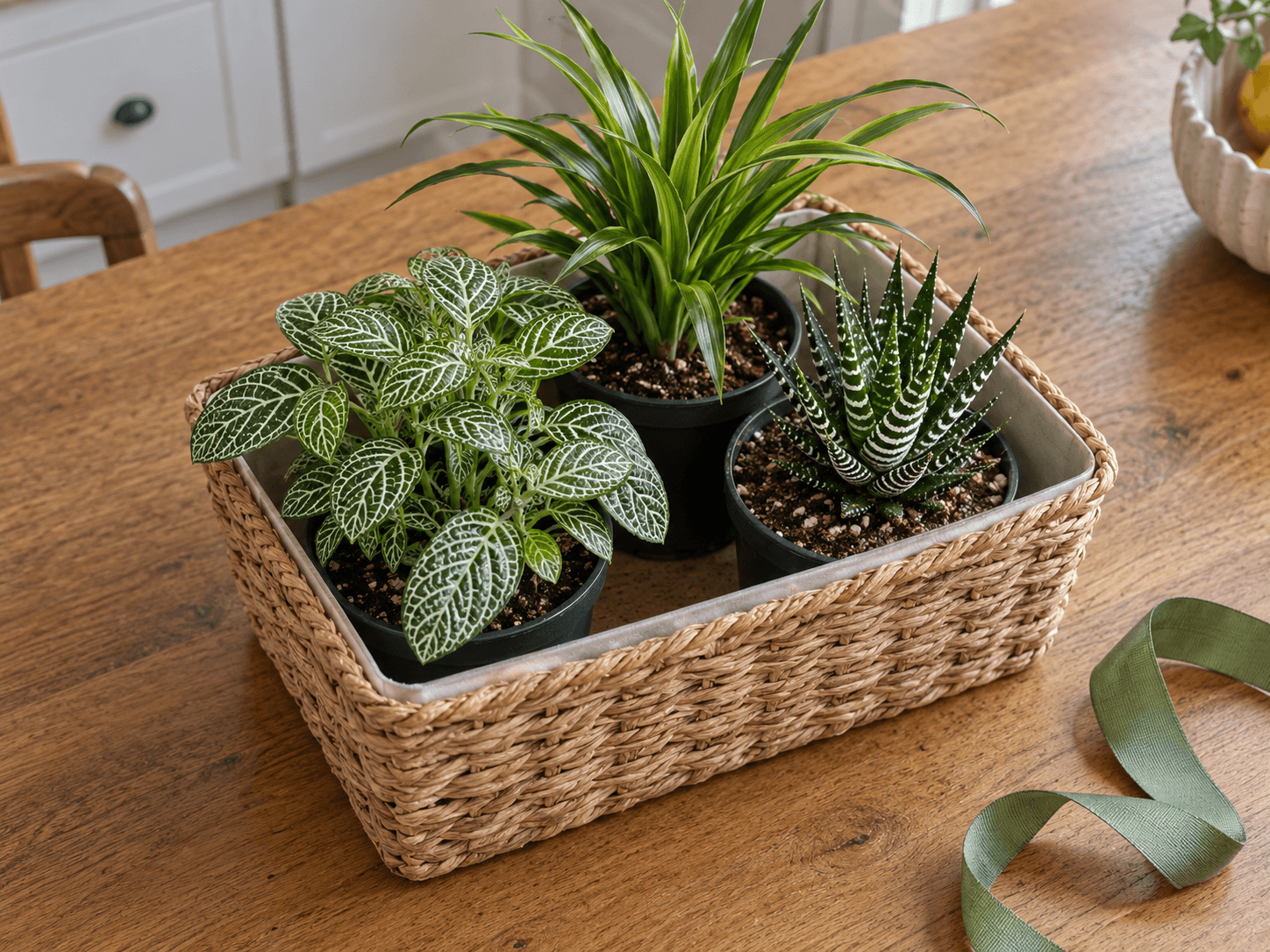
Lift the presentation layer gently
Remove loose wrapping that prevents you seeing the pot rims or base. Check for separate containers beneath decorative moss, an inner plastic liner and any water already collected. Work over a protected surface. Do not pull on the stems to discover how the arrangement was assembled.
If each plant has its own nursery pot, note which pot belongs to which plant before rearranging them. If all the stems emerge from one continuous body of mix, treat it as a planted dish garden. A basket or bowl can hold either construction; its appearance alone will not tell you.
Check the plants, not just the shared label
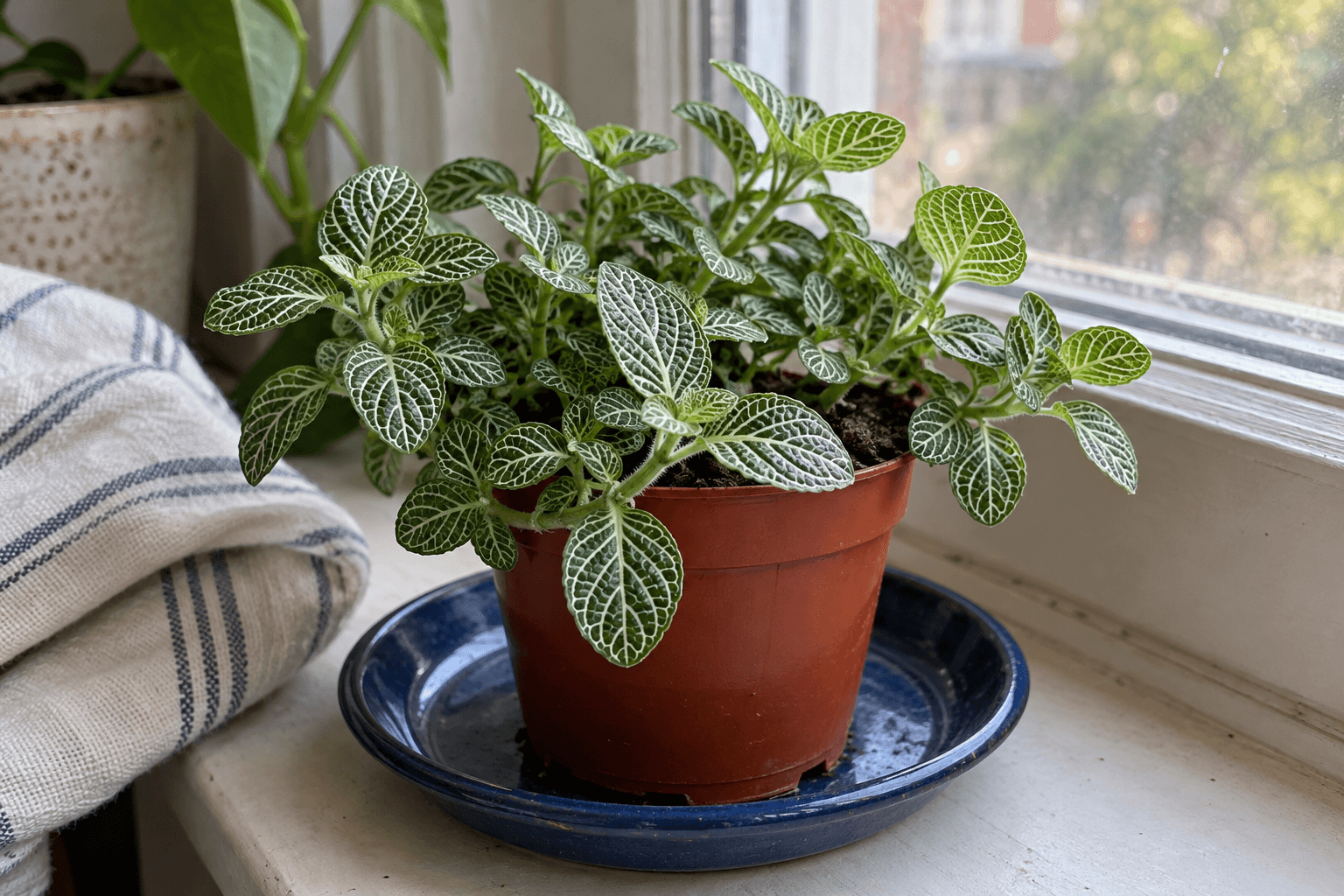
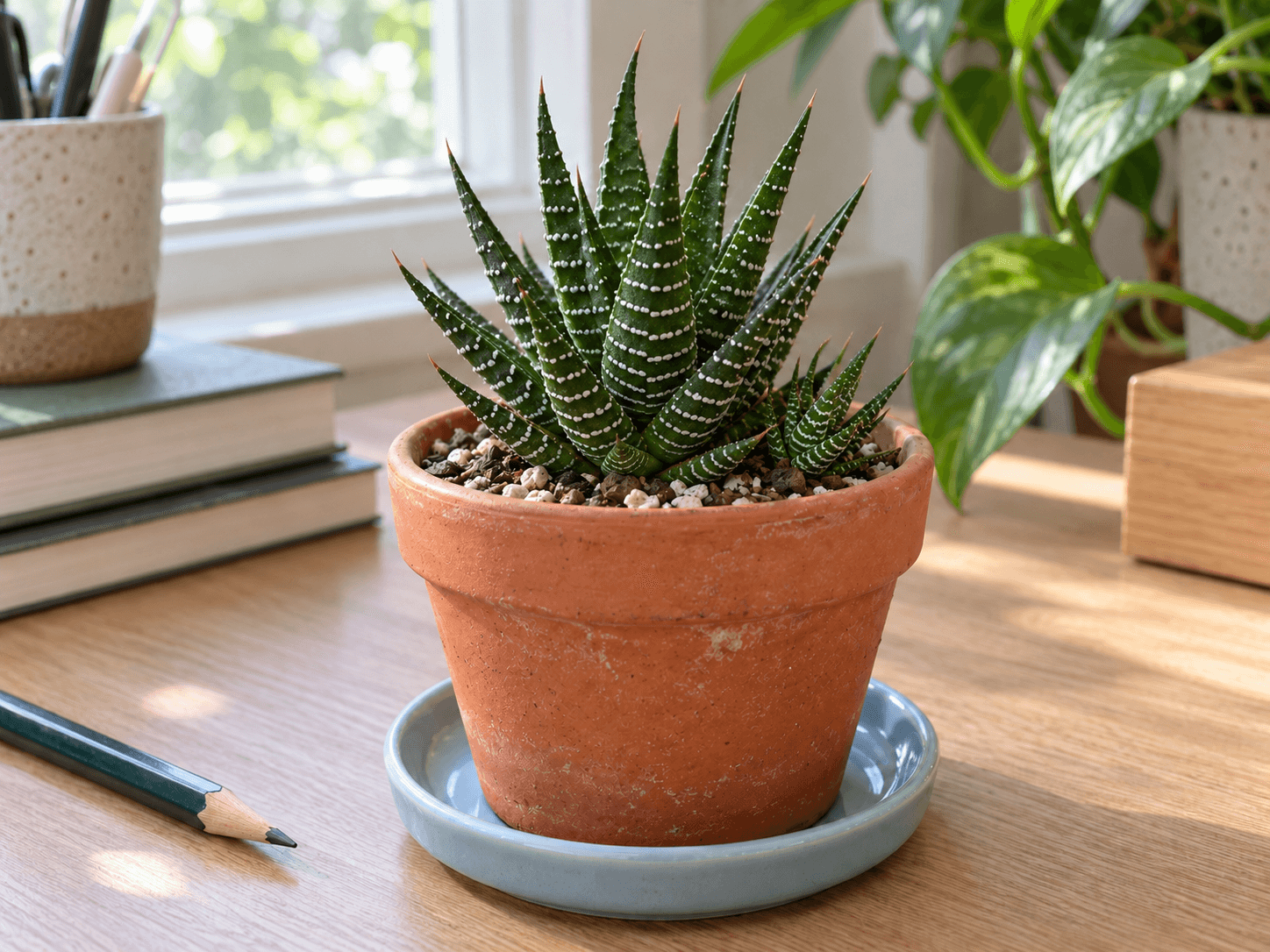
Find the names and compare light, moisture and growth habit. A Fittonia that dislikes drying out and a Haworthiopsis that needs a more pronounced dry-down make an awkward pair in one shared root space. Matching colours do not make their requirements match. Small plants also need room to become larger plants.
| Arrangement | Practical response |
|---|---|
| Separate pots with different needs | Lift them out for individual checks and watering; give each a suitable growing place. |
| Shared mix with compatible plants | Check drainage and maintain conditions that suit the group. Watch for crowding. |
| Shared mix with incompatible needs | Plan separate suitable pots rather than repeatedly compromising between wet and dry. |
| Unknown plants or hidden construction | Ask the giver or supplier for names and assembly details before setting a routine. |
Make each draining pot accessible
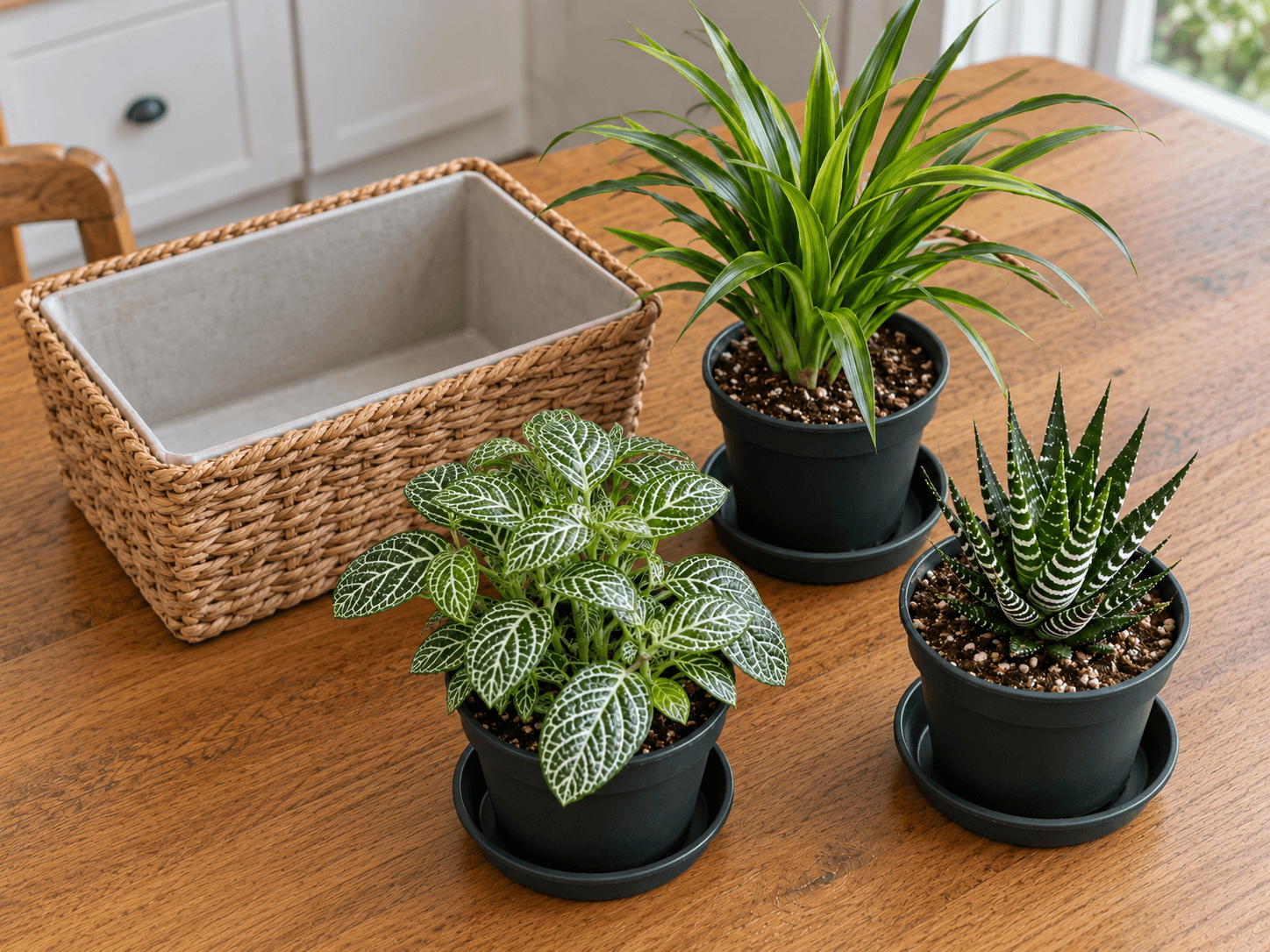
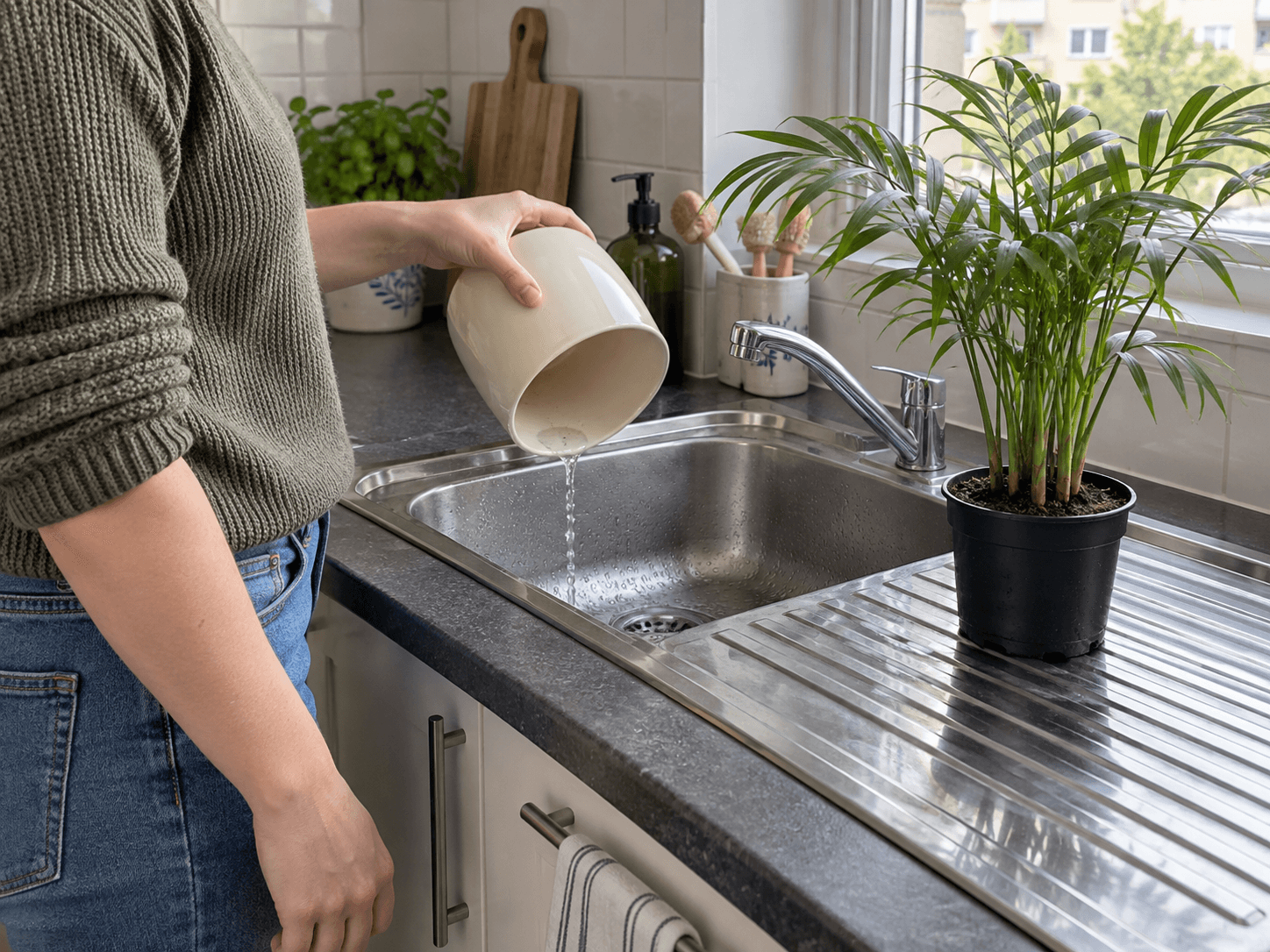
For separate pots, remove the one that needs water, water appropriately and let it drain before returning it. Empty the outer liner and check it again after care. One dry pot does not mean every plant in the basket needs water, and one damp pot should not keep a neighbour waiting indefinitely.
For a shared planting, drainage needs an actual route out of the root container. A layer of stones inside a sealed bowl does not provide one. Use the pots-and-drainage guide if the container cannot be emptied or checked reliably. Avoid burying plant crowns under extra mix or decorations.
Keep the gift without keeping the exact arrangement
Separate nursery pots are straightforward to rearrange. A shared root ball needs more care: choose appropriately sized draining pots and suitable medium, ease the plants apart without pulling their stems, and avoid unnecessary root disturbance. If roots are tightly entangled or a plant is declining, get help identifying the best next step rather than cutting blindly.
Keep the basket for another use or a short display with accessible inner pots. Put each plant where its light and care needs can be met. The original arrangement need not last for every plant to become a welcome part of the home.
Find a related guide below.
Back to the beginningSources & notes
Care guidance checked against these horticultural references on 20 October 2026.
- Oklahoma State Extension: Dish gardensCompatible moisture and light needs, drainage, root-container space and keeping crowns at the correct depth.
- University of Maryland Extension: Potting and repottingRoot-ball placement, aeration and why not to add gravel.
- University of Maryland Extension: Watering indoor plantsMoisture and pot-weight checks; top and bottom watering.
- NC State Extension: Fittonia albivenisLow spreading habit, filtered light and moisture requirements.
- NC State Extension: Haworthiopsis attenuataAttenuata versus fasciata, light, dry-down, offsets and leaf tubercles.