The curtain changes the room
Window direction is only the beginning. Read the light after the curtain, balcony and neighbouring building have had their say.
The short answer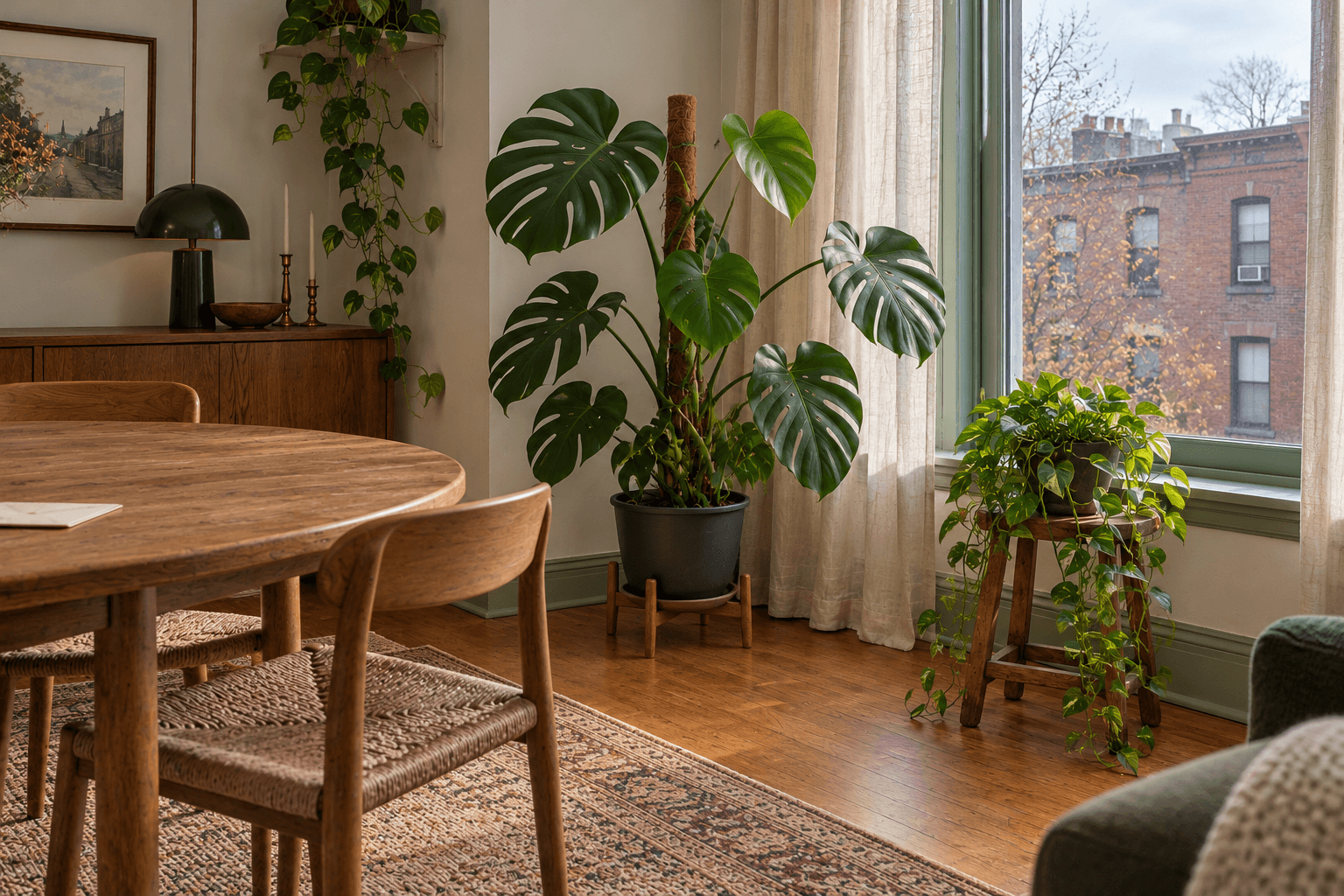
Use an ordinary day
A south-facing window behind a deep balcony may receive less direct sun than expected. A sheer curtain left closed all day changes the result again. Observe the actual setup when you are home, then note what stays open while you are out. The useful question is what the plant receives, not what the room could receive.
Look from the pot
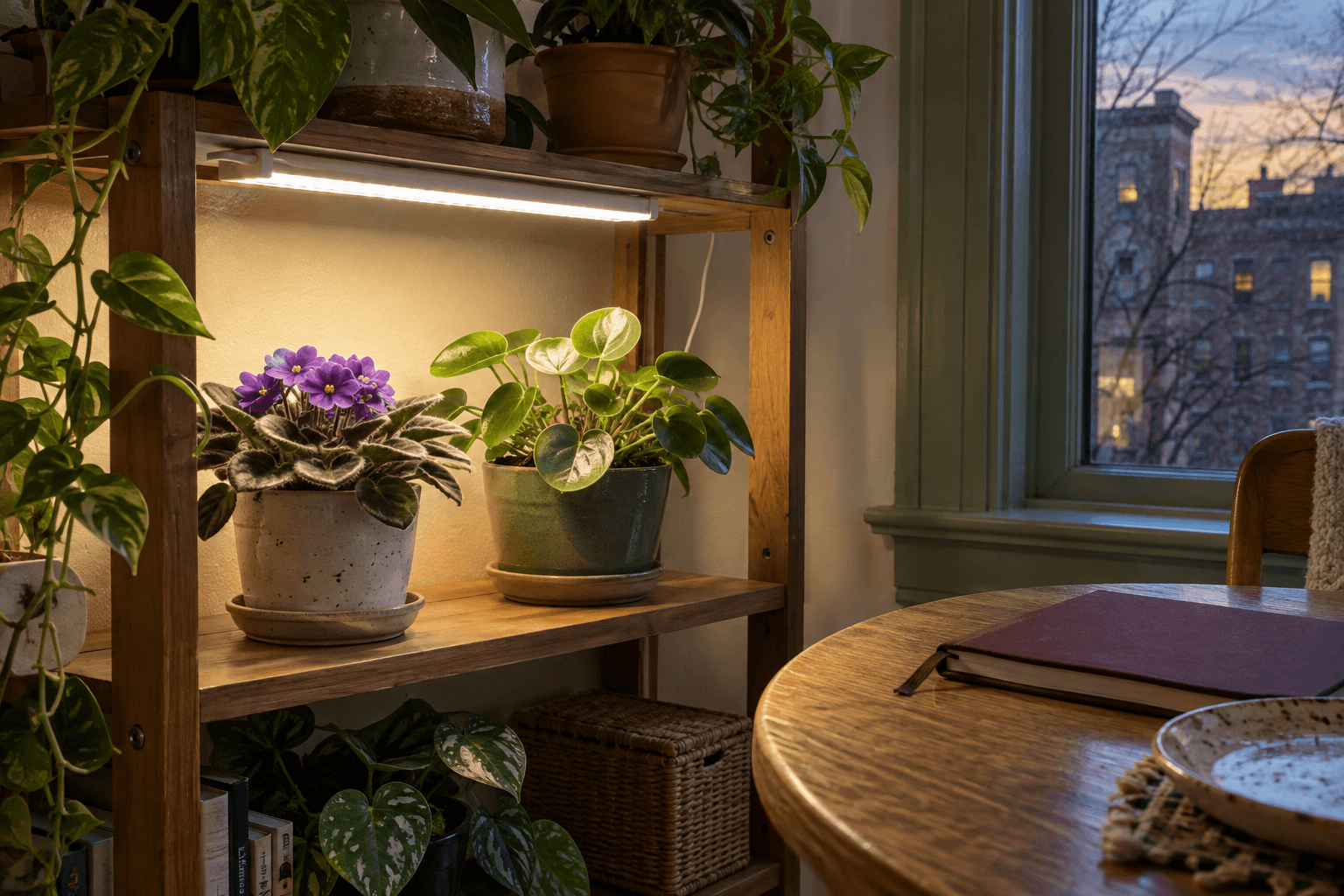
Put an empty pot in the proposed position and look towards the window from leaf height. A sofa back, shelf above or large neighbouring plant may block much of the view. This simple check is especially helpful on stacked shelves, where the top row can look excellent while lower plants receive far less light.
Repeat when the angle changes
The path of direct sun changes through the year, as do leaves on outdoor trees. Mark the edge of a sun patch with a temporary piece of tape if that helps you notice its movement. A plant accustomed to filtered light may need protection when the curtain comes down for washing and a strong beam suddenly reaches it.
Make a small, usable change
Try a slightly different position or curtain opening before buying another plant. Keep leaves clear of glass and preserve access to the window. Judge the adjustment by subsequent growth and moisture use, not by a single bright afternoon. If the available light still cannot meet the plant's needs, choose a better location or suitable supplemental lighting.
Find a related guide below.
Back to the beginningSources & notes
Care guidance checked against these horticultural references on 20 October 2026.
- University of Minnesota Extension: Lighting for indoor plantsWindow exposures, low-light limits and supplemental lighting.
- Royal Horticultural Society: Growing houseplantsIndoor conditions, seasonal care, humidity and holiday planning.
- University of Maryland Extension: Diagnose indoor plant problemsOverlapping causes of wilt, yellowing, poor growth and root damage.