The purple side of a fishbone leaf
Ctenanthe burle-marxii
The patterned top and purple underside belong to the same leaf. Get to know this clumping prayer-plant relative before reacting to each change in posture.
The short answer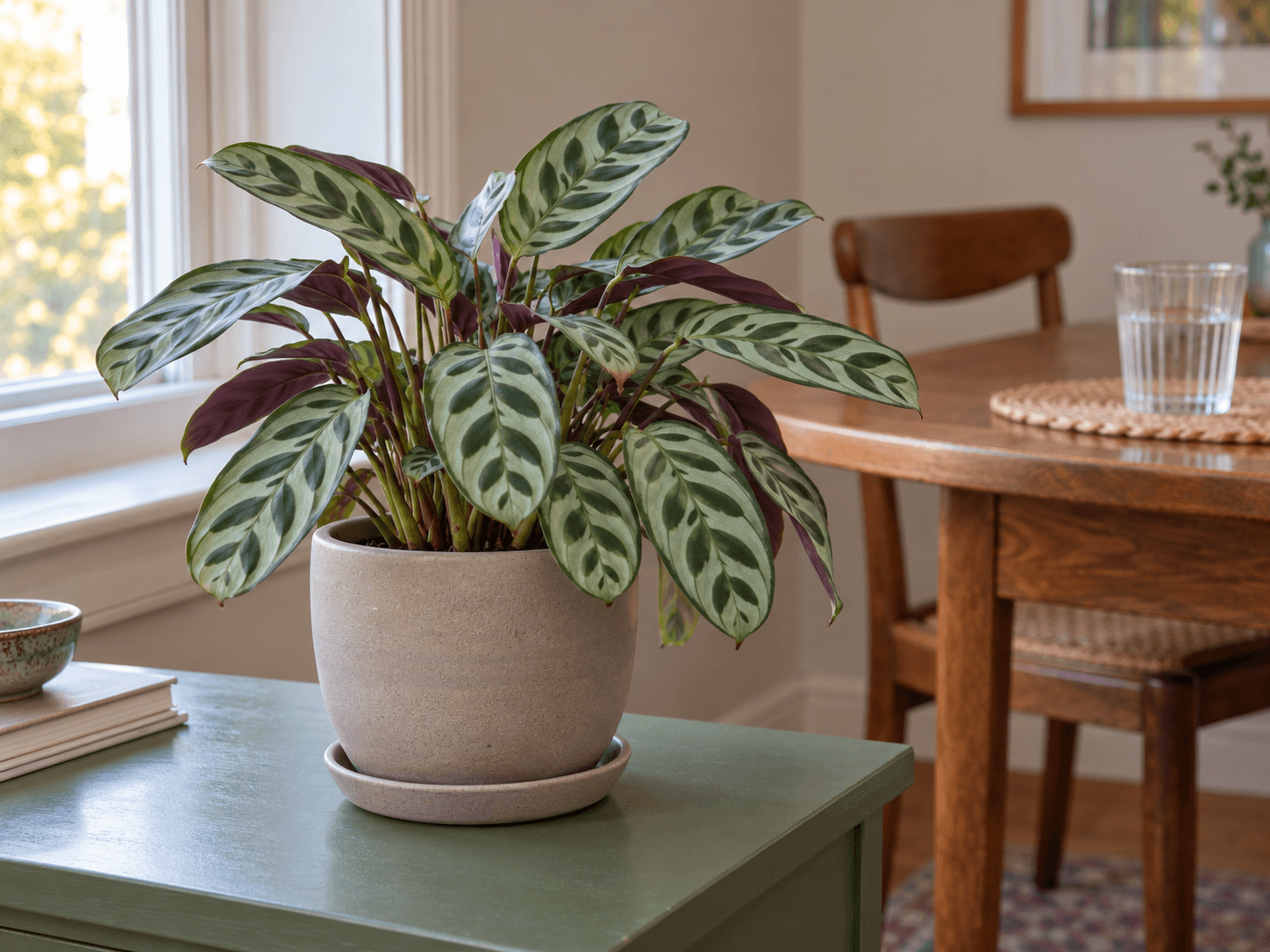
Keep the genus on the label
Ctenanthe burle-marxii has pale oblong leaves marked with dark fishbone bands and purple backs. The name burle-marxii also appears on plants in other genera. A label or photograph that includes the full name is more helpful than a note saying fishbone plant.
This is a clumping foliage plant, distinct from the low, spreading Maranta commonly sold as prayer plant. Its thin stalks and patterned leaves need space around the pot. Do not tie them into a tight bundle to make the plant fit a narrow shelf.
Compare morning with evening
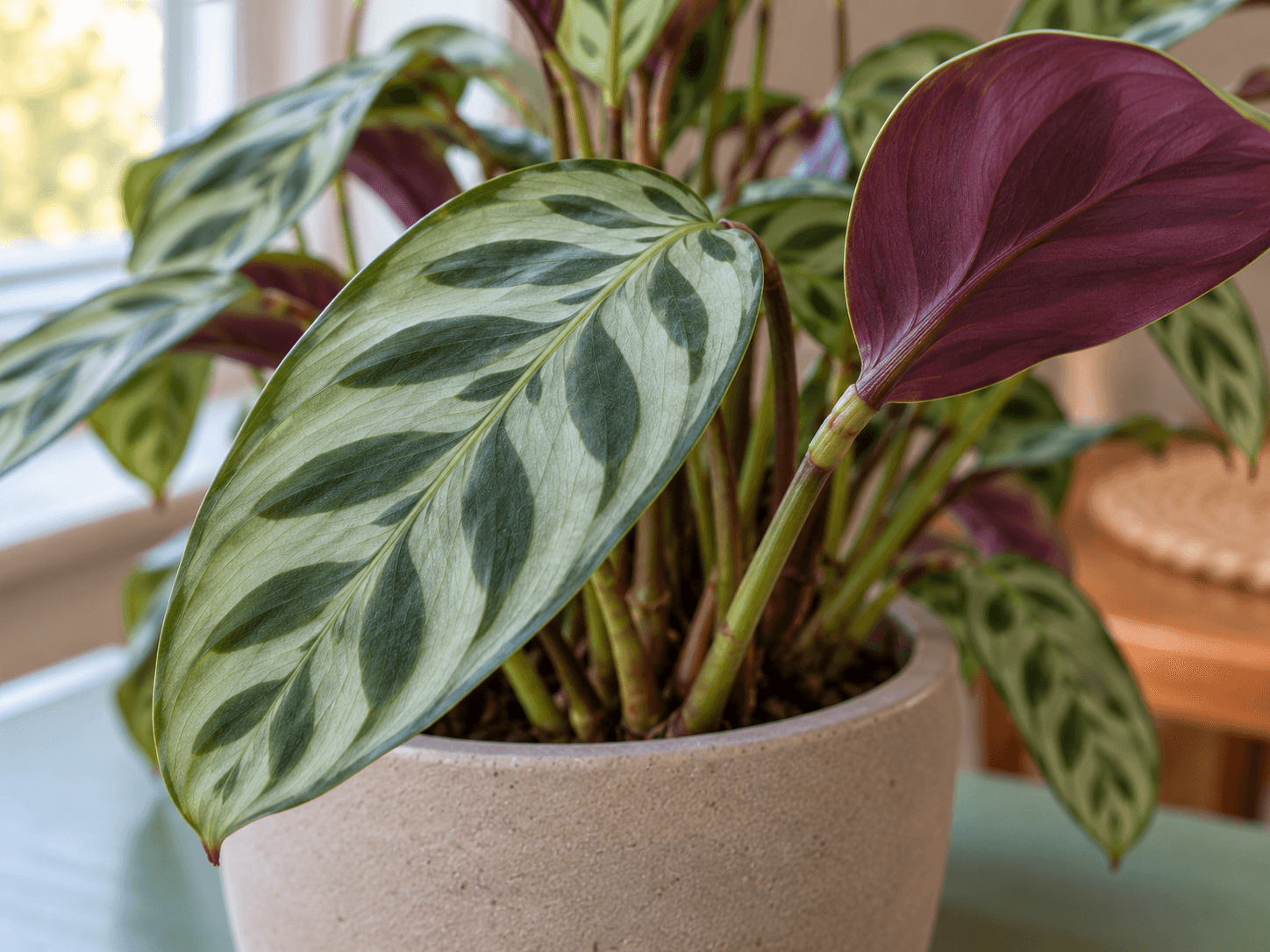
Choose one outer leaf you can recognise and take a morning and evening photograph from the same spot. These relatives change leaf position through the daily cycle. That small record gives you a useful reference before a tilted purple-backed leaf sends you looking for a remedy.
Persistent tight curling, limp stalks or progressive yellowing deserve attention even in a plant whose leaves normally move. Check the pot before watering, then inspect beneath the blades and around the stalk bases. A normal habit and a care problem can occur at the same time.
Keep moisture accessible
Set the pot where you can reach the mix without pushing a hand through the whole canopy. Water thoroughly when needed, let excess drain and empty the saucer or cover pot. Avoid both a permanently saturated root zone and repeated complete drying.
Bright filtered light, a steady room temperature and protection from dry heater airflow are useful starting conditions. Recheck the position when the heat comes on or seasonal sun reaches farther into the room. Keep a note of the change rather than assuming the watering interval must stay the same all year.
Divide a healthy clump when it needs space
If the plant has filled its container, inspect the roots during a spring repot. Division is an option for a healthy established clump; it is not the first response to unexplained decline. Prepare the receiving pots before separating anything.
- Look for natural groups of shoots with roots attached.
- Separate substantial rooted sections rather than individual leaves.
- Replant at the previous depth in draining mix and keep conditions steady while growth resumes.
A single patterned leaf cut off above the mix is not a rooted division. If you only need a smaller-looking plant for a photograph, move the surrounding objects instead of dismantling the clump.
Find a related guide below.
Back to the beginningSources & notes
Care guidance checked against these horticultural references on 20 October 2026.
- RHS: Ctenanthe burle-marxiiFishbone leaf markings, purple undersides, clumping growth and division.
- RHS: How to grow calatheasLeaf movement, filtered light, warmth and moisture for related genera.
- University of Maryland Extension: Watering indoor plantsMoisture and pot-weight checks; top and bottom watering.