The pink underside turns into view
Stromanthe thalia 'Triostar'
Cream and green above, burgundy below, and a different outline by evening. Learn the normal changes before treating every raised leaf as trouble.
The short answer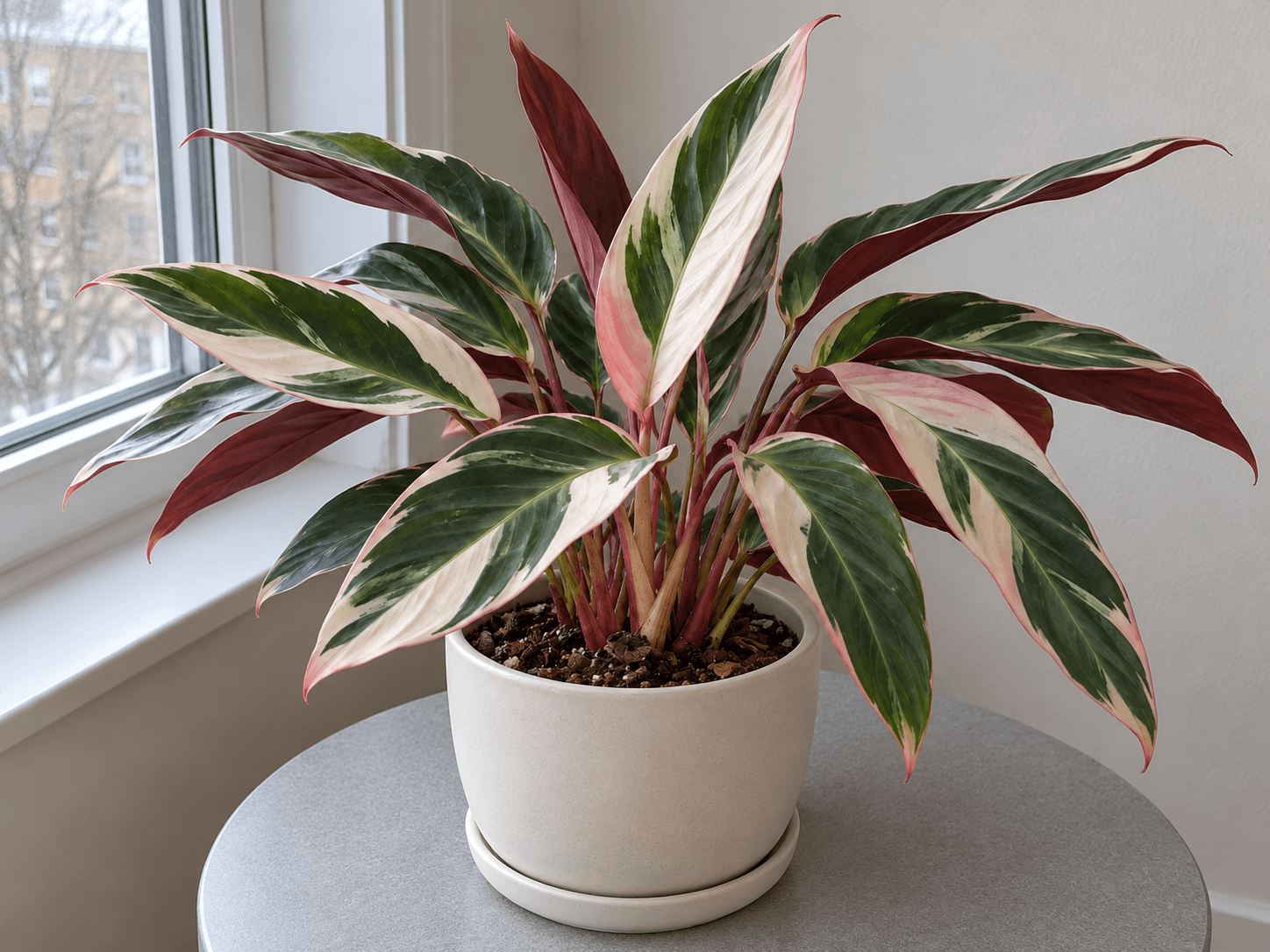
Two sides of the same leaf
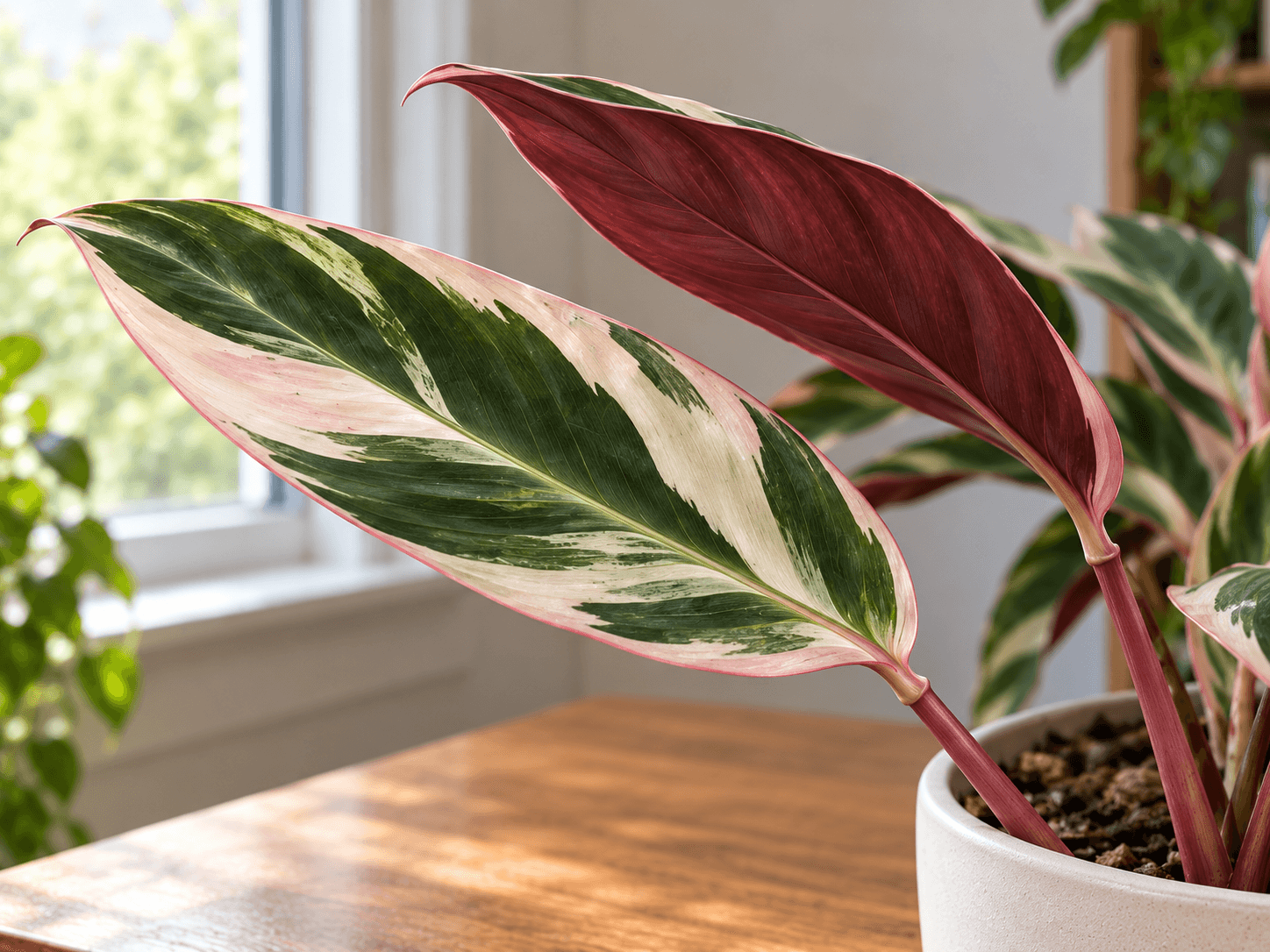
Triostar has elongated leaves with irregular green, cream and pink patches above and a darker reddish underside. The pattern varies from leaf to leaf. It is a Stromanthe in the prayer-plant family, also sold under older names including Stromanthe sanguinea; the familiar prayer-plant label does not make it a Maranta.
Keep a clear photo of the normal pattern on arrival. It helps separate pale variegation from a new bleached patch or damaged edge later. Compare a leaf with its own earlier appearance rather than expecting every blade on the plant to have the same amount of pink.
Compare at the same time of day
The leaves change position as day becomes night. If the plant looks suddenly more upright, check it again the following morning before deciding it has wilted. A pair of photos from the same spot can show this movement without any handling.
A leaf that stays tightly curled, develops a crisp edge or loses firmness calls for a different check. Feel the mix, look at recent heat or sun exposure and inspect for pests. Do not assume the normal evening movement explains all changes, or that every change needs more water.
Protect the pale areas from harsh exposure
Use bright filtered daylight and protect the leaves from prolonged strong sun. Keep the plant warm and away from cold drafts. A desk by a useful window can work well if the plant still has space when the laptop, papers and coffee arrive.
Humid air matters for this plant. Measure conditions near the leaves if dry margins keep returning. A suitable humidifier can help where the room is persistently dry; a quick mist does not establish what the humidity is during the rest of the day. Avoid directing a wet plume onto the desk or foliage.
Keep moisture steady and drainage visible
Water as the surface starts to dry, before the whole root ball dries out. Let excess water escape and empty the cover pot. In darker months, check the actual drying rate instead of maintaining the summer interval. Dense foliage can hide both the mix and an outer pot full of water.
Find a related guide below.
Back to the beginningSources & notes
Care guidance checked against these horticultural references on 20 October 2026.
- NC State Extension: Stromanthe thaliaTriostar colour, leaf movement, humidity, moisture and division.
- RHS: Triostar, also listed as Calathea TriostarStromanthe synonym, pink undersides, filtered light and division.
- University of Maryland Extension: Watering indoor plantsMoisture and pot-weight checks; top and bottom watering.