The fern with its feet showing
Phlebodium aureum 'Blue Star'
The blue-green fronds need space, and the creeping golden rhizomes belong on the surface. Resist the urge to tidy them into a deeper pot.
The short answer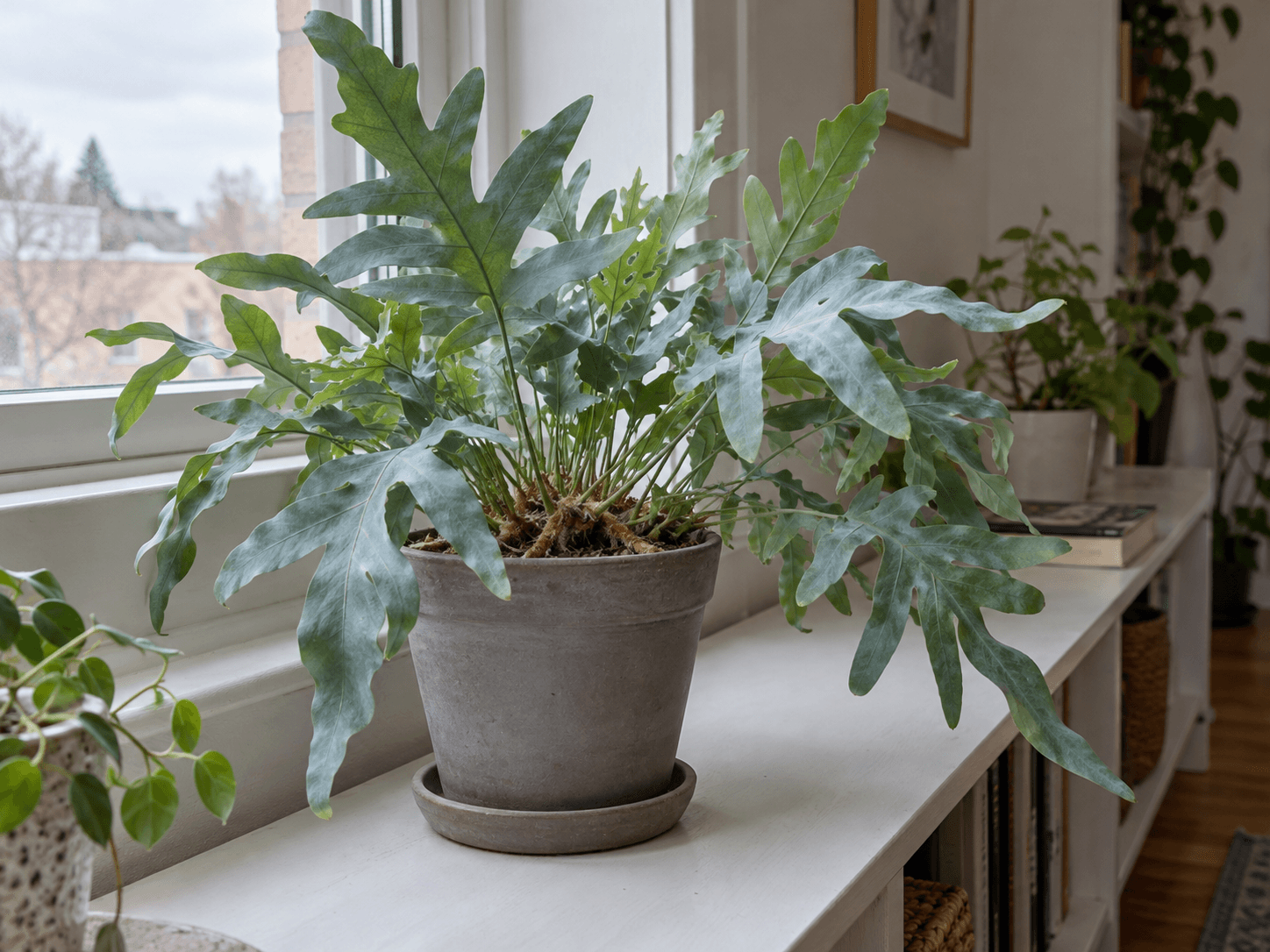
That is a stem, not an escape
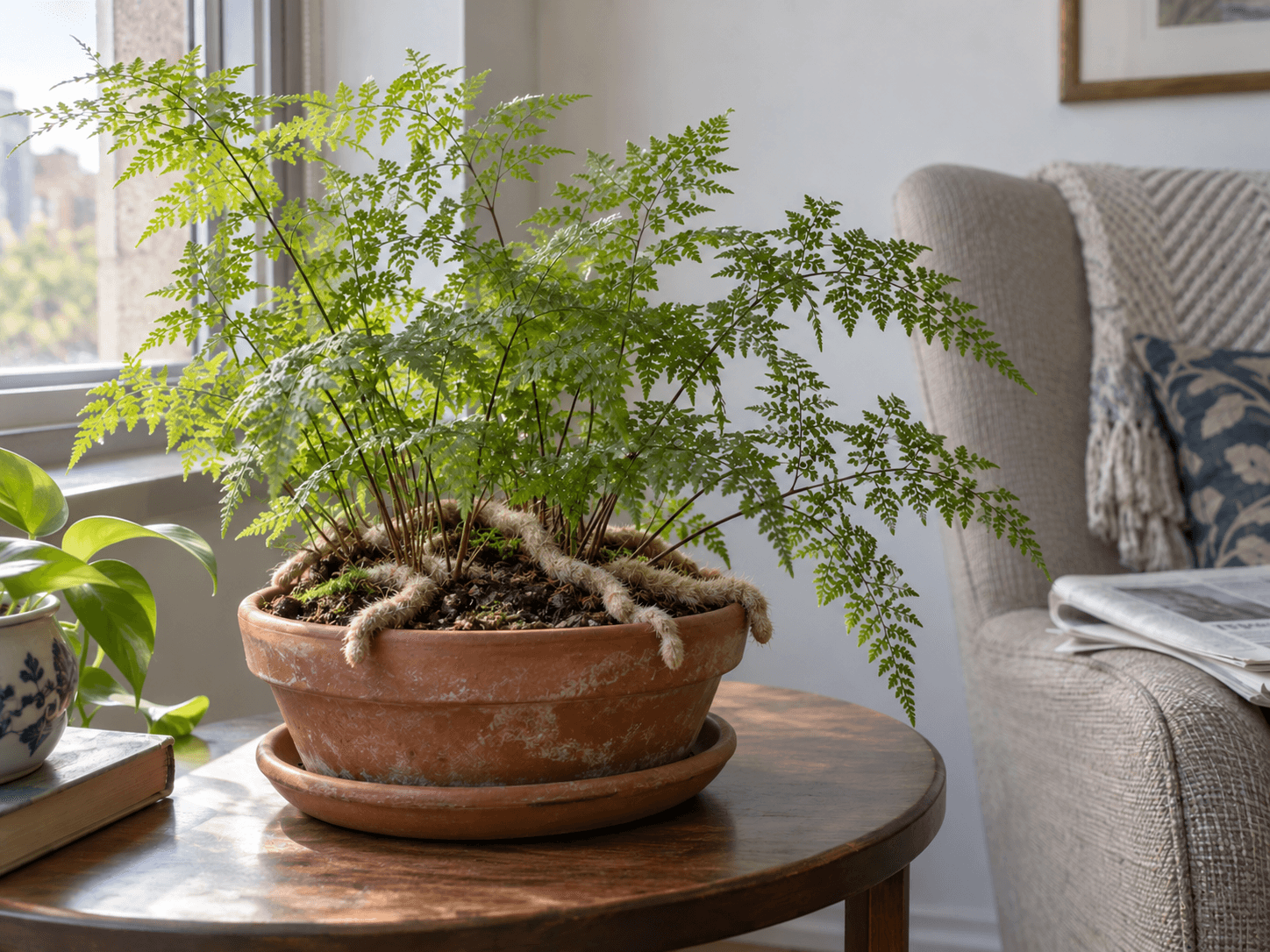
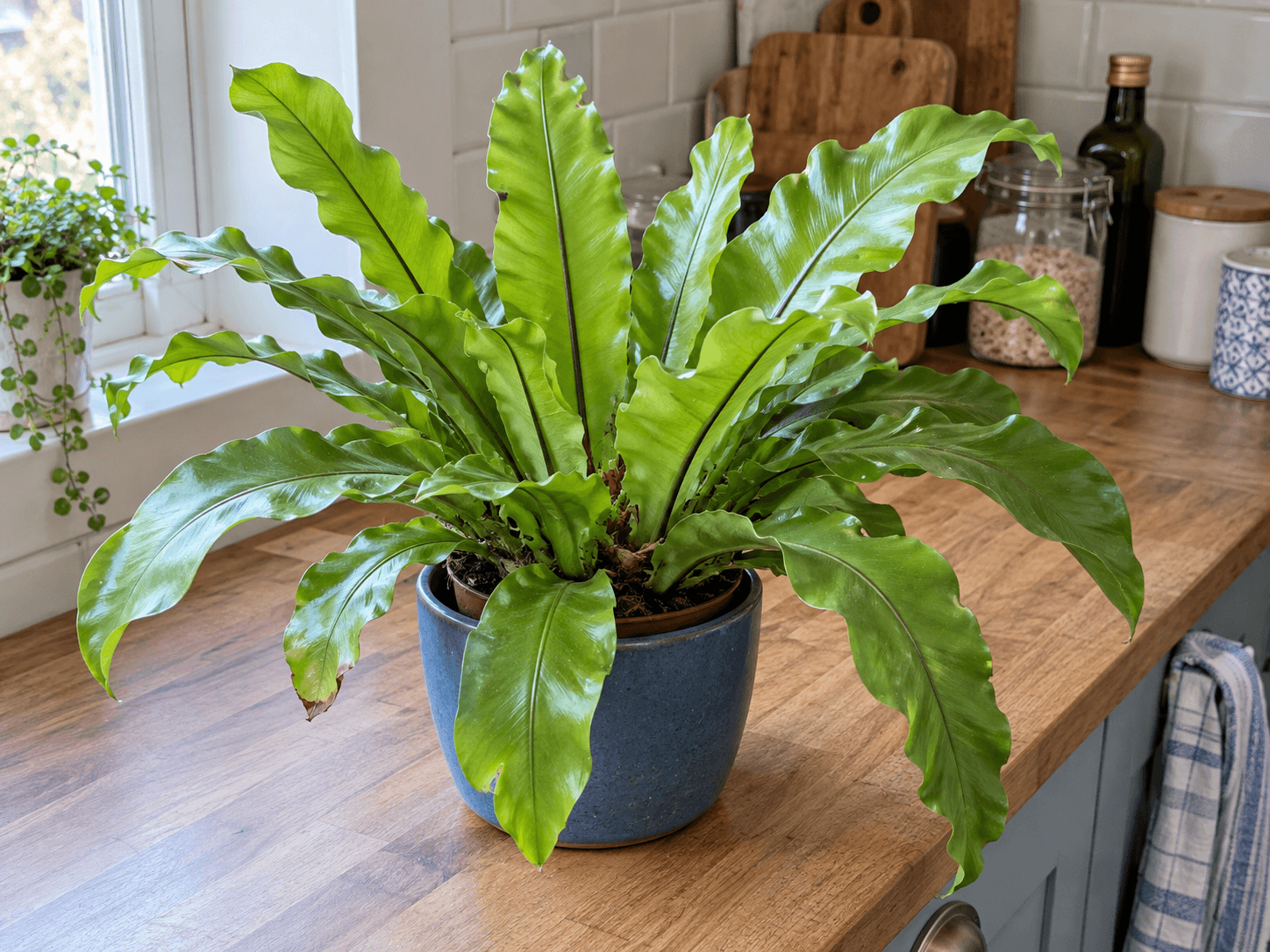
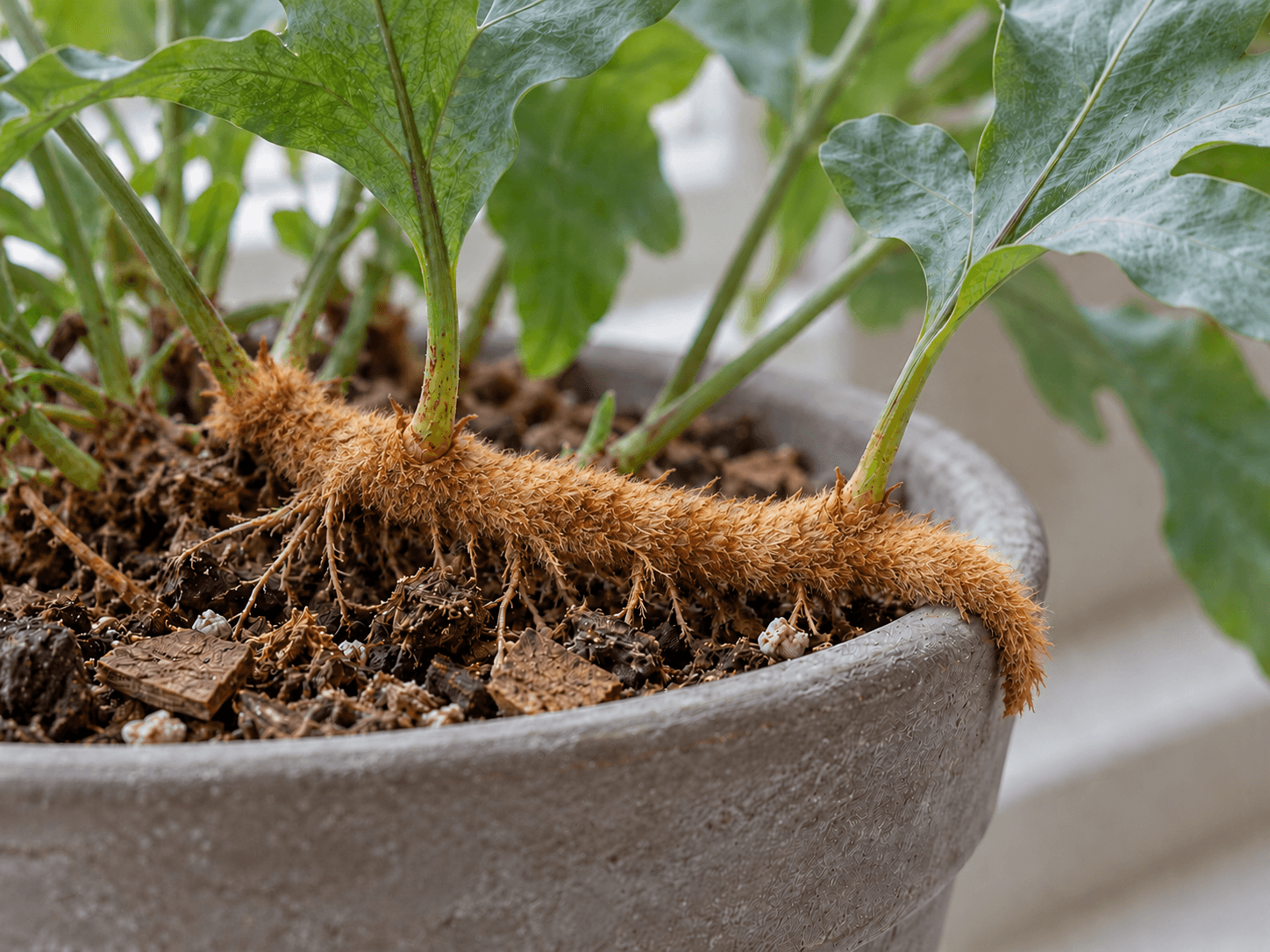
The gold-brown growth at the rim is a rhizome: a creeping stem that produces fronds and roots. Phlebodium aureum grows this way naturally. Blue Star is a cultivated form with blue-green, deeply lobed fronds, quite unlike the fine divided foliage of a Boston fern.
It is easy to interpret anything outside a container as a complaint about the container. Here the useful question is what is happening inside. A rhizome crossing the rim can be perfectly ordinary while the roots still have space. Photograph it from the side and leave it visible; pushing fresh mix over it hides the very structure you need to observe.
Allow a wider outline
Give the plant room for its fronds to spread without being folded against a wall. Bright indirect light and a position away from hot, dry airflow are useful starting conditions. The blue-grey colour is part of the plant, not a film to polish off.
Try the pot on its proposed shelf with the largest frond facing the room. Open the cupboard, draw the curtain and walk past with a bag. If you must keep turning or moving the fern to use the room, choose another surface now. A slightly lower shelf is often easier to inspect and water than a high decorative ledge.
Give water a way out
Use a loose, moisture-retentive medium with drainage rather than dense garden soil. Let the surface begin to dry before the next watering, then wet the root ball and drain it. Constant saturation is a problem even for a plant that enjoys humid air.
Keep a note of how the actual pot behaves after a change of season or position. A fern moved away from a bright window may use water more slowly. Checking it on the same day each week can be convenient; adding water on that day whether it needs it or not is the part to avoid.
Keep the structure visible
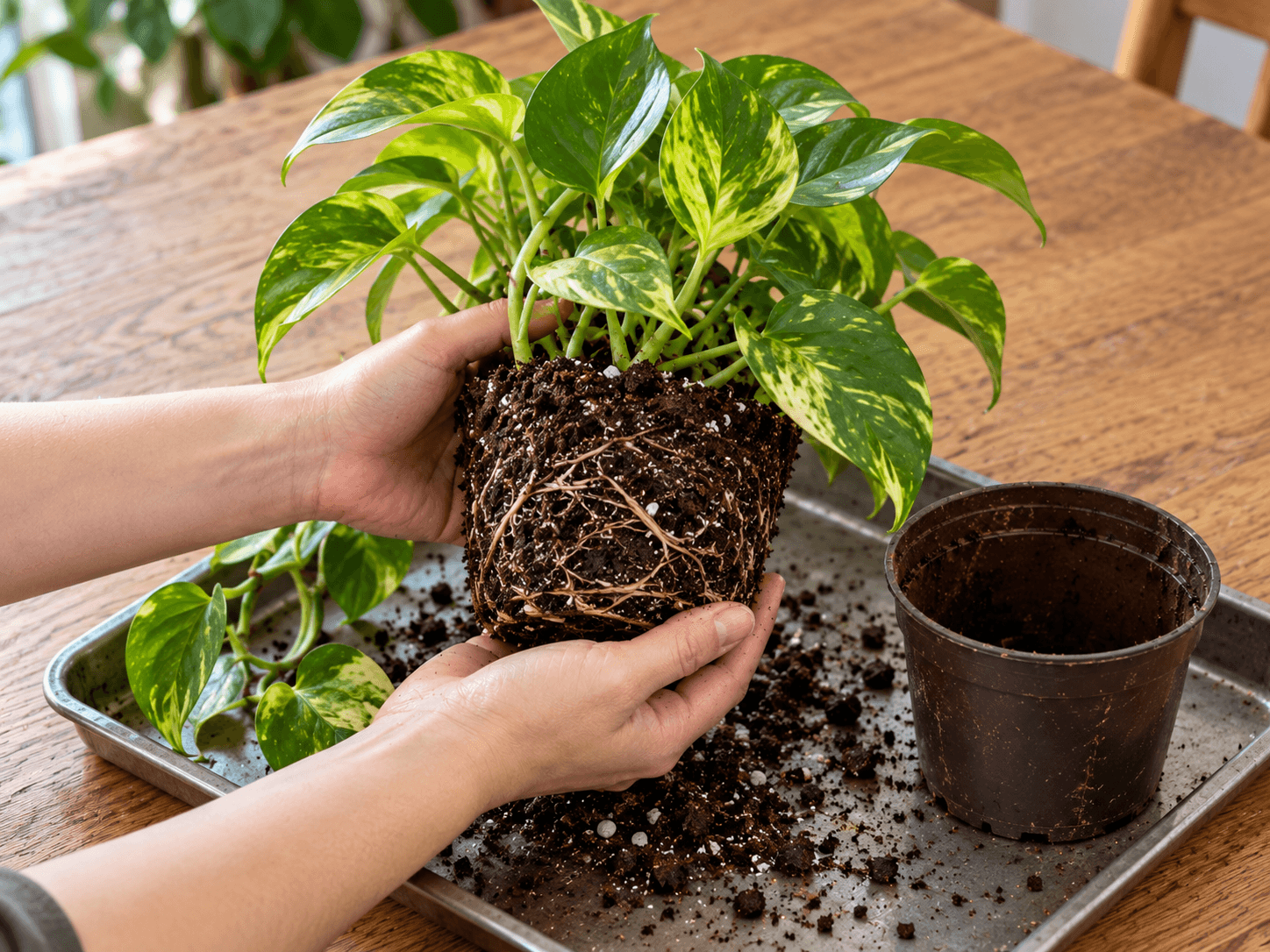
When roots genuinely crowd the container, repot modestly and keep the rhizomes on the surface. Support the root ball rather than pulling the plant up by its thin frond stalks. A damaged frond can be removed with a clean cut once you can see where its stalk joins.
Find a related guide below.
Back to the beginningSources & notes
Care guidance checked against these horticultural references on 20 October 2026.
- NC State Extension: Phlebodium aureumLobed fronds, golden scaly rhizomes, epiphytic habit and root conditions.
- RHS: How to grow epiphytic fernsDo not bury surface rhizomes; avoid overpotting and persistent saturation.
- University of Maryland Extension: Watering indoor plantsMoisture and pot-weight checks; top and bottom watering.