Leave the middle of the fern alone
Asplenium nidus
The broad fronds are easy to notice. The small, unfolding growth in the middle is the part to protect when watering and finding a place for this fern.
The short answer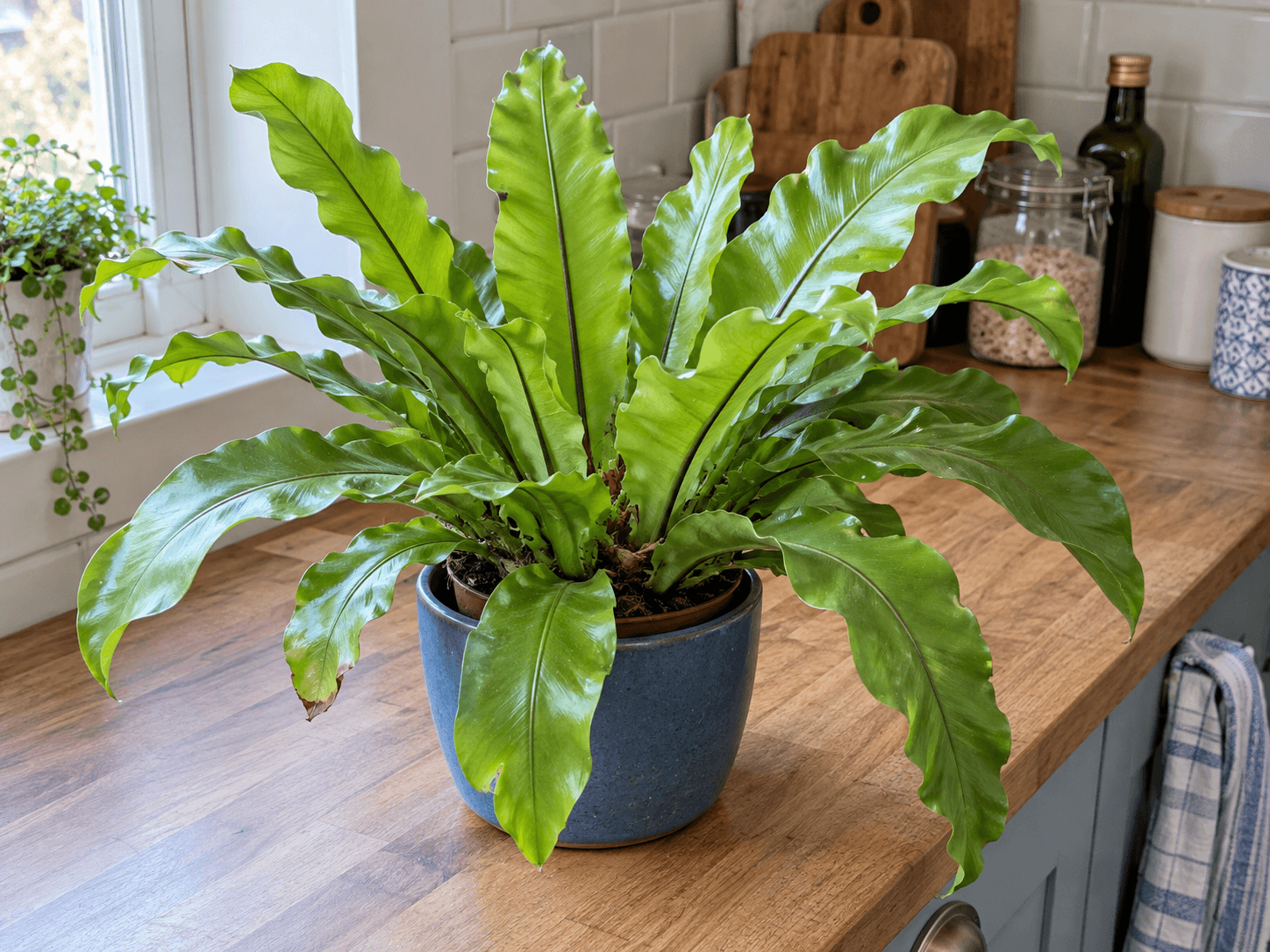
A fern with whole leaves
A bird's-nest fern does not look much like the fern people draw from memory. Its fronds are broad, undivided blades, arranged around a central nest. Asplenium nidus has a dark midrib and gently wavy edges. Related Asplenium species and cultivars share the common name, so keep a nursery label if you have one; a curly edge alone is not a reliable species test.
The useful measurement at the shop is the distance between the outer frond tips, not the diameter of the pot. Put that width on your counter with two mugs before buying. If one mug lands in the dish rack, the fern will eventually do the same. This is a good plant for a visible, accessible surface, rather than the last gap on a crowded shelf.
Light without a hot pane
A bright position out of strong direct summer sun suits the foliage. Check the actual path of the sun: a kitchen counter can be softly lit at breakfast and exposed for hours after lunch. Keep the fronds away from cold glass, a heating outlet and the place where you open the window in winter.
A bathroom is an option when it has useful daylight. It is not a solution for a dark room simply because a shower happens there. Before moving the fern, stand in the proposed spot and check what the leaves will face once the door is closed.
Aim around the nest
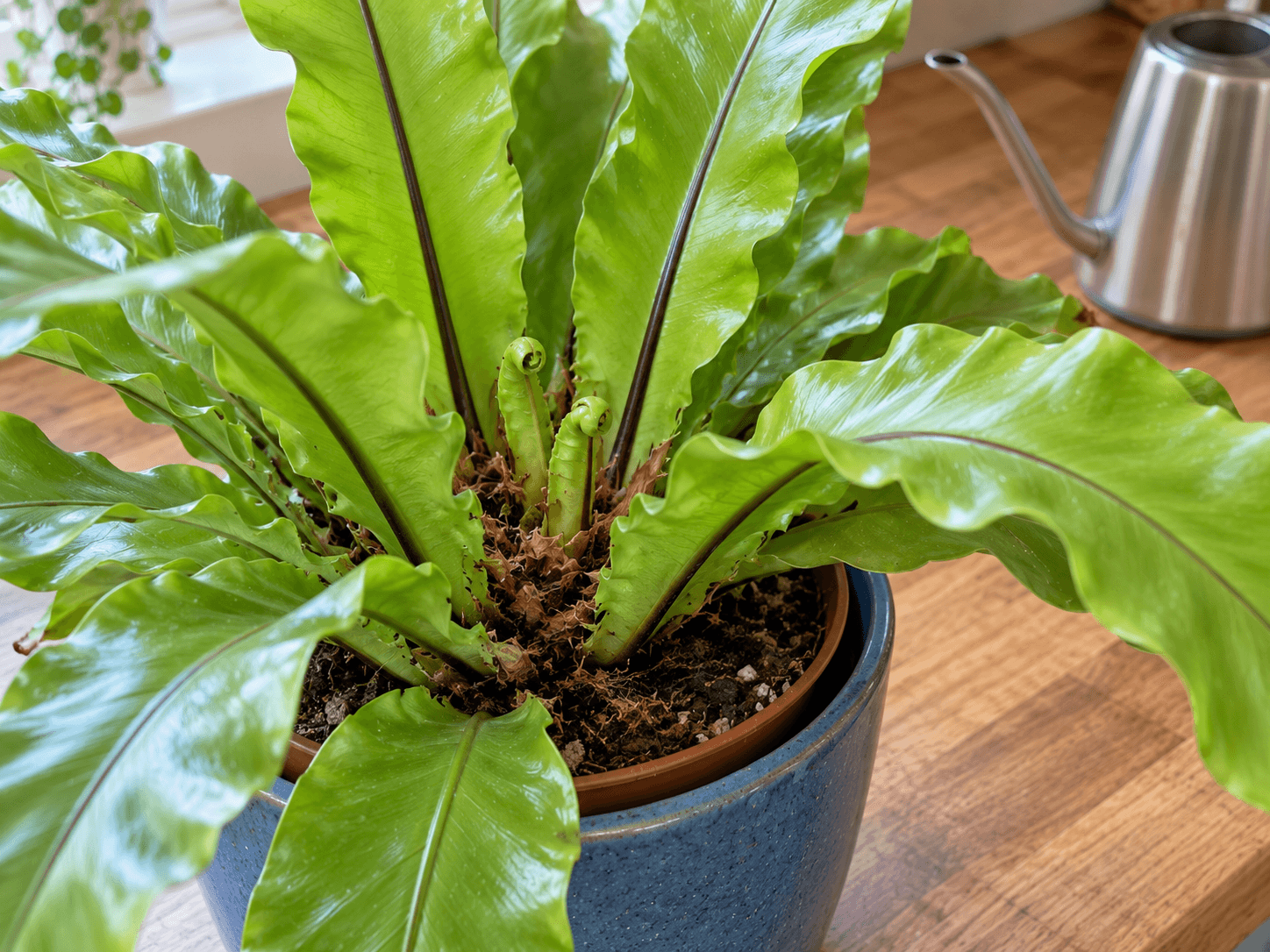
- Feel the accessible mix and lift the nursery pot before watering. Do not wait for the whole root ball to become crisp and light.
- When the surface begins to dry, water slowly around the plant until excess escapes below. Avoid directing a stream into the central nest.
- Let the pot drain and empty the cover pot before putting it back. The blue outer pot is a container for the nursery pot, not a reservoir.
If a wide frond blocks the route, move the spout rather than bending the frond out of the way. A small can is easier to control here than a jug tipped above the whole plant.
Read new growth, not one old edge
A damaged outer tip does not mend. Check whether subsequent fronds emerge and expand normally, and whether the mix is drying between checks. Repeatedly wetter compost alongside declining foliage needs a drainage and root assessment. More water is not the automatic response to a brown edge.
Find a related guide below.
Back to the beginningSources & notes
Care guidance checked against these horticultural references on 20 October 2026.
- NC State Extension: Asplenium nidusUndivided fronds, central rosette, filtered light, moisture and fragile new growth.
- RHS: Care for humidity-loving houseplantsRelated bird's-nest fern care and keeping water out of the growth centre.
- University of Maryland Extension: Watering indoor plantsMoisture and pot-weight checks; top and bottom watering.
- RHS: Epiphytic fernsTree-dwelling fern habits, indirect light and airy growing media.