Check the name before the ceiling
Strelitzia reginae and Strelitzia nicolai
A small bird of paradise can become a very large houseplant. Check the species, the window and the clear floor space before bringing one home.
The short answer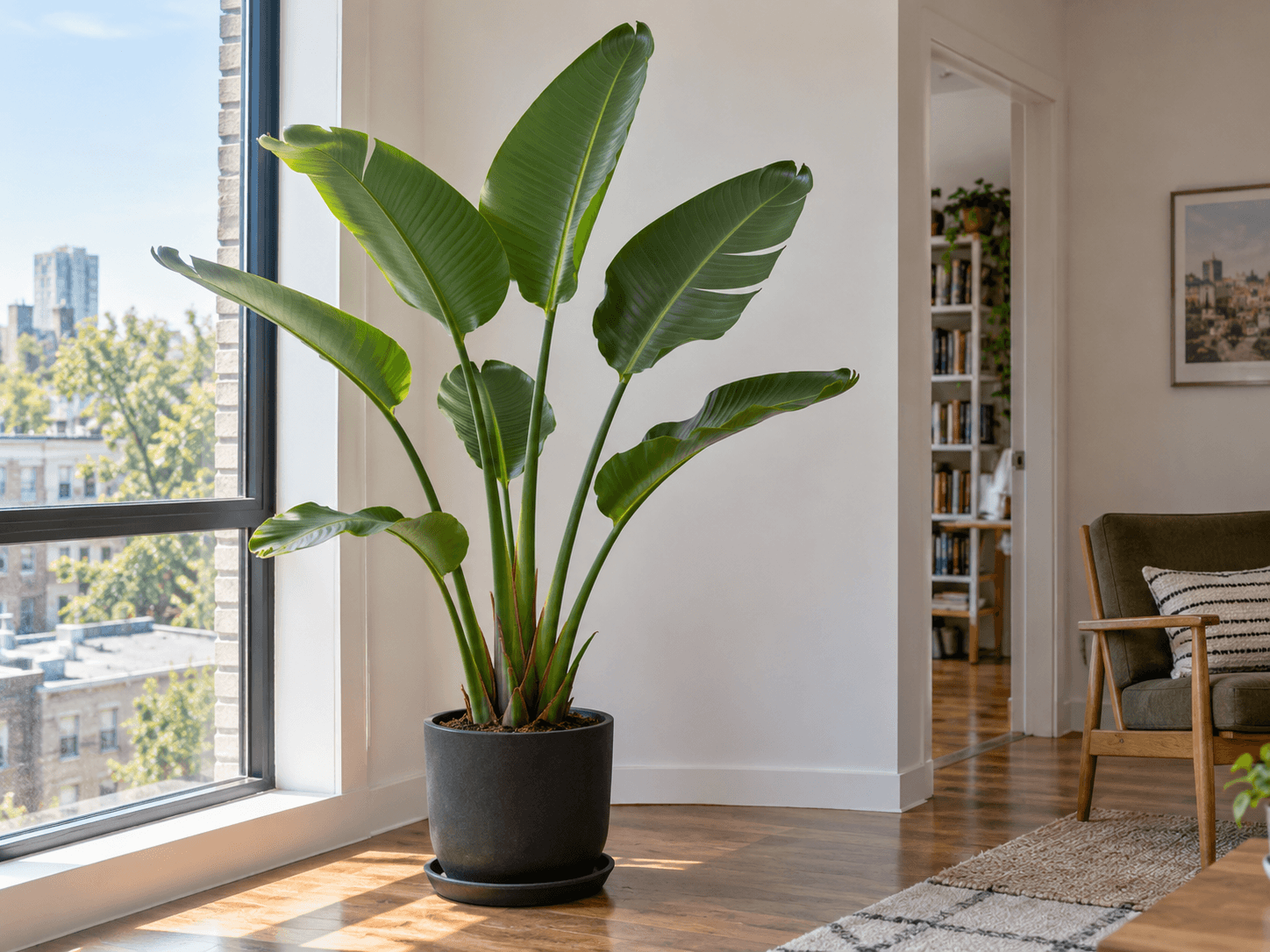
A young plant does not show its final scale
Strelitzia reginae can still reach roughly 1.5 metres or more in height, with a substantial spread. Strelitzia nicolai is a much larger species, reaching tree-like proportions outdoors in suitable climates. A compact young nicolai in the shop is not a dwarf version of reginae.
Measure the proposed place with the chair pulled out and the door open. Include the distance from the pot to the window and the space above the tallest leaf. Plan how you would move a heavier pot later. Do not rely on a narrow gap that only works while every leaf is pressed against the wall.
Give the leaves a bright window
Strelitzias need considerably more light than a dim interior corner provides. A large sunny window is a better starting point. Increase exposure gradually if the plant has been kept in lower light, and keep leaves from being trapped against hot glass or rubbed by a curtain.
Flowering requires maturity and suitable conditions; a young foliage plant may take years to flower. Check the species and age before assuming the absence of orange blooms is a problem. White-flowered nicolai will not turn into orange-flowered reginae with a different feed.
A large pot needs a deeper check
During active growth, keep the mix reasonably moist without leaving the roots saturated. Check beneath the dry-looking surface of a large container before watering again. As growth slows in lower winter light, the pot may take much longer to use the same amount of water.
Keep the drainage route and saucer accessible. If the plant stands in a heavy decorative container, arrange a practical way to remove runoff before it becomes too large to lift comfortably. Watering a floor plant should not depend on guessing how much water is hidden below it.
Separate a split from a new symptom
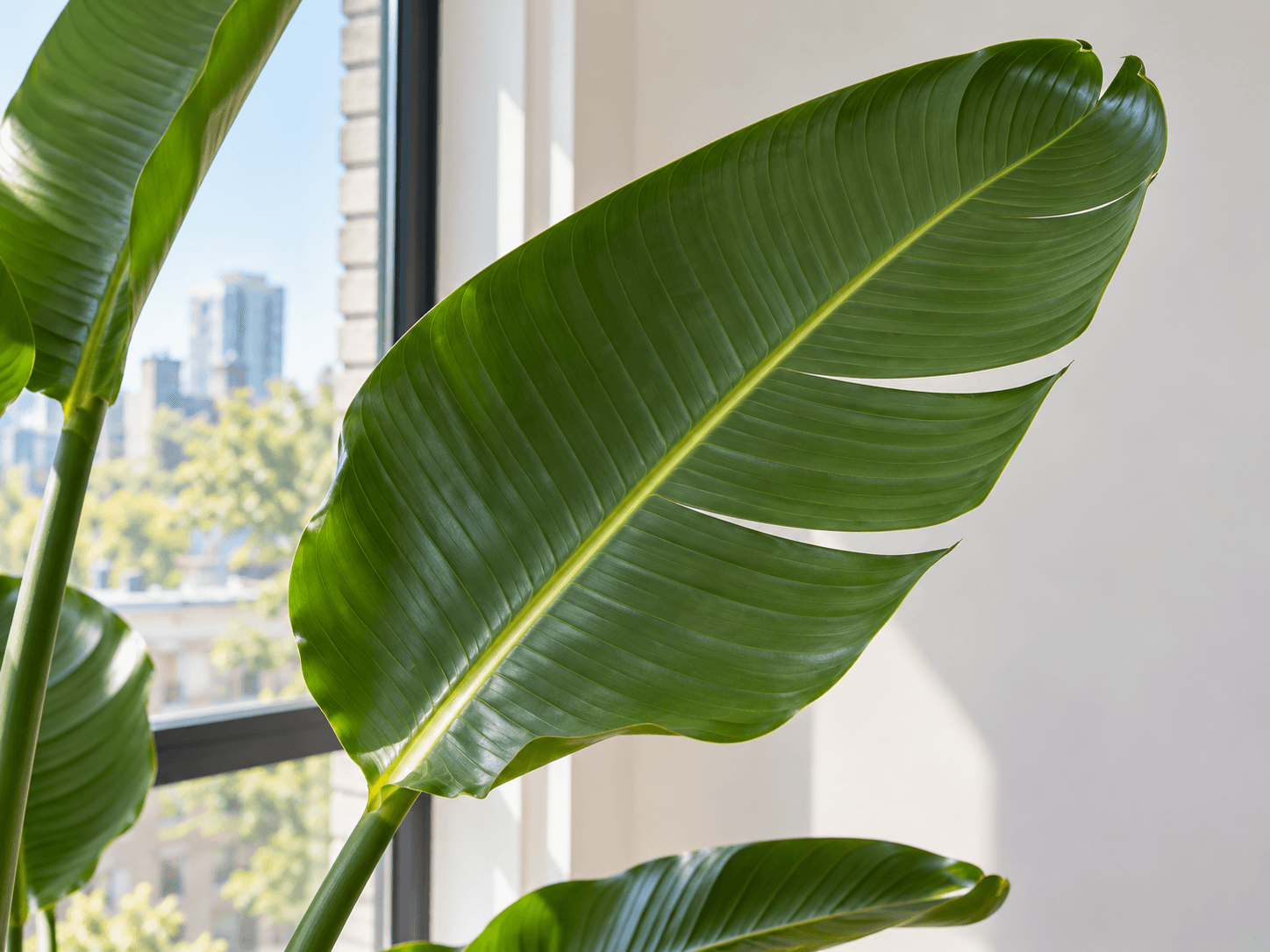
Broad leaves can tear along their veins after wind or physical contact. Inspect the location of a split and what touches the leaf. Existing tears do not seal back together, so reduce repeated rubbing and watch the next leaf rather than cutting away every imperfect blade.
Find a related guide below.
Back to the beginningSources & notes
Care guidance checked against these horticultural references on 20 October 2026.
- RHS: How to grow strelitziaSpecies choice, sunny indoor space, watering, maturity and wind damage.
- NC State Extension: Strelitzia nicolaiWhite bird of paradise identity, large paddle leaves and eventual size.
- University of Maryland Extension: Watering indoor plantsMoisture and pot-weight checks; top and bottom watering.
- University of Minnesota Extension: Lighting for indoor plantsWindow exposures, low-light limits and supplemental lighting.