Choose the sheltered part of the balcony
A warm balcony can still be too exposed. Check what happens at pot and leaf height before moving an indoor plant outside.
The short answer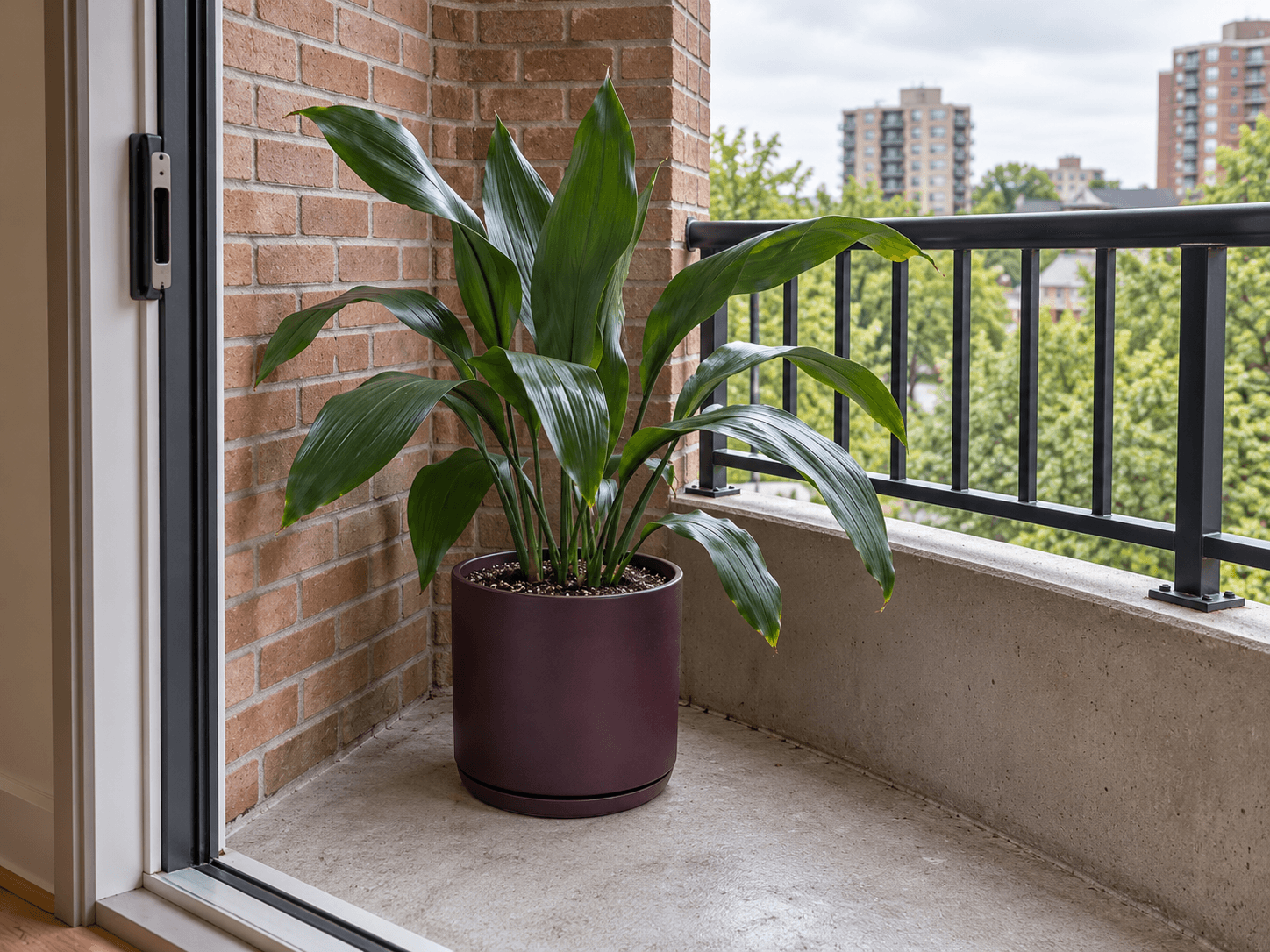
Look beyond the sunny photograph
Watch the intended spot on more than one ordinary day. A corner may be sheltered from one direction and exposed from another. Look for leaves striking a wall, stems whipping against railings and pots rocking. Do this from a safe position; a weather warning is a reason to postpone the experiment.
Check light separately. Shelter beside a wall can be very dim, while a covered balcony can receive strong low-angle sun. Introduce outdoor conditions gradually once temperatures suit the species. If the only available place is both exposed and hard to reach, keeping that plant indoors is a reasonable choice.
Keep the container and the route manageable
Choose a broad, stable base without giving a small root system an enormous volume of wet mix. Keep pots on the balcony floor in an appropriate position, away from edges and the doorway. Avoid a tall, narrow stand that turns an already top-heavy plant into a more difficult object to move.
Weight matters to the building as well as the plant. Check building requirements before adding heavy containers or screens; get qualified advice if capacity or fixings are uncertain. A mesh or slatted screen can filter wind, but installation needs to suit the building. Do not improvise a sail-sized solid panel.
Check contact points and moisture
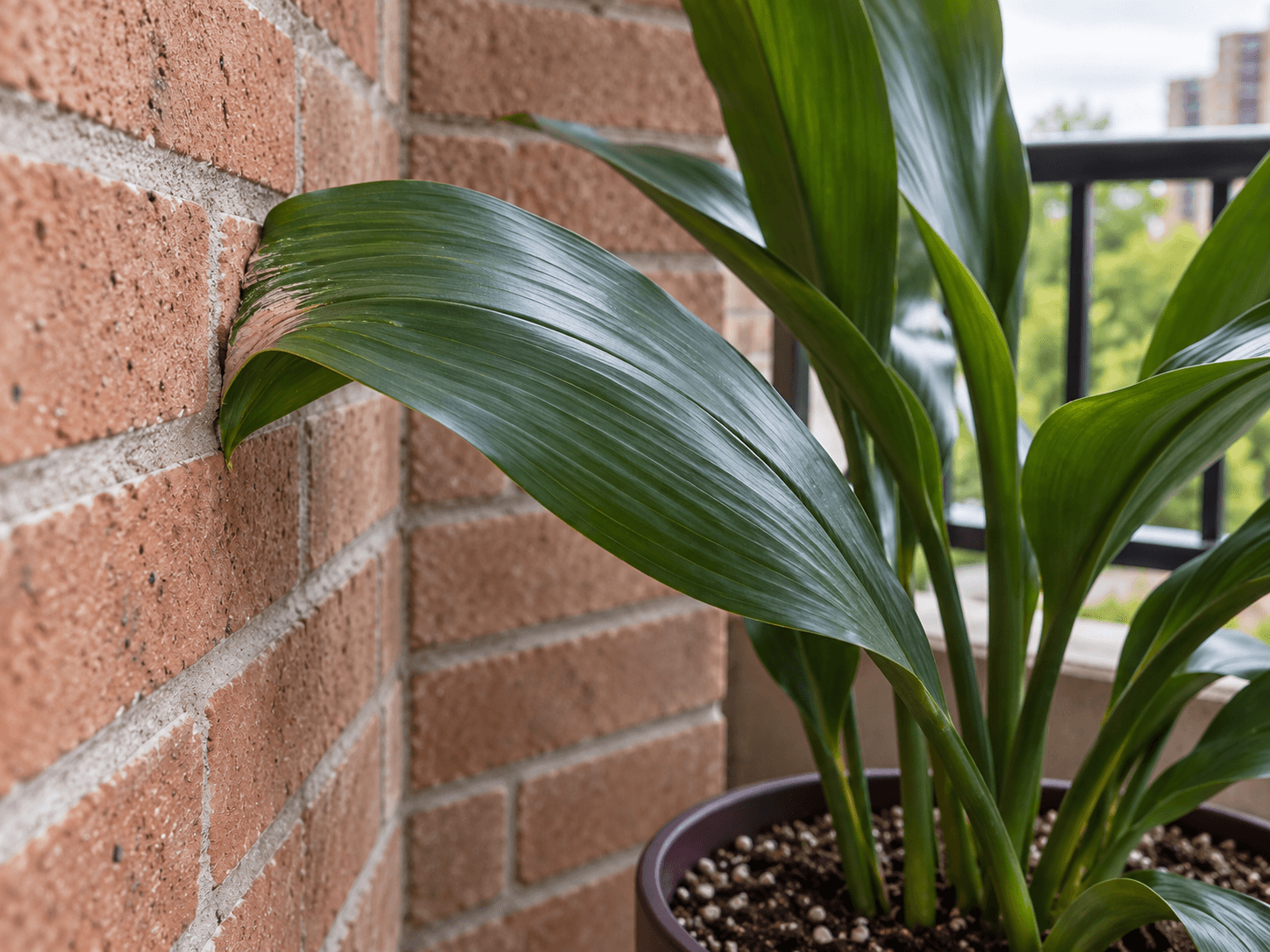
- Look for repeated contact between leaves, brickwork and railings. Move the pot before the contact becomes a daily occurrence.
- Check the potting mix directly. Wind and warmth can shorten the interval between watering, but a wet pot still does not need more.
- After rain, check whether water reached the mix and whether an outer pot or saucer collected it. Keep drainage clear.
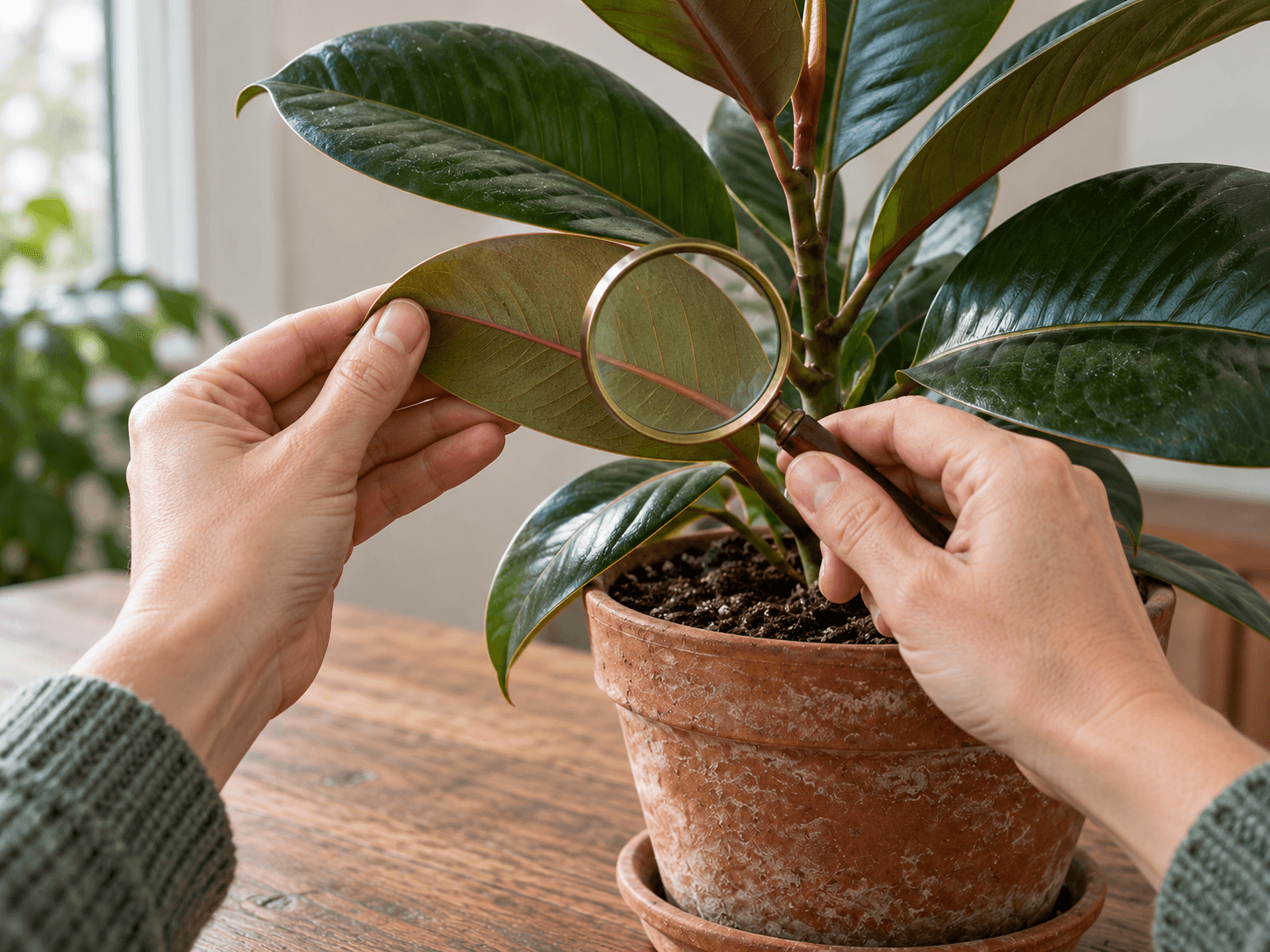
- Inspect the whole plant if damage continues after moving it. Check for pests and other causes rather than attributing every mark to wind.
Decide when the plant comes inside
Choose the indoor landing place before bad weather arrives. Allow for the width of the foliage, the door opening and a pot that is heavier after watering. Arrange help for a plant you cannot move comfortably. Do not leave the decision until strong gusts are already pushing it around.
Find a related guide below.
Back to the beginningSources & notes
Care guidance checked against these horticultural references on 20 October 2026.
- RHS: Greening balconies and roof gardensWind filtering, container stability, load considerations and drying in exposure; UK building specifics are not applied to Toronto.
- Iowa State Extension: Moving indoor plants outside for summerGradual light adjustment, night-temperature checks, stable containers, changed water needs and autumn pest inspection.
- University of Maryland Extension: Watering indoor plantsMoisture and pot-weight checks; top and bottom watering.