Wait for the new alocasia leaf
Alocasia × amazonica 'Polly'
The pale rolled leaf in the middle needs time. Keep the roots evenly supplied while the plant is growing, and adjust when growth slows.
The short answer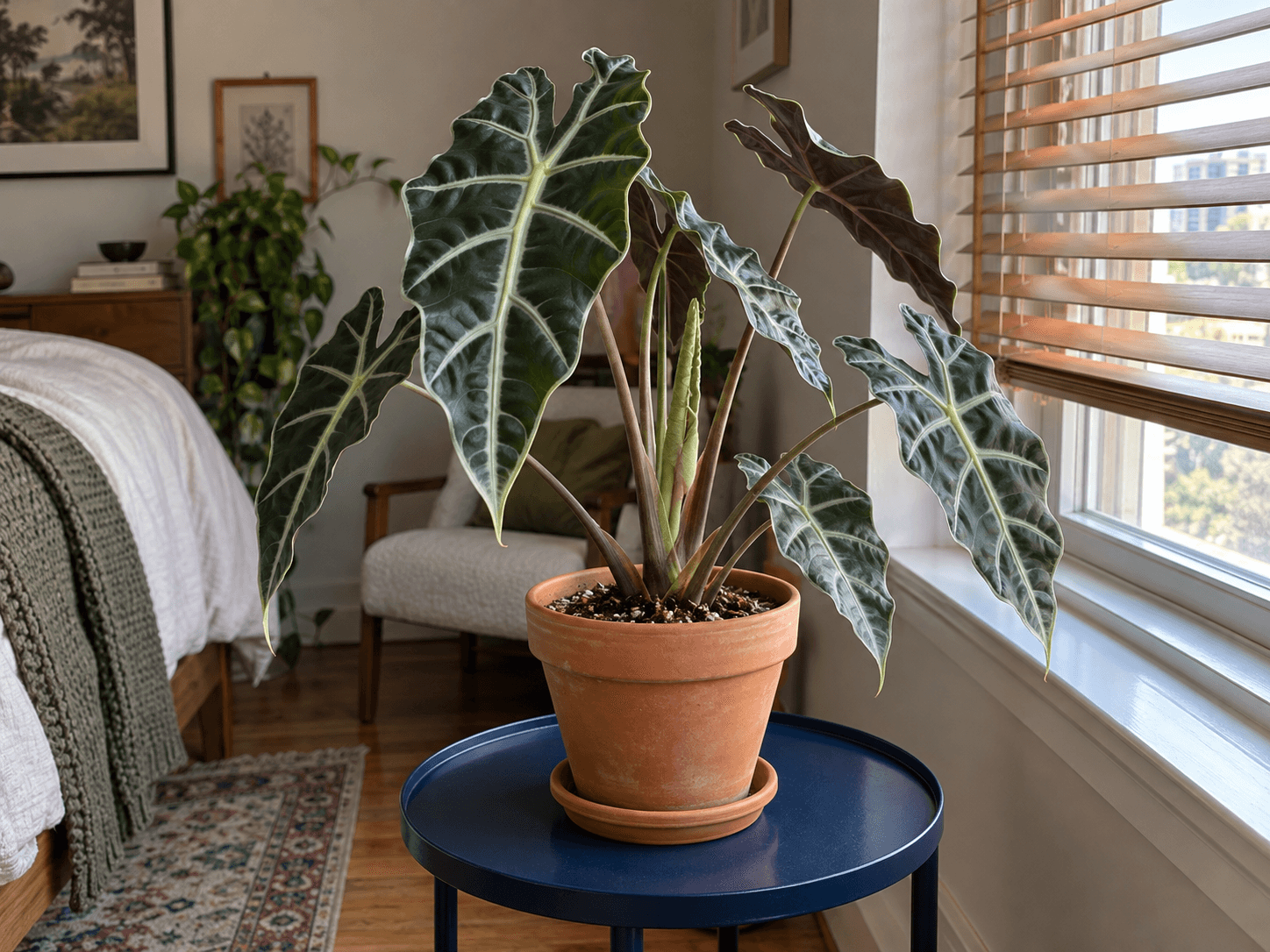
A compact plant with wide leaves
Polly has dark, pointed leaves with conspicuous pale veins and undulating edges. Although sold as a compact alocasia, its leaf stalks spread beyond the rim. Allow space on both sides of the pot before choosing a narrow shelf. A leaf leaning into a curtain will be brushed every time someone opens it.
Keep the nursery label: elephant ear covers many plants with different eventual sizes. Set this one in bright filtered daylight, protected from cold drafts and prolonged hot sun. A winter windowsill can be much colder than the room. Check beside the pot at night, especially after moving it closer to the glass.
The rolled leaf is already doing its job
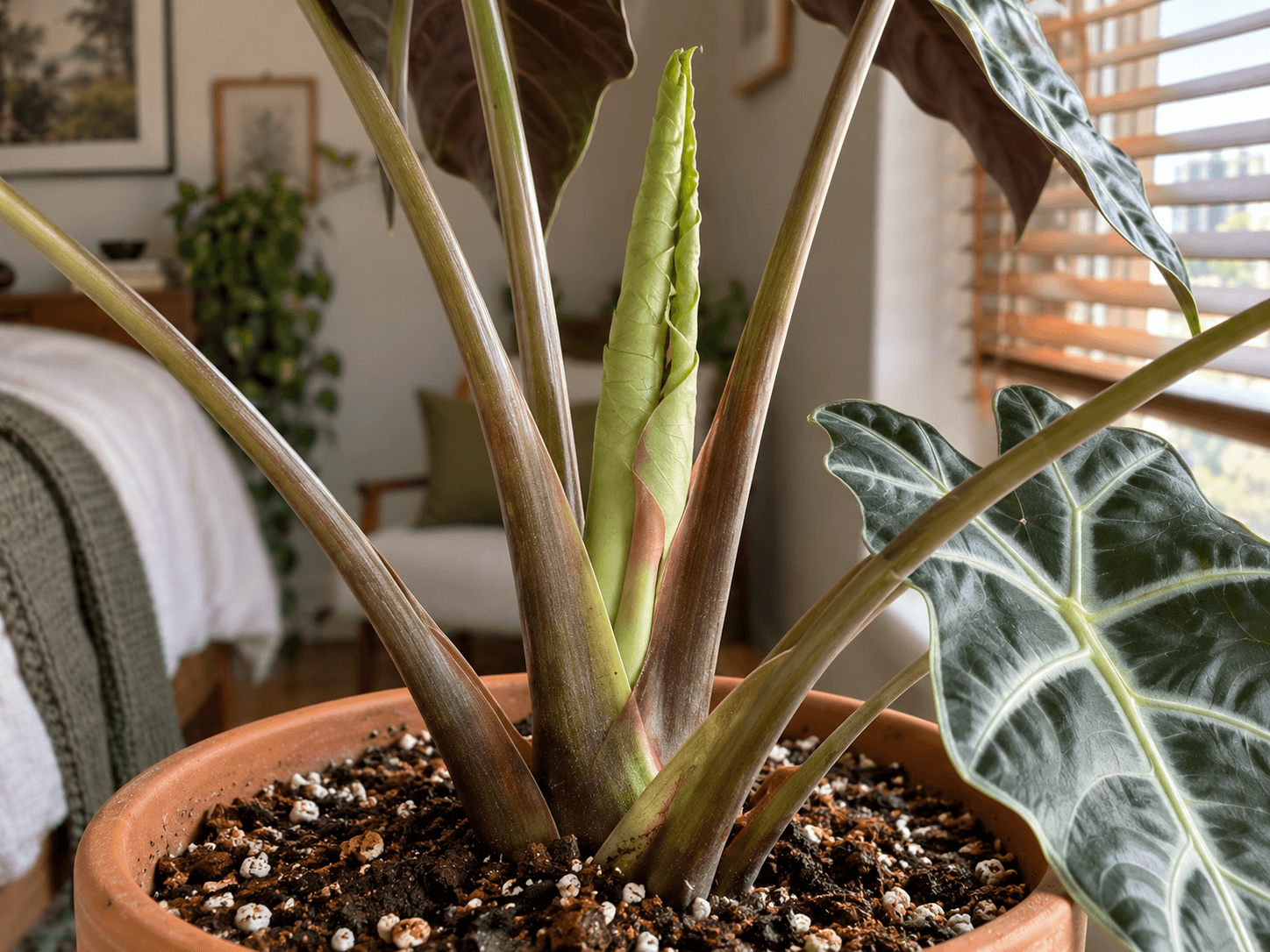
New growth is easier to follow if you photograph the centre from the same angle every few days. Record when the leaf first appeared rather than judging it against a plant photographed in a greenhouse. Avoid turning a slow opening into a reason to tug, cut or add fertilizer.
A yellowing older leaf and an opening new one can occur together, but the plant does not have a strict one-in, one-out rule. Look at the whole canopy. Several leaves collapsing in wet mix calls for a root and drainage check; fine stippling or webbing calls for a closer pest inspection.
Reach the mix without soaking the crown
Check the exposed mix near the rim. During active growth, water when the surface starts drying and allow the pot to drain. Keep the inner container easy to lift from its cover pot. If leaves hide the top completely, move a stalk gently aside rather than pouring blindly into the middle.
A warm room and adequate humidity suit this plant. Measure humidity if dry edges keep returning; changing the watering interval does not change the air. Position a humidifier where its mist will not continually wet the leaves or furniture, and clean it according to its instructions.
Use the winter plant as your guide
Alocasias can rest and lose foliage in winter. A smaller, inactive canopy needs much less water than a growing summer plant. Keep checking the pot, reduce feeding when growth stops and avoid leaving the remaining underground growth in saturated mix. Soft tissue and a deteriorating smell need investigation, whatever the season.
Find a related guide below.
Back to the beginningSources & notes
Care guidance checked against these horticultural references on 20 October 2026.
- RHS: How to grow alocasiasLight, warmth, seasonal watering, division and handling.
- RHS: Alocasia PollyCompact habit, shield-shaped silver-veined leaves and indoor conditions.
- University of Maryland Extension: Watering indoor plantsMoisture and pot-weight checks; top and bottom watering.