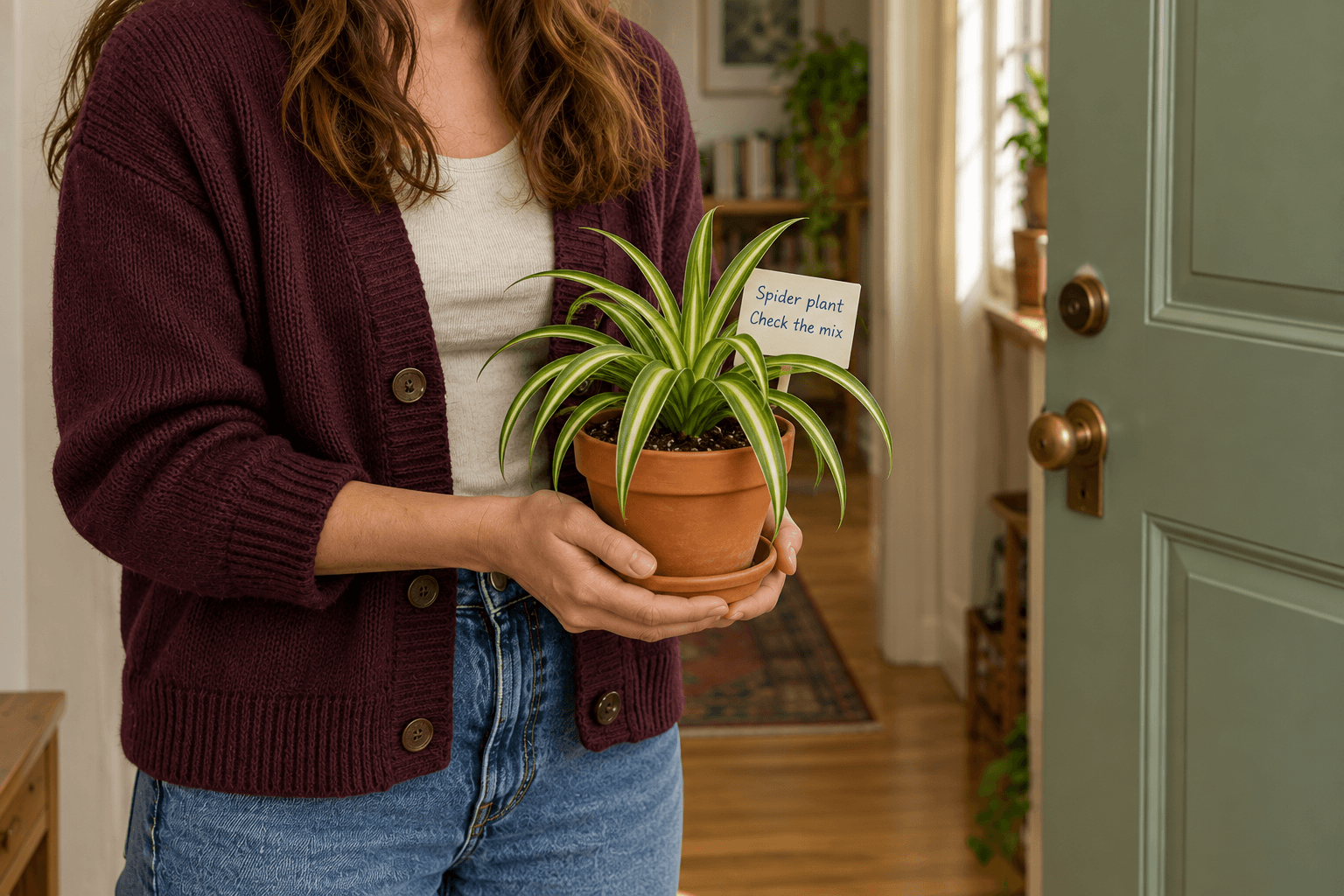
A small plant at the end of the stem
Choose a developed plantlet and give its small roots a manageable first pot. The runner is not a pothos vine.
The short answer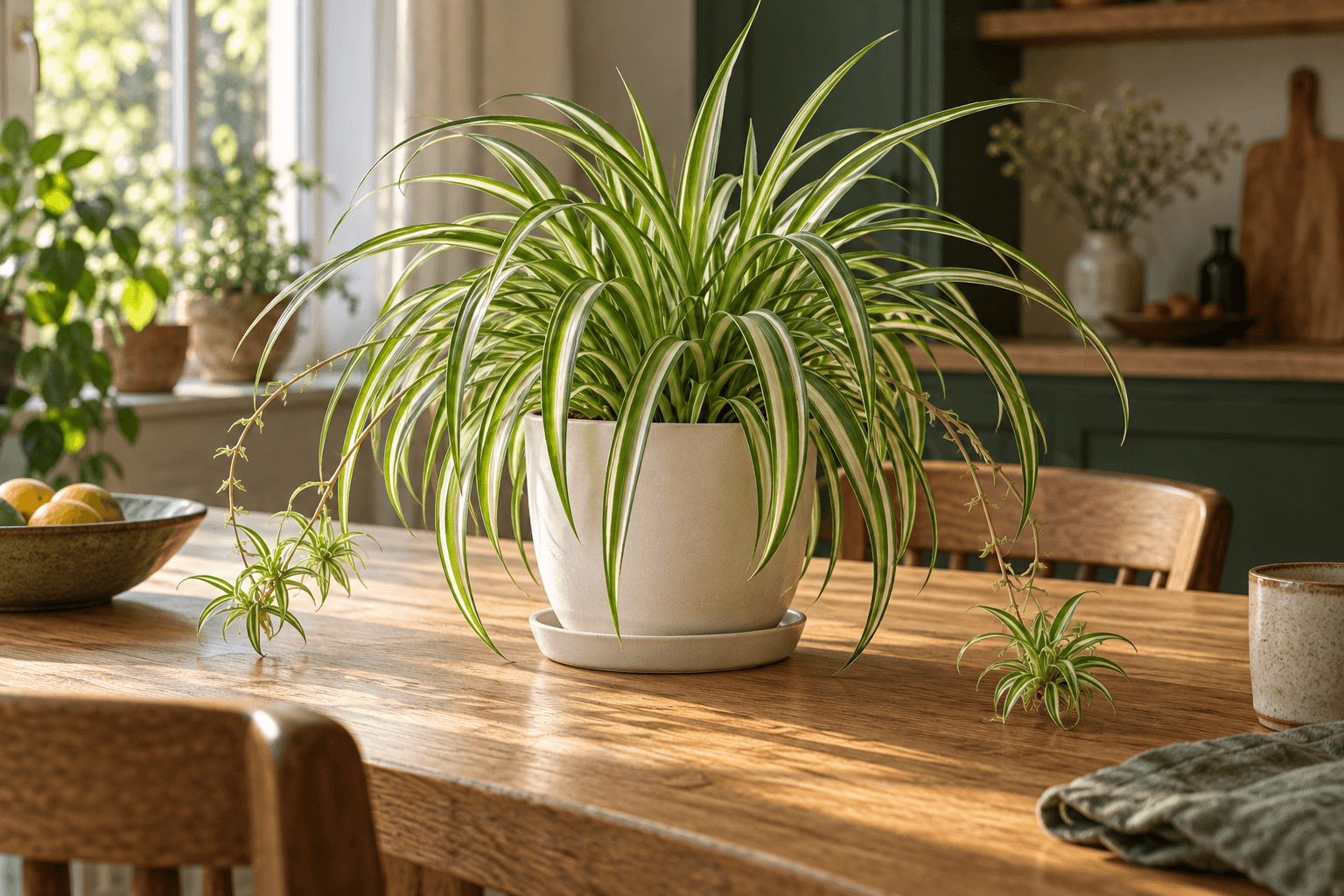
Wait for a useful starting point
Look at the base of a good-sized plantlet for roots or root beginnings. Leave very small, weak or damaged growth on the parent rather than detaching it for a deadline. Check the parent for pests before sharing any offspring. A healthy plantlet with a developed base is easier to manage than a tiny tuft of leaves.
Place the base, not the leaves
If the runner reaches a small pot beside the parent, leave it attached. Rest the plantlet base on moist, airy mix and use a bent wire pin to keep it in contact without piercing or burying the crown. Once roots hold the plantlet in the mix and it is making new growth, cut the connecting runner with clean snips.
A plantlet that already has roots can be detached and potted directly. Set the roots into the mix and leave the crown at the surface. There is no need to put an already rooted plantlet through a jar-of-water stage first. Keep the small pot moist while it establishes, with excess water able to drain.
Give it a steady first position
Keep the young plant in bright indirect light and monitor moisture closely while it establishes. Its small root system should not be buried in a large volume of wet mix. A loose support can help it stay upright without pressing the crown down. Avoid repeatedly lifting it to check roots; new growth is a less disruptive sign.
Find a related guide below.
Back to the beginningSources & notes
Care guidance checked against these horticultural references on 20 October 2026.
- University of Wisconsin Extension: Spider plantRooting plantlets while attached, securing the base and separating rooted plantlets.
- Royal Horticultural Society: Growing spider plantsRooting attached and detached plantlets.
- NC State Extension: Chlorophytum comosumPlantlets, light, moisture and leaf-tip sensitivity.
- Oregon State University Extension: Safe plant propagation and salesUse healthy propagation material and clean containers; inspect before sharing.