Let a gasteria grow at its own pace
Gasteria species and hybrids
Small gasterias offer thick spotted leaves without demanding the hottest sill. Follow the centre and offsets before deciding that slow growth needs more water or feed.
The short answer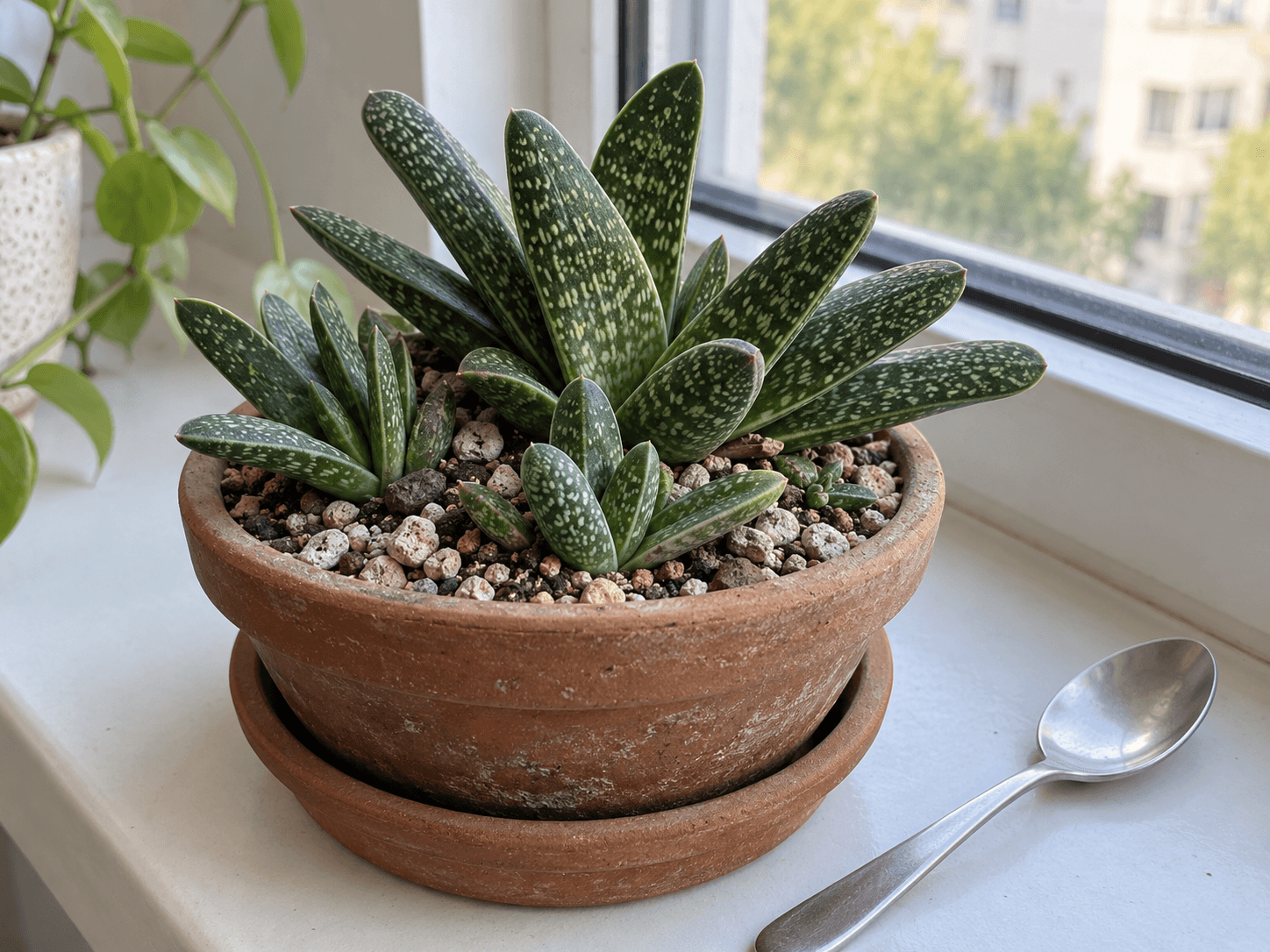
Keep the name with the plant
Gasterias have fleshy leaves that may be spotted, rough or relatively smooth, with forms ranging from small fans to larger rosettes. The illustrated dwarf type, Gasteria bicolor var. liliputana, makes small clumps. Other species and hybrids can become considerably larger.
Young leaves may sit in two opposite ranks and look different from an older rosette. That change is not automatically distortion. Keep the nursery label and photograph the plant from above as well as from the side, so you have a record of its original shape.
Filtered light can be the better fit
SANBI describes the dwarf gasteria growing under the shelter of other vegetation and recommends partial or dappled shade. Indoors, bright filtered daylight is a useful starting point. Do not assume that every succulent belongs against the hottest south-facing glass.
Check whether a nearby curtain removes most of the light for the day. If the position is too dim, move gradually toward better daylight. If colour changes after a sudden exposure change, review that move alongside moisture and root condition instead of treating redness as an instruction to water immediately.
Keep the pot proportionate
Use a draining container and gritty succulent mix, allowing it to dry between waterings. A small plant in a large decorative bowl has a great deal of wet material to use up. Choose the root container for the plant, then use a separate outer pot if you want a larger display.
Check below any surface grit before deciding the pot is dry. After watering, let excess escape and empty the saucer. Adjust the interval when growth or room conditions change. Slow visible growth by itself is not a reason for repeated watering or extra fertilizer.
Watch the small fans at the base
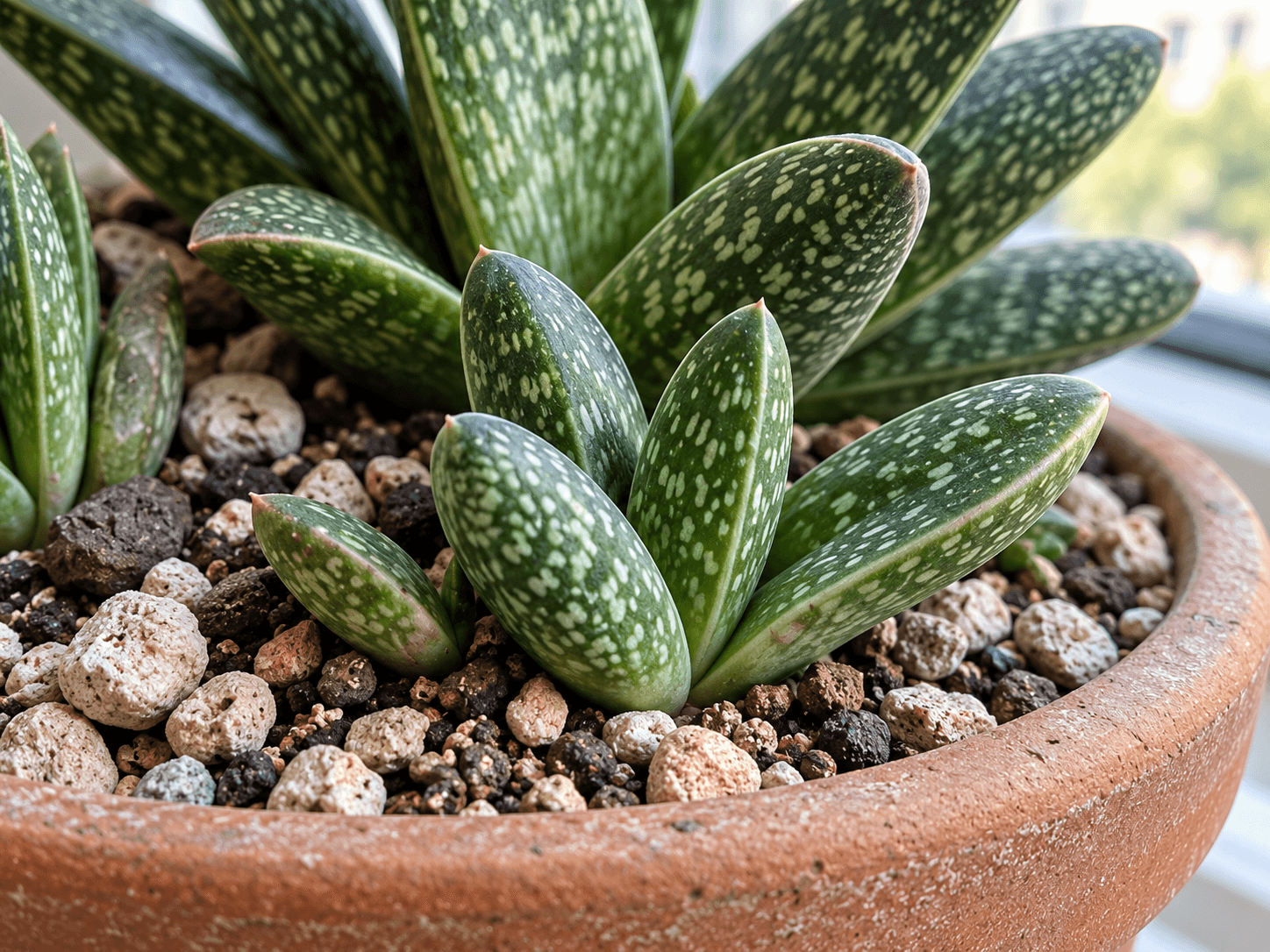
Offsets let a small specimen gradually form a clump. Leave them attached if you like that shape and the pot still drains and dries sensibly. During a needed repot, you can separate a substantial rooted section and give it its own small container.
The leaves can break if used as handles. Lift the pot or support the root ball when working with the plant. A broken leaf need not become a project; maintaining the established clump is a reasonable choice too.
Find a related guide below.
Back to the beginningSources & notes
Care guidance checked against these horticultural references on 20 October 2026.
- SANBI PlantZAfrica: Gasteria bicolor var. liliputanaSmall clumps, juvenile two-ranked leaves, filtered light and division.
- RHS: How to grow houseplant cacti and succulentsDraining media, restrained pot sizing, watering and species exceptions.
- NC State Extension: Plants grown in containersContainer materials, potting media, nutrition and indoor care.
- University of Maryland Extension: Watering indoor plantsMoisture and pot-weight checks; top and bottom watering.