Keep an echeveria compact
Echeveria species and hybrids
Choose a bright position for an echeveria, protect its waxy leaf surface and judge new growth before trying to repair an elongated stem.
The short answer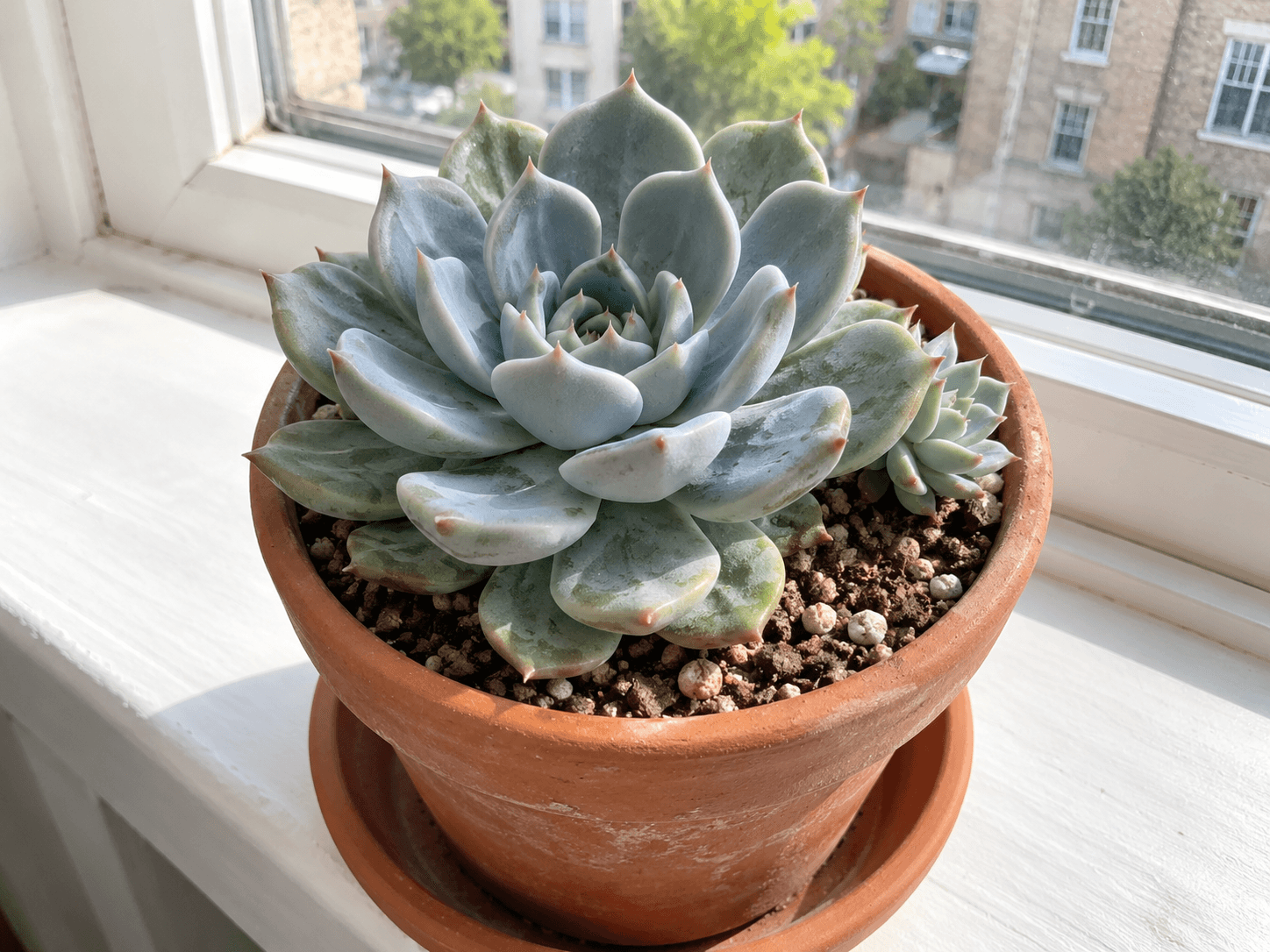
Start with the light at leaf level
Echeverias come in many colours and leaf shapes, but a compact rosette is a useful starting point when choosing one. Look at the centre before buying: are the newest leaves close together, or is a thin stem already reaching above the older growth? Keep the label, since a photograph cannot reliably identify every hybrid.
Use a bright window and introduce stronger sunlight gradually after a dim shop or winter position. Check what curtains, neighbouring buildings and other plants actually block. A pale room can look bright to you while offering little light to a small plant behind a larger pot.
Compare photographs of the centre over several weeks. Improving the position can support more compact new growth, but it will not shorten an existing elongated stem. Avoid cutting immediately just to make the plant match its purchase photograph.
Dry down, then wet the roots
Use a container with drainage holes and a porous succulent mix. Let it dry before watering thoroughly, then empty the saucer. Expect a longer interval when light and growth decrease. The calendar can remind you to check; it cannot tell you whether this particular pot is dry.
Direct water onto the mix where possible. A densely packed rosette can make the surface difficult to reach, so use a narrow spout rather than pouring blindly into its centre. Do not bury the lower leaves when repotting, and avoid a much larger pot simply to balance a tall stem.
Leave the waxy surface alone
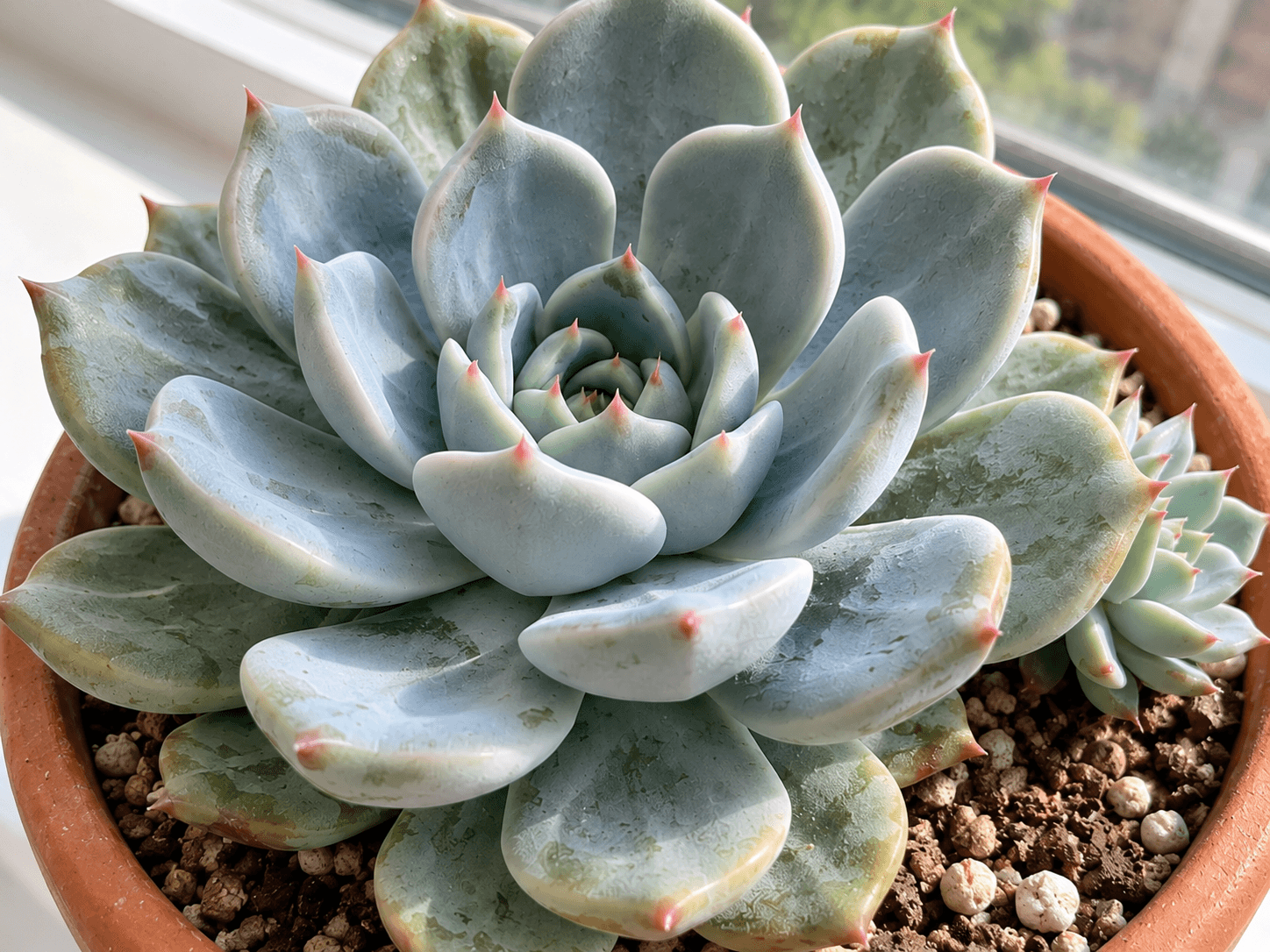
Many echeverias have a powdery-looking wax coating. Repeated rubbing changes its appearance. Handle the pot instead of gripping the rosette, and skip leaf polish. A darker mark where a leaf was touched is a different observation from spreading soft tissue, a pest or a wet patch.
Separate age from a growing problem
Older lower leaves can dry and fall as the stem develops. Check whether the centre remains firm and the next leaves are well formed. If several leaves become soft or translucent while the mix stays wet, inspect drainage and roots rather than assuming normal ageing.
Leave small offsets attached until they are substantial enough to handle. For a leaf cutting in active growth, choose a firm healthy leaf and remove it with its whole base intact. A torn middle piece is different from a complete leaf with the tissue that joined it to the stem.
- Let the detached end dry and seal for a day or two before setting it on a porous succulent propagation mix.
- Rest the leaf on the surface with its base touching the mix. Keep the leaf uncovered in a warm, bright place protected from strong direct sun; do not seal the pot in a humidity bag.
- Keep the rooting surface slightly moist, not wet. Leave a developing rosette attached to its parent leaf while it forms roots and the old leaf gradually shrivels.
Find a related guide below.
Back to the beginningSources & notes
Care guidance checked against these horticultural references on 20 October 2026.
- RHS: EcheveriaRosette growth, offsets, light and free-draining mix.
- NC State Extension: EcheveriaLeaf rosettes, wax coating, lower-leaf loss and propagation.
- RHS: Leaf cuttingsSucculent leaf callusing, uncovered propagation and lightly moist draining medium.
- Iowa State University Extension: Propagating succulentsCallusing stem cuts before rooting in porous medium, including Crassula, and separating rooted offsets.
- RHS: How to grow houseplant cacti and succulentsDraining media, restrained pot sizing, watering and species exceptions.
- NC State Extension: Plants grown in containersContainer materials, potting media, nutrition and indoor care.