Keep the colour near the window
Codiaeum variegatum
A croton needs a bright, consistently warm position. Follow the whole plant when leaves change colour or fall, rather than treating every yellow patch as damage.
The short answer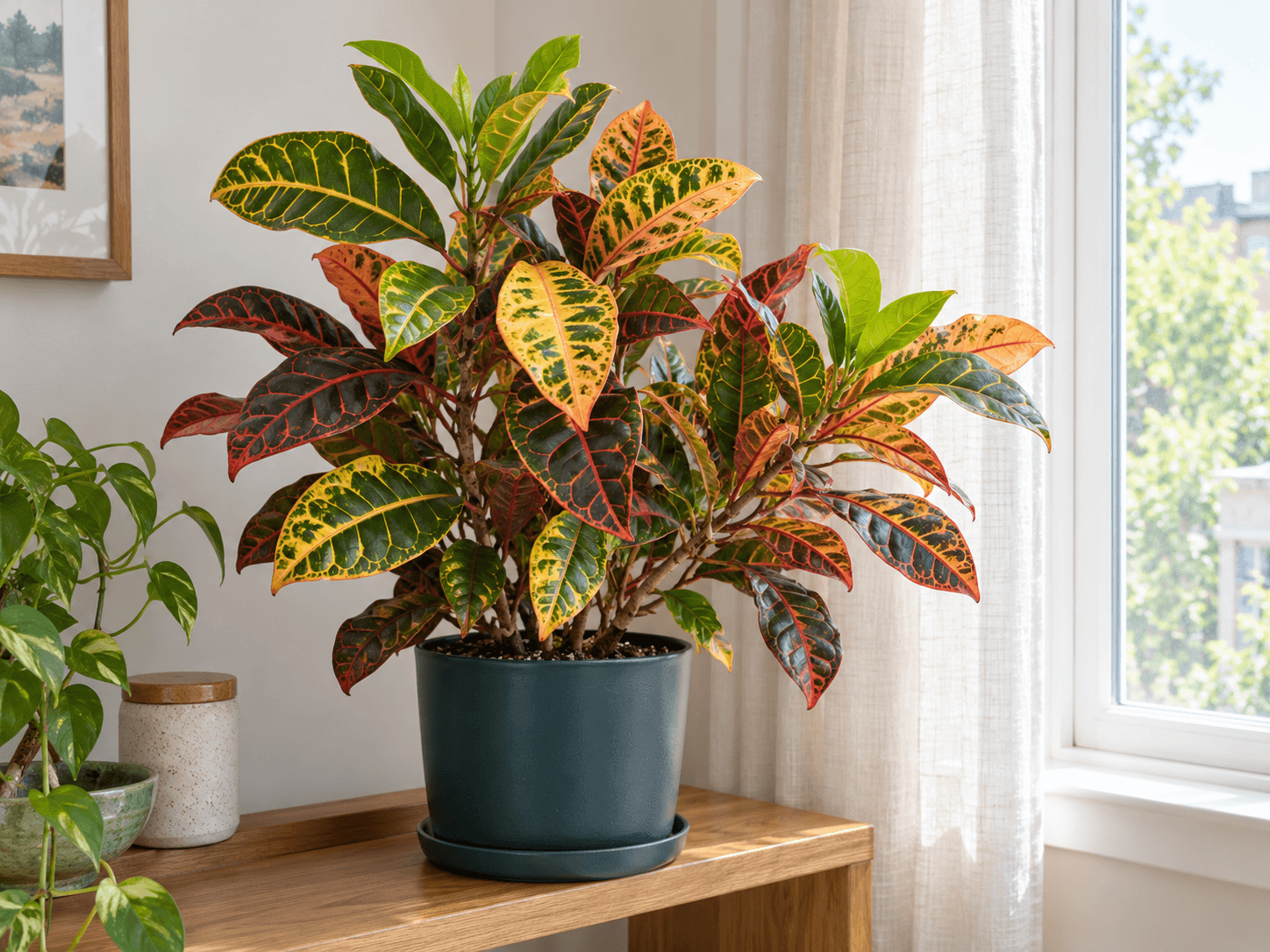
Know the pattern you bought
Croton cultivars vary considerably: some have broad oval leaves, others narrow or twisted ones, and their greens, yellows and reds appear in different arrangements. Photograph the plant and save its cultivar label on arrival. That gives you a better comparison than a photograph of a different croton online.
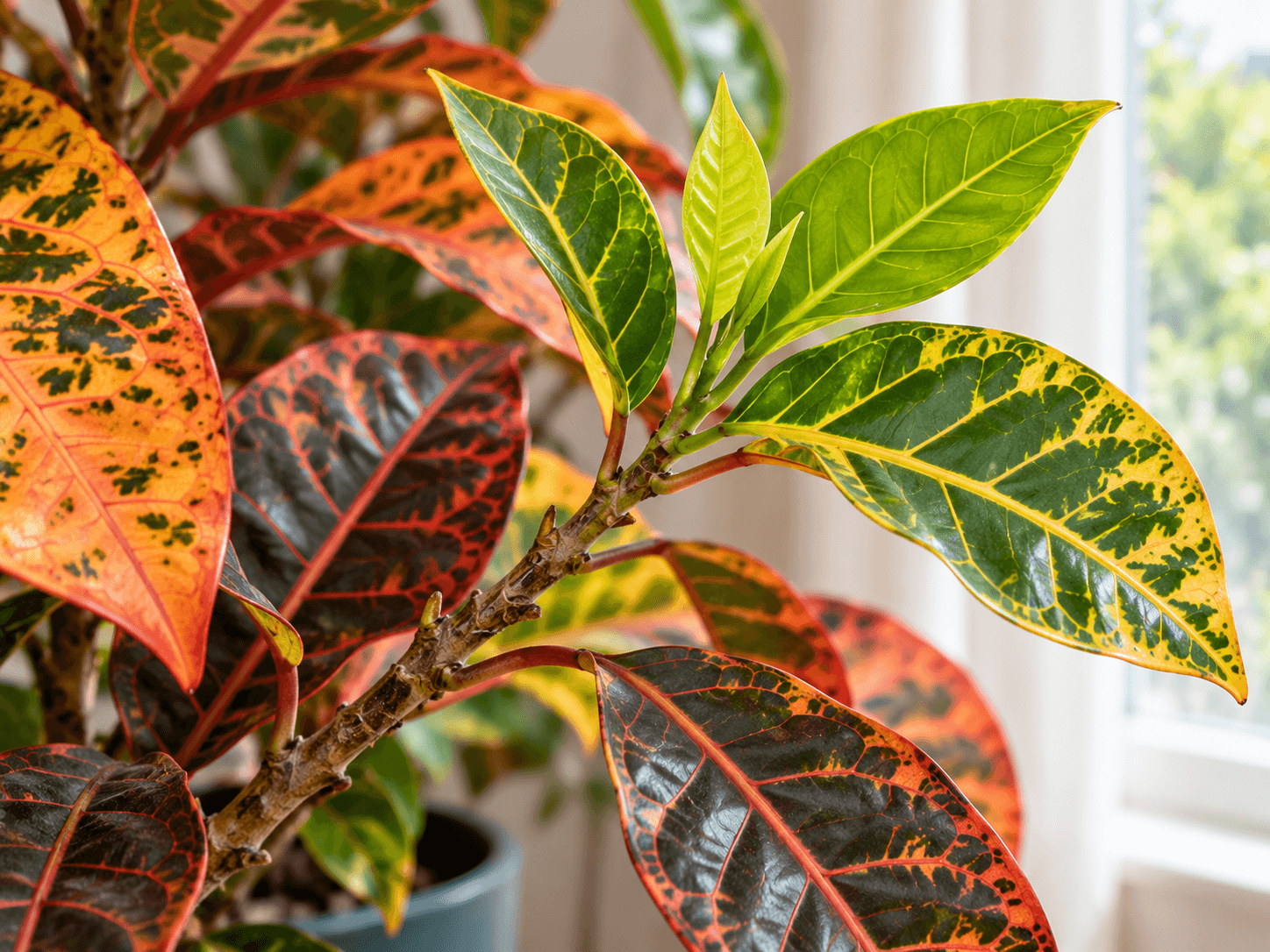
A yellow vein on an otherwise firm, normally patterned leaf is not the same observation as a whole leaf turning pale and falling. Look at the distribution of the change, the condition of the stalk and whether other leaves are affected before deciding what it means.
Choose a bright place that stays warm
Bright light helps maintain strong colour, but abrupt hot summer sun through glass can scorch foliage. Start with bright filtered daylight and adjust gradually. An interior corner chosen only because its wall matches the leaves may be too dim.
Keep the plant away from cold drafts and large temperature swings. The RHS advises keeping crotons above 15 C, with warmer growing conditions preferred. Check the window at night as well as during a sunny afternoon. Protect a newly bought plant during the journey home in cold weather.
Check beneath the canopy
Let the upper mix dry before watering thoroughly and draining. A dense croton can hide the top of the pot and any water collected beneath it. Lift the inner pot when practical, or check the saucer directly, rather than adding water through the leaves without seeing where it goes.
When growth slows, the same pot may remain moist longer. Repeated complete drying and persistent saturation can both cause trouble. If leaves fall after a move, record the changed conditions and check moisture before trying to replace every lost leaf with another drink.
Follow the remaining tips
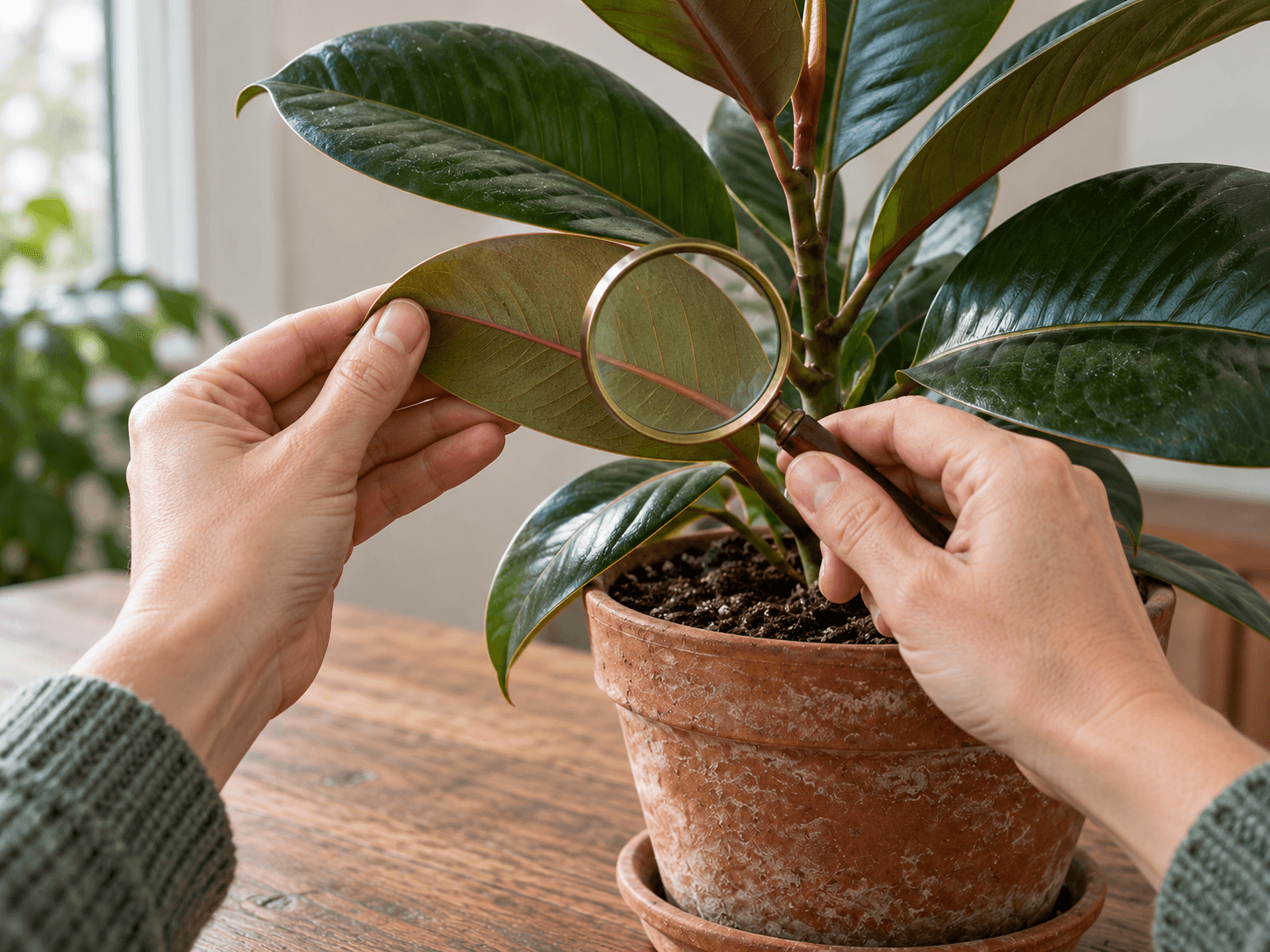
Photograph the growing tips and inspect leaf undersides for pests. Keep a suitable position steady while you watch the response. A plant that is still declining needs another look at roots and conditions; repeated moves make it harder to understand which change helped.
Find a related guide below.
Back to the beginningSources & notes
Care guidance checked against these horticultural references on 20 October 2026.
- RHS: How to grow codiaeumLight, warmth, leaf drop, watering and irritating sap.
- NC State Extension: Codiaeum variegatumCultivar variation, light-dependent colour and shrub habit.
- University of Maryland Extension: Watering indoor plantsMoisture and pot-weight checks; top and bottom watering.