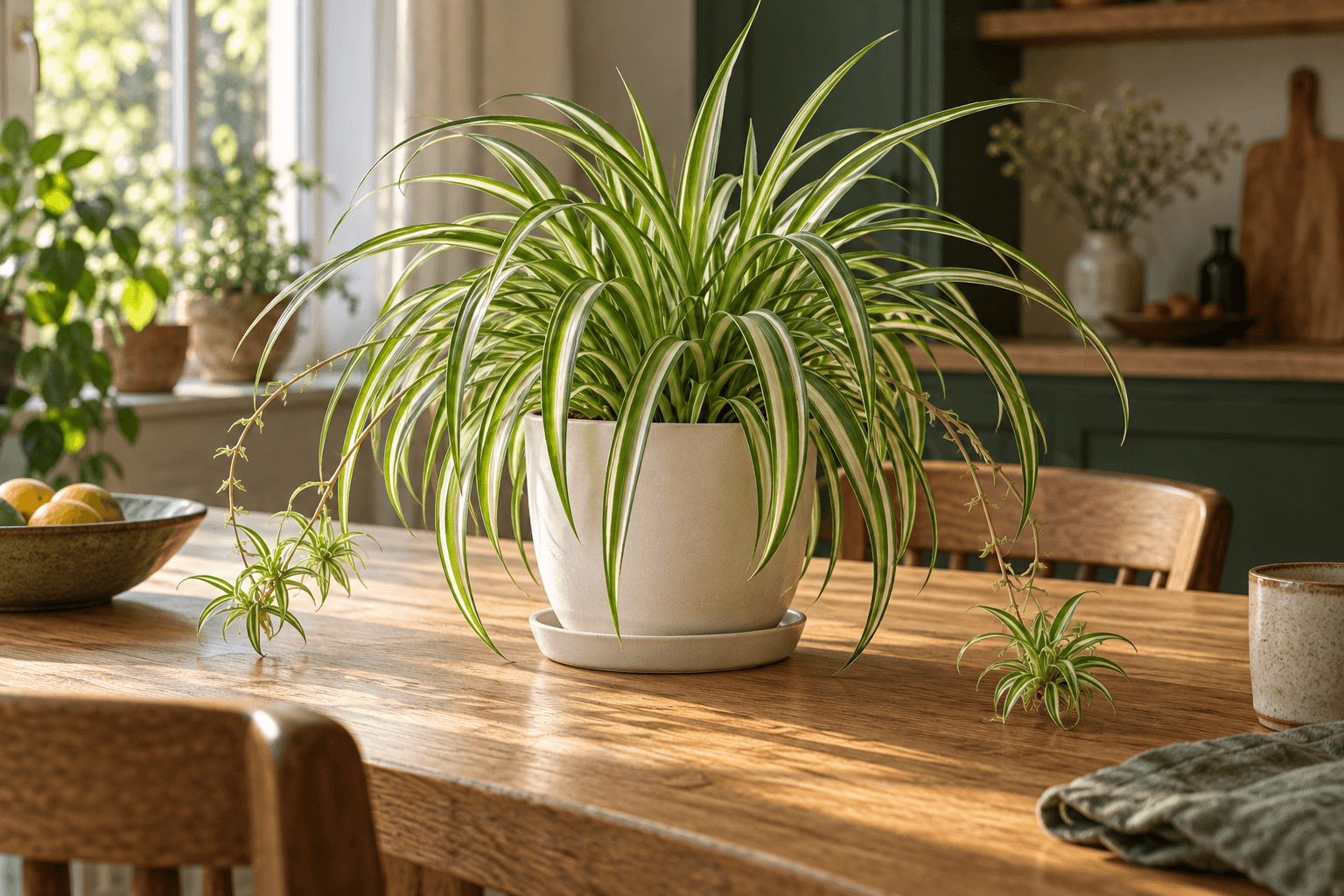
New growth beside the old cane
Dracaena fragrans
The thick cane and the leafy shoot are different parts of the same plant. Follow the new growth before deciding that a cut top has failed.
The short answer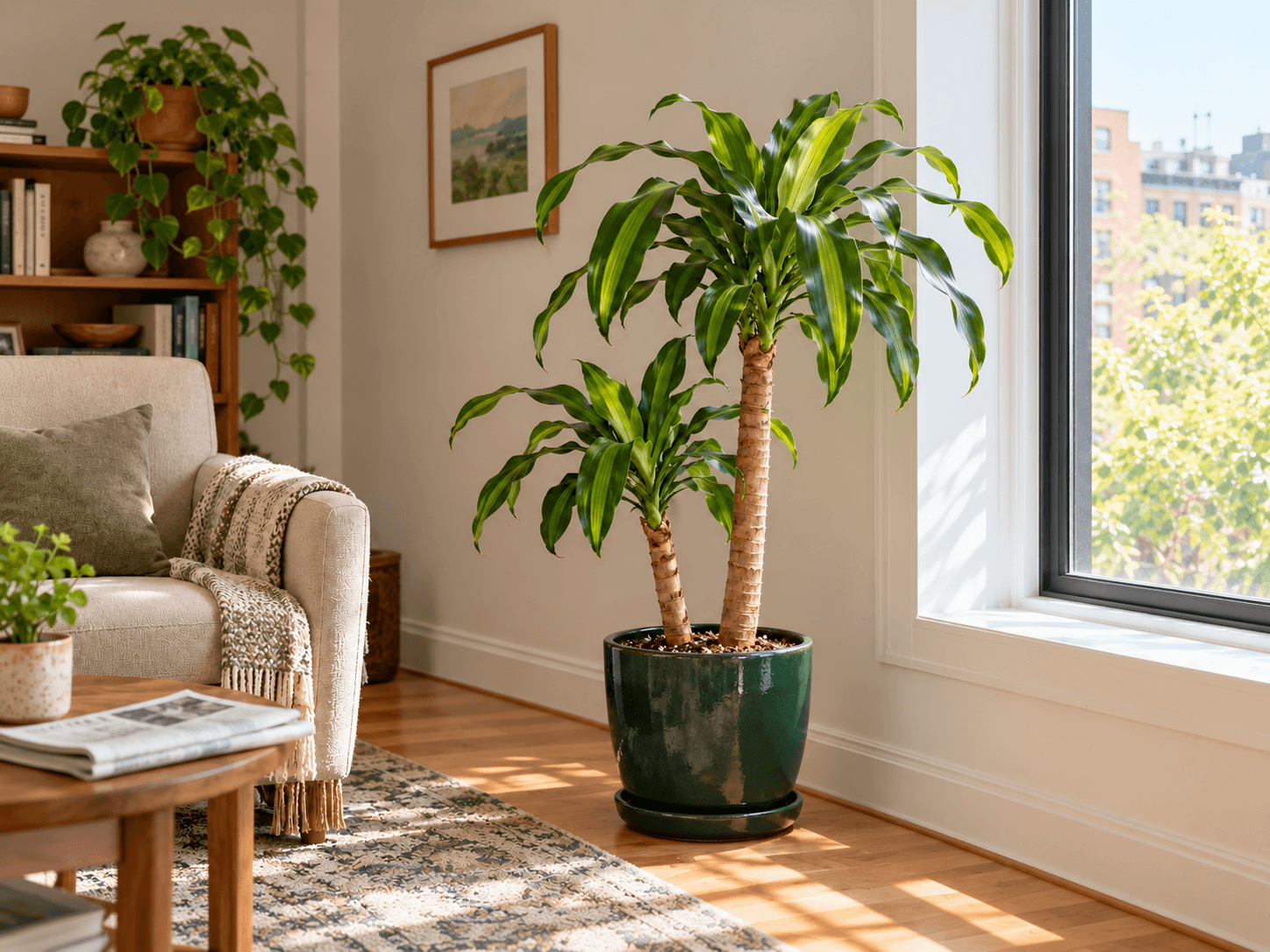
Look beside the old cut
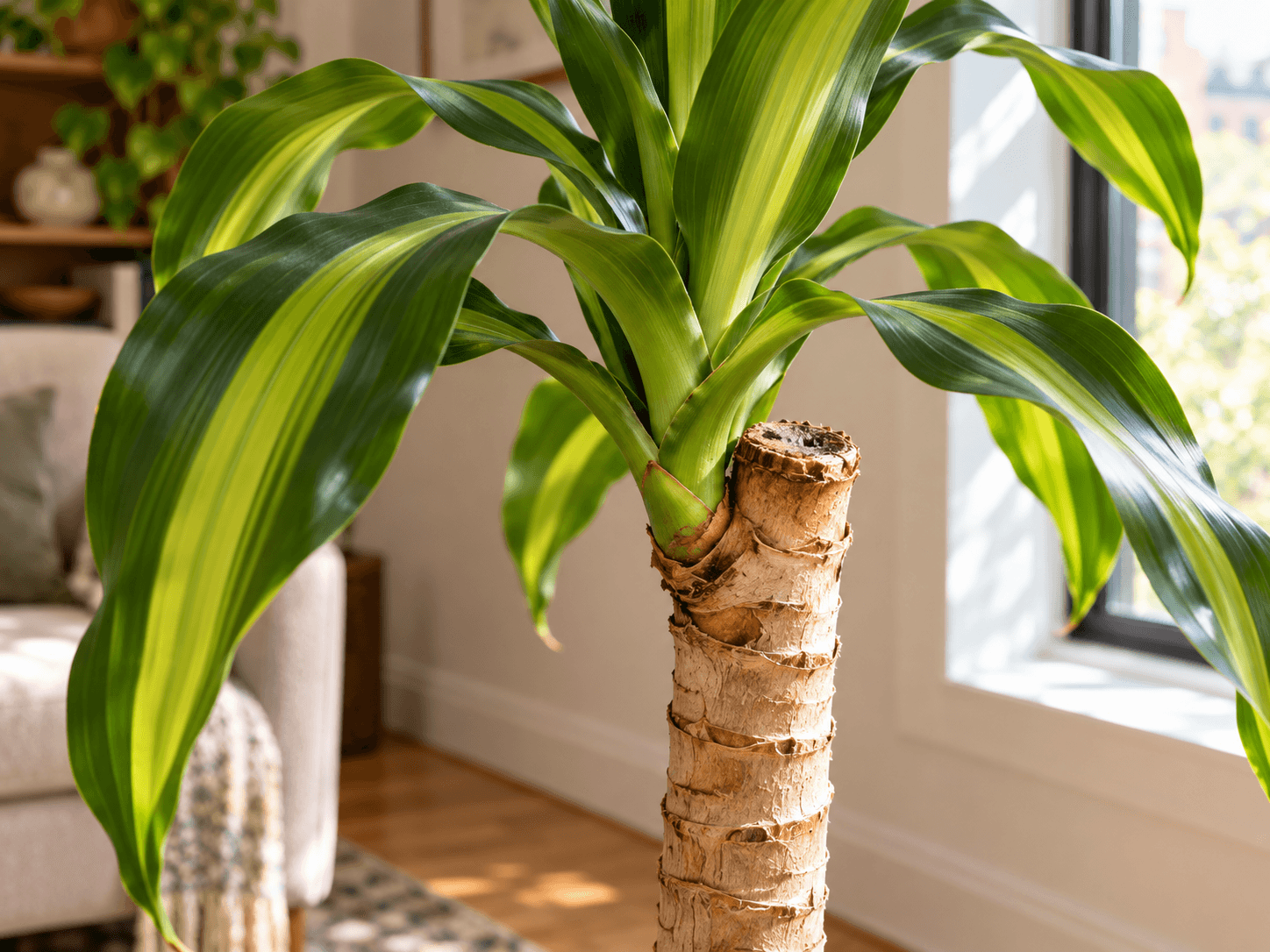
Many shop-grown corn plants have a thick, blunt-ended cane with one or more shoots emerging near its top. That old cut does not need to extend upward for the plant to grow. Follow the living shoot from the cane to the newest leaves; that is the part to watch.
Several canes in one container can be separate rooted pieces. If one becomes soft or its crown collapses, inspect it rather than assuming all the stems share the same condition. Take a photo from the side before moving the leaves so you can describe exactly which cane has changed.
A stripe is not a yellowing leaf
Dracaena fragrans cultivars vary. Massangeana has a broad yellow-green central stripe; other cultivars have white stripes, pale margins or largely green foliage. Retaining the cultivar label makes it easier to recognise the normal pattern. An orderly stripe along several otherwise firm leaves is different from a leaf steadily fading all over.
Choose a bright position with protection from harsh direct sun. Leave room for the broad leaves to arch. A plant beside a chair can be brushed by shoulders whenever someone sits down, so test the arrangement while the room is in use, not only while it is tidy.
A floor pot still needs a drainage routine
Check the upper mix before watering and allow it to dry between applications. Water slowly across the surface, then remove runoff from the saucer or cover pot. Decide how you will do this before buying a heavy container. A small jug for removing collected water may be more practical than lifting the whole plant each time.
Do not enlarge the pot just to balance a tall cane visually. Check the roots and drainage first; if repotting is needed, make a modest increase. A wider decorative outer container can change the appearance without surrounding a small root ball with a large volume of wet mix.
Keep a brown tip in proportion
Corn plants can develop brown tips with dry air, moisture problems or sensitivity to fluoride and accumulated salts. Check new growth as well as old damage. An existing brown end will remain brown, so judge a change in care by whether damage continues, not by waiting for that tip to turn green.
Inspect leaf bases for mealybugs and check marked leaves closely before choosing a treatment. Rarely, a mature corn plant produces strongly scented flowers; flowering is not a requirement for a healthy indoor specimen. Do not add extra feed in an attempt to make it happen.
Find a related guide below.
Back to the beginningSources & notes
Care guidance checked against these horticultural references on 20 October 2026.
- NC State Extension: Dracaena fragransCorn plant habit, cultivar stripes, filtered light, tip browning and occasional flowers.
- RHS: How to grow dracaenaWoody cane growth, new shoots below cuts, drainage and pet precautions.
- University of Maryland Extension: Watering indoor plantsMoisture and pot-weight checks; top and bottom watering.