A brighter place for silver leaves
Aglaonema cultivars
Aglaonema offers patterned foliage without a climbing vine. Keep its tropical roots warm and its care matched to the room.
The short answer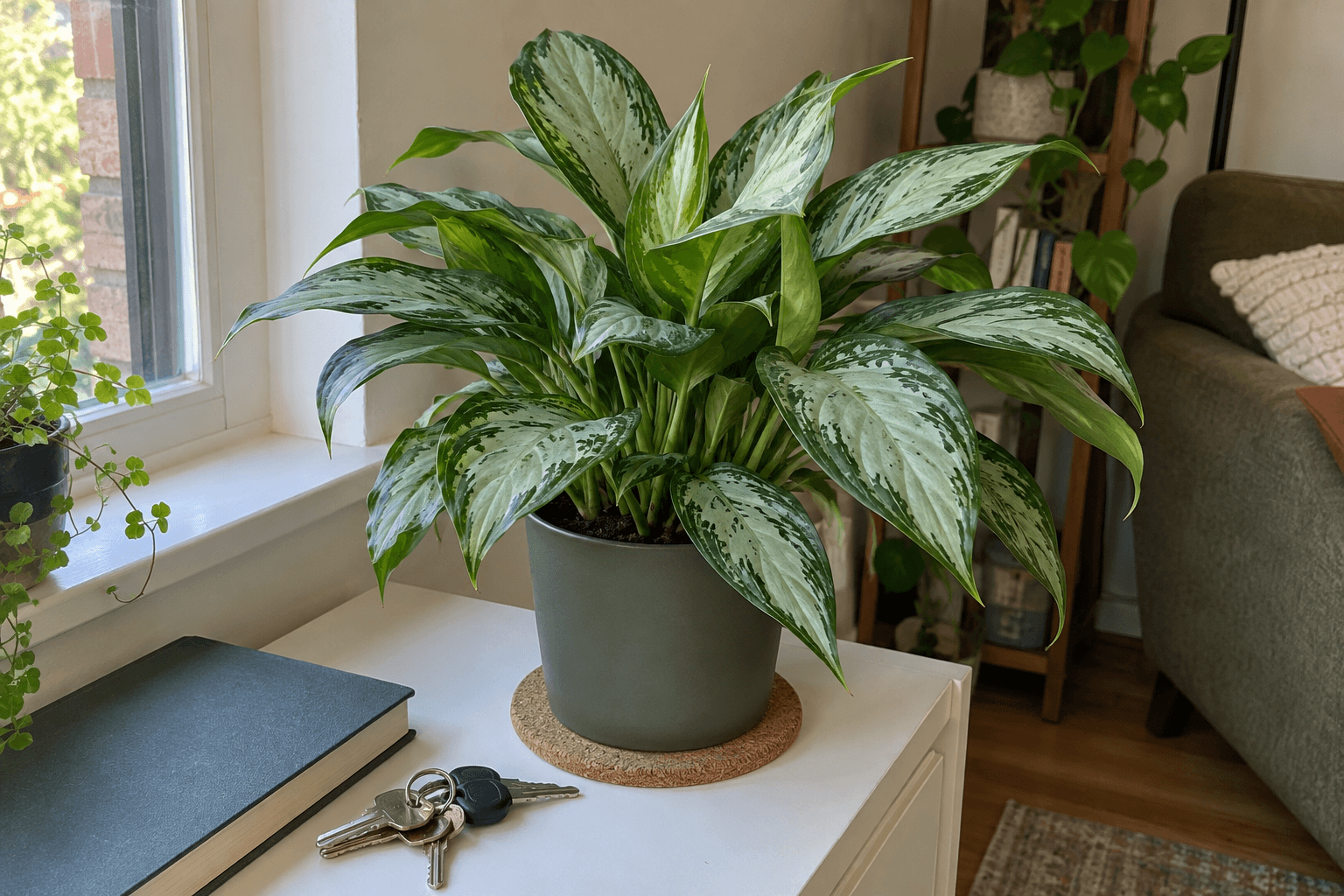
Keep the cultivar name
Chinese evergreen covers multiple Aglaonema species and cultivars. Silver, green, pink and red forms do not all behave identically in a dim room. Keep any cultivar label with a photograph of the plant. It gives you a better starting point for future care than a name based only on the colour of one leaf.
Mind the cold route home
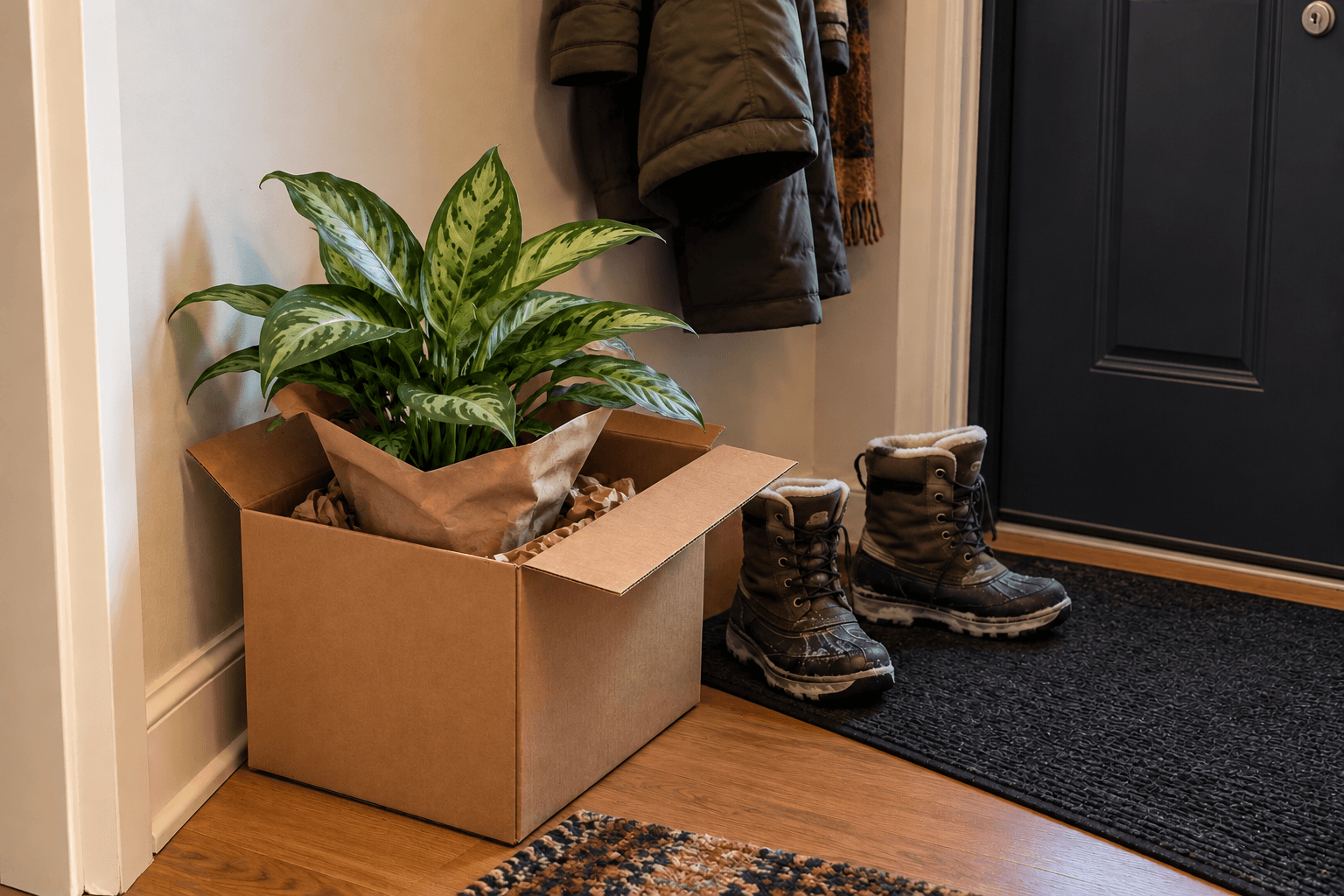
This tropical plant is sensitive to cold. Protect it on the trip from the shop and avoid a position beside an opening winter door. A bright window can still be a poor place if the leaves touch cold glass. Check the plant's immediate surroundings, including the space behind a curtain overnight.
Moisture without a reservoir
Clemson Extension recommends checking the top 1 to 2 inches, roughly 2.5 to 5 cm, of mix. If that layer is dry, water thoroughly and drain; if it still feels damp, wait. The lower root zone should retain some moisture rather than alternating between saturation and prolonged drought. In a less bright room, reaching the same dry-down can take much longer.
Use room-temperature water and remove accumulated runoff from the cachepot. Older stems may become more exposed with age; do not assume that normal development calls for burying the stem deeply or feeding heavily. Look separately at stem firmness, new leaves and how long the pot remains wet.
Choose an accessible position
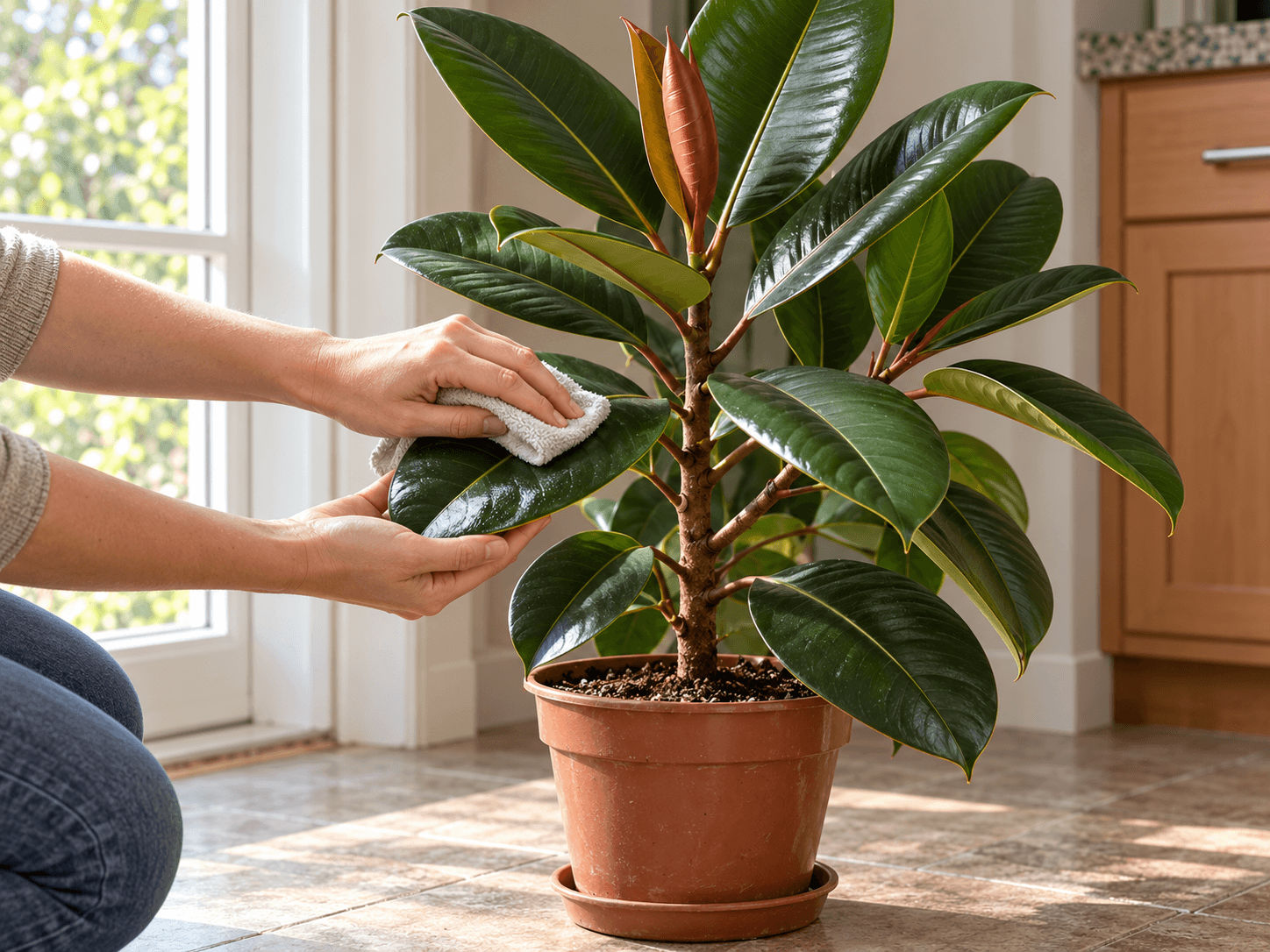
The plant contains irritating calcium oxalate crystals and is not suitable for chewing. Place it where both household access and routine care make sense. Inspect the leaves and stems for pests when cleaning. If it declines, record whether the change followed cold, watering or a move before choosing a treatment. A clear history can prevent several unnecessary interventions.
Find a related guide below.
Back to the beginningSources & notes
Care guidance checked against these horticultural references on 20 October 2026.
- NC State Extension: AglaonemaCultivar differences, cold sensitivity, moisture and calcium oxalates.
- Clemson Extension: Chinese evergreen care and cultivationUpper-medium moisture check, root damage from extremes, warmth and cold sensitivity.
- University of Maryland Extension: Watering indoor plantsMoisture and pot-weight checks; top and bottom watering.
- University of Minnesota Extension: Managing insects on indoor plantsInspection, isolation, pest signs and integrated management.